The USSR had steady and consistent economic growth, and provided free, high quality education and healthcare, full employment, cheap or free housing, and fantastic infrastructure and city planning that still lasts to this day despite capitalism neglecting it. This rapid development resulted in dramatic democratization of society, reduced disparity, doubling of life expectancy, tripling of functional literacy rates to 99.9%, and much more. Living in the 1930s famine would not have been good, but it was the last major famine outside of wartime because the soviets ended famine in their countries.
The USSR brought dramatic democratization to society. First-hand accounts from Statesian journalist Anna Louise Strong in her book This Soviet World describe soviet elections and factory councils in action. Statesian Pat Sloan even wrote Soviet Democracy to describe in detail the system the soviets had built for curious Statesians to read about, and today we have Professor Roland Boer’s Socialism in Power: On the History and Theory of Socialist Governance to reference.
When it comes to social progressivism, the soviet union was among the best out of their peers, so instead we must look at who was actually repressed outside of the norm. In the USSR, it was the capitalist class, the kulaks, the fascists who were repressed. This is out of necessity for any socialist state. When it comes to working class freedoms, however, the soviet union represented a dramatic expansion. Soviet progressivism was documented quite well in Albert Syzmanski’s Human Rights in the Soviet Union.
The truth, when judged based on historical evidence and contextualization, is that socialism was the best thing to happen to Russia in the last few centuries, and its absence has been devastating.
Death rates spiked:
And wealth disparity skyrocketed alongside the newly impoverished majority:
When you look at the US Empire and western Europe as having higher quality of life than the USSR, you are looking at the benefits of imperialism, colonialism, and neocolonialism and wishing the USSR also practiced this, instead of helping liberate colonies and the global south. Russia in particular was a semi-feudal backwater in 1917, and made it to space 5 decades later. The USSR was not the picture of wealth, but was for its time the picture of development and rapid progress.
When it comes to social progressivism, the soviet union was among the best out of their peers, so instead we must look at who was actually repressed outside of the norm. In the USSR, it was the capitalist class, the kulaks, the fascists who were repressed
at least where I am from it seems the represeion and punishment was for anyone that was anti-communist. This includes anyone with left-leaning views.
Anyway, it seems that most of your comment does hold up. However, looking deeper into the why of the statistics, it kind of seems grim.
(Unless otherwise specified, I will be speaking of where I live)
For example, the rise of birth rates is owed to aggressive natalist policies, abortion bans, and legal discrimination against childless people. These resulted in a short-term population boom, and then in a massive decline due to many deaths caused by illegal abortions.
I believe coercing people into having children, and not letting people have control over their bodies is messed up.
Another one: In the aftermath of an earthquake, a lot of monuments, historically significant buildins, and even an important railway station were set up for demolition. A lot of them were demolished, despite being in very good condition. Another tactic that was employed was intentional neglect and abandonment, to justify demolition.
A lot of growth did happen here though. But the debt had to be repaid, so rationalisation came into effect. This led into a massively lowered living standard, a lot of cut corners which were public hazards, and general discontent.
Towards the end of the regime, it grew more and more totalitarian, censorship was widespread, and any form of protest was stomped out. Arrests and terrorising of protesters & their families. And it all eventually culminated into a bloody revolution.
So yes, there were benefits, but as far as I seem to read from history, it was very hard to maintain, and it came at the cost of more and more social liberties.
Regarding punishing “left-leaning anti-communists,” opposition to socialism within socialism isn’t left in any capacity, but reactionary. Considering the intense siege placed on the USSR by the imperialist countries, and the lingering holdouts of prior ruling classes, this was taken incredibly seriously. Had they not done so, it’s likely they would have ended after mere years, rather than near a century.
As for abortion, I am really not sure what you’re talking about here. Abortion was fully legalized for the majority of the soviet union’s existence, and the eras where it was not so were seen as a mistake. More than abortion, however, what impacted birth rates were the dramatic and rapid industrialization, the folding of women into the workplace, and the impact of World War II.
As for the curbing of certain civil liberties, it’s important to ask why, and against who. States don’t restrict civil liberties for fun. The USSR, as previously mentioned, was in a massive state of siege by the west. As a consequence, it built up systems to defend its system internally and externally. It was never allowed the breathing room for “normal” development, like China comparatively is due to being connected to the global marketplace. Instead, the USSR was sanctioned and cordoned off. Reaction grew over time and overthrew socialism, resulting in the modern humanitarian crisis we see today.
Had socialism continued, steady improvements would have also continued, and the post-soviet countries would be in a far better position today. A return to socialism is the only path forward.
I whole-heartedly agree with socialism and replacing capitalism. I disagree with the notion that USSR and it’s satellite states implemented it properly. I wouldn’t want to live in a state that actively criminalised homosexuality, implemented anti-semitic policies in education, and did not allow (in practice) freedom of religion.
Maybe if the USSR had the chance to cool down into actual socialism it wouldn’t have had the issues mentioned above. But looking at how things unfolded, it failed for a reason.
P.S: I do appreciate the actual sources, and upon some reading I did clear out some misconceptions I had about my country under soviet rule
The USSR implemented socialism successfully. The bumps it ran into along the way were bumps any socialist state would have to run into, especially the first set of socialist states. After all, it was socialism that ended famine, doubled life expectancies, went from squalid shacks for most people to functional apartments for all, and much more.
Re-criminalizing homosexuality was certainly a mistake, but was not especially repressive compared to peer countries. Moreover, this wasn’t particularly straightforward. The soviet union was still enormously socially progressive contextually, even if existing in siege did end up hampering that progress.
The USSR was also the opposite of anti-semitic. Anti-semitism was punishable by death. Moreover, Nazis and their sympathizers warned of “Judeo-Bolshevism,” as the soviet union fought heavily against the popular anti-semitism at the time. George Orwell in fact kept a list of Jews and communists, and was a professional snitch for the British government.
As for freedom of religion, it still existed in the USSR. The CPSU took an active stance against religion, as dialectical materialism leaves no room for religion, but one thing we did learn from the soviet experience is that you cannot force people out of religion. They have to develop out of it, though you can help that along. Still, the USSR had churches and existing religion, just preventing it from gaining a hold over society.
The USSR didn’t fail, it was dissolved from the top-down. The economy didn’t explode until after it dissolved. Nobody really believed it would dissolve until right before it did. It’s dissolution was not inevitable.
No worries on the sources, being a communist in the English-speaking world pretty much requires doing a good deal of research due to the sheer number of anti-communists.
The bumps it ran into along the way were bumps any socialist state would have to run into, especially the first set of socialist states.
Criticizing the first attempt of a socialist state of being imperfect is especially dishonest since if we compare it with first attempts at capitalism we see literally all the genocidal euro empires at the forefront of building capitalism.
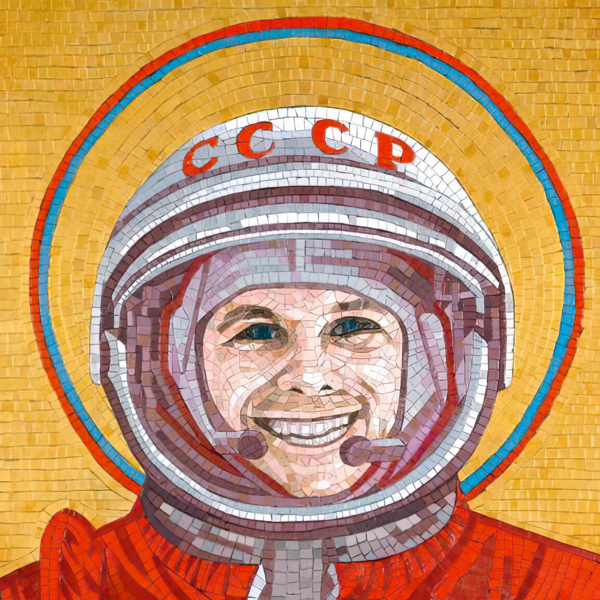

The USSR had steady and consistent economic growth, and provided free, high quality education and healthcare, full employment, cheap or free housing, and fantastic infrastructure and city planning that still lasts to this day despite capitalism neglecting it. This rapid development resulted in dramatic democratization of society, reduced disparity, doubling of life expectancy, tripling of functional literacy rates to 99.9%, and much more. Living in the 1930s famine would not have been good, but it was the last major famine outside of wartime because the soviets ended famine in their countries.
Literacy rates, societal guarantees in the 1936 constitution, reports on the healthcare system over time, and more are good sources for these claims.
The USSR brought dramatic democratization to society. First-hand accounts from Statesian journalist Anna Louise Strong in her book This Soviet World describe soviet elections and factory councils in action. Statesian Pat Sloan even wrote Soviet Democracy to describe in detail the system the soviets had built for curious Statesians to read about, and today we have Professor Roland Boer’s Socialism in Power: On the History and Theory of Socialist Governance to reference.
When it comes to social progressivism, the soviet union was among the best out of their peers, so instead we must look at who was actually repressed outside of the norm. In the USSR, it was the capitalist class, the kulaks, the fascists who were repressed. This is out of necessity for any socialist state. When it comes to working class freedoms, however, the soviet union represented a dramatic expansion. Soviet progressivism was documented quite well in Albert Syzmanski’s Human Rights in the Soviet Union.
The truth, when judged based on historical evidence and contextualization, is that socialism was the best thing to happen to Russia in the last few centuries, and its absence has been devastating.
Death rates spiked:
And wealth disparity skyrocketed alongside the newly impoverished majority:
Capitalism brought with it skyrocketing poverty rates, drug abuse, prostitution, homelessness, crime rates, and lowered life expectancy. An estimated 7 million people died due to the dissolution of socialism and reintroduction of capitalism, and the large majority of post-soviet citizens regret its fall. A return to socialism is the only path forward for the post-soviet countries.
When you look at the US Empire and western Europe as having higher quality of life than the USSR, you are looking at the benefits of imperialism, colonialism, and neocolonialism and wishing the USSR also practiced this, instead of helping liberate colonies and the global south. Russia in particular was a semi-feudal backwater in 1917, and made it to space 5 decades later. The USSR was not the picture of wealth, but was for its time the picture of development and rapid progress.
2 of your charts are the same
Oof ty
at least where I am from it seems the represeion and punishment was for anyone that was anti-communist. This includes anyone with left-leaning views.
Anyway, it seems that most of your comment does hold up. However, looking deeper into the why of the statistics, it kind of seems grim.
(Unless otherwise specified, I will be speaking of where I live)
For example, the rise of birth rates is owed to aggressive natalist policies, abortion bans, and legal discrimination against childless people. These resulted in a short-term population boom, and then in a massive decline due to many deaths caused by illegal abortions. I believe coercing people into having children, and not letting people have control over their bodies is messed up.
Another one: In the aftermath of an earthquake, a lot of monuments, historically significant buildins, and even an important railway station were set up for demolition. A lot of them were demolished, despite being in very good condition. Another tactic that was employed was intentional neglect and abandonment, to justify demolition.
A lot of growth did happen here though. But the debt had to be repaid, so rationalisation came into effect. This led into a massively lowered living standard, a lot of cut corners which were public hazards, and general discontent.
Towards the end of the regime, it grew more and more totalitarian, censorship was widespread, and any form of protest was stomped out. Arrests and terrorising of protesters & their families. And it all eventually culminated into a bloody revolution.
So yes, there were benefits, but as far as I seem to read from history, it was very hard to maintain, and it came at the cost of more and more social liberties.
Regarding punishing “left-leaning anti-communists,” opposition to socialism within socialism isn’t left in any capacity, but reactionary. Considering the intense siege placed on the USSR by the imperialist countries, and the lingering holdouts of prior ruling classes, this was taken incredibly seriously. Had they not done so, it’s likely they would have ended after mere years, rather than near a century.
As for abortion, I am really not sure what you’re talking about here. Abortion was fully legalized for the majority of the soviet union’s existence, and the eras where it was not so were seen as a mistake. More than abortion, however, what impacted birth rates were the dramatic and rapid industrialization, the folding of women into the workplace, and the impact of World War II.
As for the curbing of certain civil liberties, it’s important to ask why, and against who. States don’t restrict civil liberties for fun. The USSR, as previously mentioned, was in a massive state of siege by the west. As a consequence, it built up systems to defend its system internally and externally. It was never allowed the breathing room for “normal” development, like China comparatively is due to being connected to the global marketplace. Instead, the USSR was sanctioned and cordoned off. Reaction grew over time and overthrew socialism, resulting in the modern humanitarian crisis we see today.
Had socialism continued, steady improvements would have also continued, and the post-soviet countries would be in a far better position today. A return to socialism is the only path forward.
I whole-heartedly agree with socialism and replacing capitalism. I disagree with the notion that USSR and it’s satellite states implemented it properly. I wouldn’t want to live in a state that actively criminalised homosexuality, implemented anti-semitic policies in education, and did not allow (in practice) freedom of religion. Maybe if the USSR had the chance to cool down into actual socialism it wouldn’t have had the issues mentioned above. But looking at how things unfolded, it failed for a reason.
P.S: I do appreciate the actual sources, and upon some reading I did clear out some misconceptions I had about my country under soviet rule
The USSR implemented socialism successfully. The bumps it ran into along the way were bumps any socialist state would have to run into, especially the first set of socialist states. After all, it was socialism that ended famine, doubled life expectancies, went from squalid shacks for most people to functional apartments for all, and much more.
Re-criminalizing homosexuality was certainly a mistake, but was not especially repressive compared to peer countries. Moreover, this wasn’t particularly straightforward. The soviet union was still enormously socially progressive contextually, even if existing in siege did end up hampering that progress.
The USSR was also the opposite of anti-semitic. Anti-semitism was punishable by death. Moreover, Nazis and their sympathizers warned of “Judeo-Bolshevism,” as the soviet union fought heavily against the popular anti-semitism at the time. George Orwell in fact kept a list of Jews and communists, and was a professional snitch for the British government.
As for freedom of religion, it still existed in the USSR. The CPSU took an active stance against religion, as dialectical materialism leaves no room for religion, but one thing we did learn from the soviet experience is that you cannot force people out of religion. They have to develop out of it, though you can help that along. Still, the USSR had churches and existing religion, just preventing it from gaining a hold over society.
The USSR didn’t fail, it was dissolved from the top-down. The economy didn’t explode until after it dissolved. Nobody really believed it would dissolve until right before it did. It’s dissolution was not inevitable.
No worries on the sources, being a communist in the English-speaking world pretty much requires doing a good deal of research due to the sheer number of anti-communists.
Criticizing the first attempt of a socialist state of being imperfect is especially dishonest since if we compare it with first attempts at capitalism we see literally all the genocidal euro empires at the forefront of building capitalism.
Absolutely.
somehow a www seems to have sneaked it’s way into that nadeko link? I can’t connect to it with it at least.
Ah that’s my bad, fixed it. Thanks!