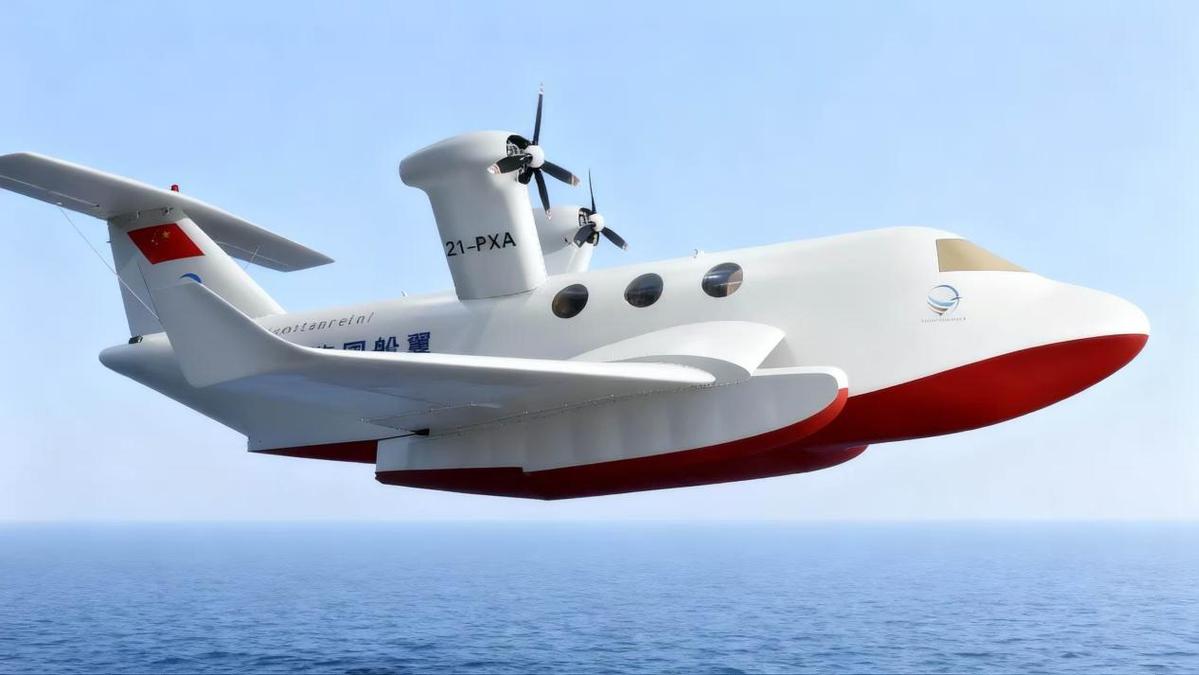
@yogthos I’m not sure is the first: en.wikipedia.org/wiki/Lun-clas…
Not pictured: subwoofer, shogun wing, underglow
WTF. It’s not the first by any means. The USSR had an insanely massive one that was so fucking cool looking and pointless. There were others.
Yeah I know of at least one company in the US
alreadyplanning on doing this with passenger service.The headline is bogus clickbait.
@yogthos “World’s first”? The effect was known since the 1930s and in 1975: https://en.wikipedia.org/wiki/Lun-class_ekranoplan
If I remember right the USSR had all kinds of strange for the time vessels designed and built for use in the Caspian and Sea of Asov.
How is this a first in any way? Ground effect vehicles have been a thing for decades.
Perhaps they mean commercially produces ones. To my knowledge these have never gone past experimental prototype stages.
Russia had a maritime ground effect vehicle that was used as a ferry… decades ago.
This seems like the constant Android vs iPhone feature claims of
brand new never before seen! Except on your competitors flagships half a decade ago
Ah didn’t know about those, I only knew of electroplans.
“I made this.”
true, but only as prototypes that never went into mass production
This one here in this post is only a prototype. The ekranoplans where actually used.
That looks something Scrooge McDuck would fly on late 80’s to early 2000’s comics.
Ground effect vehicle? What’s that?
Ground effect vehicles are basically airplanes that are forced to fly really, really low. They take off from water and cruise just a few meters above the surface. At that altitude, the air gets compressed between the wing and the ground or water, which creates a huge cushion of extra lift. This lets the vehicle carry way more weight than a normal plane of the same size and power, making it incredibly efficient for hauling cargo over water. The trick is that it only works over flat surfaces like oceans or lakes, and the piloting can be tricky because you’re skimming the waves at high speed without actually being able to climb to a higher altitude. It’s a neat piece of engineering that trades operational flexibility for raw lifting power.
That’s pretty cool. The article did not explain that and I stopped reading halfway through. I imagine many readers were confused.
deleted by creator