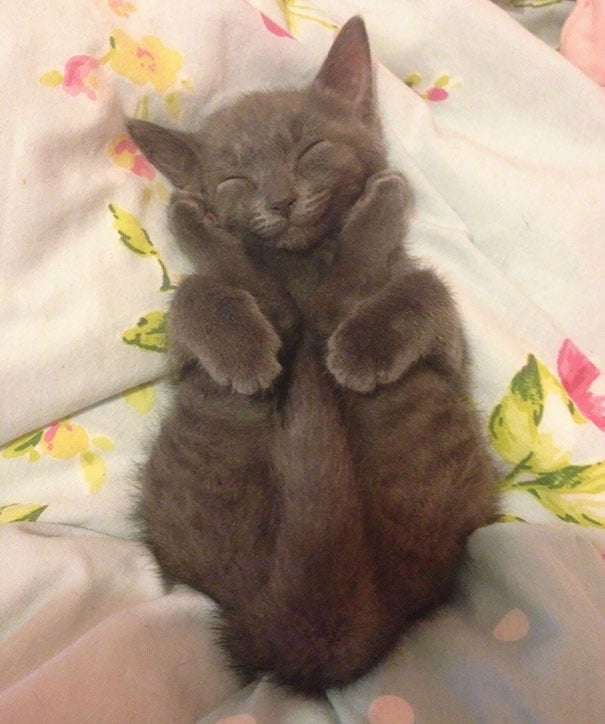
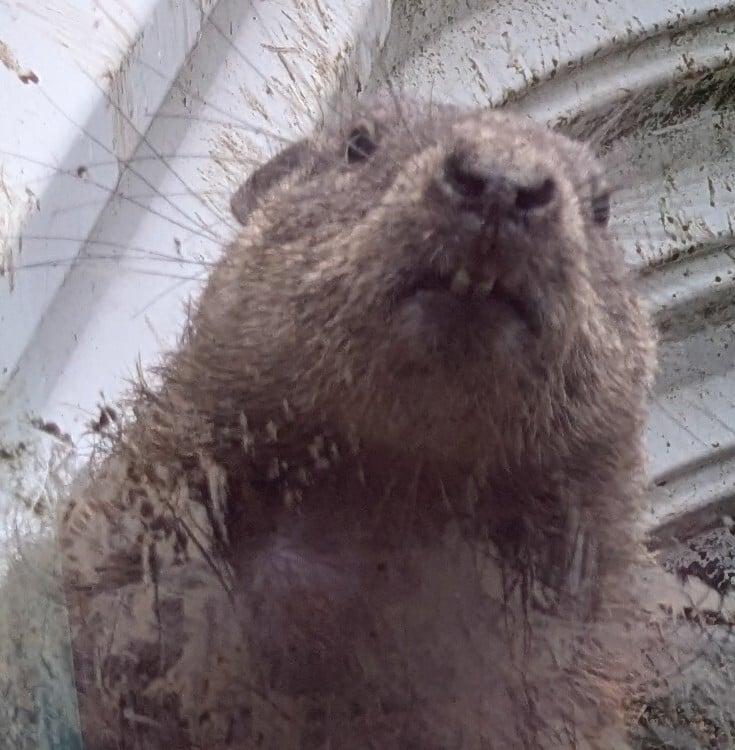
…well, it caught me at my grandmother’s place, sadly I can’t take him home with me.
Some cats go outside. This is a very healthy looking cat, so I’m sure it has a home. Don’t steal cats.
Every outside cat turned into an inside cat is a good thing. Cats are invasive and annihilate local ecosystems.
Yup! The lovely little goofballs love to murder things for fun.
Maybe that’s why they got along with humans.
Invasive outside of Africa and Eurasia yes, but housecats and African/Eurasian wildcats aren’t separate species.
Considering their username ends with UK I’m going to assume they’re from the UK where cats have been around longer than humans. As long as they’re neutered to avoid feral colonies cats are fine outside here.
housecats and African/Eurasian wildcats aren’t separate species.
They absolutely are, I’m not really sure what you’re talking about. Domestic cat: Felis catus, European wildcat: F. silvestris, and African wildcat: F. lybica. Hybridization with pets risks their genetic diversity, outcompetition, and disease transmission: https://www.iucnredlist.org/species/60354712/50652361#threats
the UK where cats have been around longer than humans
Cats entered the UK around the same time humans did, via Doggerland during the Holocene. It should also be noted again that this is the European wildcat (specifically the Scottish wildcat subspecies), not domesticated cats, which descend from African wildcats. Domesticated cats only reached Europe a couple of thousand years ago. Their population density in comparison to wildcats and the advantage they have in access to human spaces and wild spaces means they reproduce more, which is part of why the Scottish wildcat is critically endangered.
It’s fine to have cats, it’s not fine to just invent facts about how they don’t actually harm the environment.
Cats entered the UK around the same time humans did, via Doggerland

I haven’t laughed out loud to a comment in quite a long time, thank you friend.
Now that’s a theme park!
That focuses on predation without examining the threat to native wildcats through hybridization, territorial competition, and disease transmission from domestic cats, which the IUCN cites as risks to wildcat species. If no outdoor cat ever killed another prey animal again, that still wouldn’t solve the threats they pose to wildcat species.
It’s funny how eugenics is widely accepted to be a bad thing when applied to humans, but for some reason “genetic purity” is still lauded for plants and animals.
The real threat to wildcats comes from humanity destroying their habitat (which is why the European wildcat, once endemic to the whole of Britain, is now only found in the north of Scotland). I’d personally imagine that hybridization is preferable to genetic extinction, as far as the wildcats themselves are concerned.
Also, like I said, Scottish wildcats are no longer found in the vast majority of Britain (through no fault of the domestic cat), so unless OP is in a particularly rural area of northern Scotland it’s a completely moot point either way.
My kid once calculated the percentage of birds killed by cats and it was something insane like 0.0007%. Shame I can’t find the calculion anymore.
Wrong country.
PS try humans in the annihilation department. Wayyyyyy worse.
Yeah that’s why I don’t go outside either /s
Humans too
Yes, every outside human should be given a home too.
Every human should be neutered before allowed outside, to avoid more colonies popping up and keep the population density manageable.
Exactly. Too many extinctions.
No collar or chip; i’ve asked the neighbors and checked for missing pet posts online, but nothing came up for this guy.
Do you have a chip reader? Are they expensive?
I use my Flipper 0 which is overkill for just RFID FDX-A or FDX-B tags, you can prob get just an RFID reader for like $30.
Cool, thanks!
Not me, but I took him to a local vet.
Post it on Facebook. I know it’s Of the Devil ™ but I found a cat a few weeks ago, posted him on the local group and I’d found the owner in less than a day.
chartreuxeseses are so pretty

“Brown”
Omg thank you! I’ve always loved these grey, fluffy cats but I never knew the species name!
Every cat this color is named Dusty or Smoky.
This guy might’ve become Greasy if he managed to get under that hearse; Kovu is his name though, since my grandma’s had other cats named after Lion King characters, and I thought she’d like keeping the motif going.
Nuh uh, mine’s named Misty!
… Her mom is Smoky tho lol
Mine is named Misty too and she is a gray cat as well lol I guess I’m not very imaginative
That was my wife’s call on the name lol I just call her Peaches because she’s the sweetest kitty ever.
Damn you got me…in a way.
Mine is named Kyphi, ancient Egyptian for smoke/incense.
Nope! Eugenia reporting in.

We went with “Grayson” :)
Greycat is the name my family used.
Mine are Mochi and Boba
Ash
My friend’s cat is that color is named “Ishta”.
Kovu
Like from Lion King 2?
Is that what it comes from? A friend of mine has a cat with that name, and I thought it sounded interesting but never knew what it was from.
I’ve also never seen LK2.
Yeah, my kids are obsessed with it. It’s… not great.
But have they seen The Lion King 3???
Jk, I’m always reminded of the Mandela effect when I hear about LK2, even being well aware of LK 1 1/2 lol. Where did LK3 go?!?!
No, but I’m very familiar with the mid-quel tv series, Lion Guard. It was my 6-year-old daughter’s first real info dump. She’ll go on about the lore for an hour, explaining about Scar’s return, the Roar, and why Kion doesn’t show up in Lion King 2.
Hey OP my family recently lost our cat and this looks A LOT like like him. You didn’t happen to find him in West Virginia in the US did you??
Nah, I’m in Texas
Darn
cat on a herse!
Cats that like to chill on car roofs are a different breed. Of all the cats I’ve had, only one was a car roof cat, and he was by far our biggest badass. I guess the rest of the cats know that only the boss is allowed to be that high.
deleted by creator