Fun fact: double barrel shotguns are not considered firearms in the UK and a shotgun certificate is significantly easier to get than a firearms certificate. Also there is no minimum age for issuing one, either. It can and has been issued to 10 year olds.
while sports shooting has been licensed to some younger people, their parents still maintain responsibility and both the licensee and their parents need to pass the interviews, inspections, paperwork, fees and renewal procedures to obtain and maintain their licensed status.
Is that any break barrel or strictly doubles? Seems a weird distinction regardless, but then they’re slower to operate than a semi or pump. I remember my grandfather teaching me to shoot with an old single barrel .410 (probably the same one my uncles learned with). I couldn’t have been eight, and only ever shot pump and springer BB guns prior, but then I’m also in the States.
Here is the full description (note these are interpreted legal guidelines in layman’s language, not official legal documents which are longer and more strictly and technically worded)
Chapter 2: Definition and Classification of Firearms and Ammunition
2.1 This chapter provides definitions of firearms, component parts, shotguns, deactivated firearms and defectively deactivated firearms, imitation and realistic imitation firearms, including readily convertible imitations, some information on antiques (which are covered more fully in Chapter 8), and firearms conversion. It goes on to define various types of firearms and ammunition for which no certificate is required, including certain types of air weapons.
2.2 The definitions of ‘firearm’, ‘lethal barrelled weapon’, ‘shotgun’ and ‘ammunition’ for the purposes of the Firearms Acts are set out in section 57 of the Firearms Act 1968 (“the principal Act”) and are set out below. The definition of ‘firearm’ extends to certain imitation firearms (see paragraphs 2.32 to 2.36).
Definition of ‘firearm’ and ‘lethal barrelled weapon’
2.3 Section 57 of the principal Act (as amended) defines a ‘firearm’ as (i) a lethal barrelled weapon of any description from which any shot, bullet or other missile can be discharged with kinetic energy of more than one joule at the muzzle of the weapon (ii) a prohibited weapon and (iii) any relevant component part (see below and Chapter 12) of such a lethal barrelled or prohibited weapon.
Definition of ‘airsoft’ gun
2.4 An ‘airsoft’ gun as defined in section 57A of the 1968 Act is not regarded as a firearm for the purposes of that Act. Section 57A defines an airsoft gun as a barrelled weapon of any description which is designed to discharge only a small plastic missile (whether or not it is also capable of discharging any other kind of missile) and is not capable of discharging a missile of any kind above the permitted kinetic energy thresholds at the muzzle of the weapon (see below). A ‘small plastic missile’ is defined in section 57A(3) as a missile that:
a) is made wholly or partly from plastics;
b) is spherical, and
c) does not exceed 8 millimetres in diameter.
Section 57A(4) sets the maximum permitted kinetic energy levels for airsoft guns at:
a) 1.3 joules if the weapon is capable of discharging two or more missiles successively without repeated pressure on the trigger, and
b) 2.5 joules in any other case.
Definition of ‘relevant component part’
2.5 A ‘relevant component part’ of a lethal barrelled or prohibited weapon is a firearm in its own right and is defined in section 57(1D) of the 1968 Act as:
a) a barrel, chamber or cylinder,
b) a frame, body or receiver,
c) a breech block, bolt or other mechanism for containing the pressure of discharge at the rear of a chamber, but only where the item is capable of being used as a part of a lethal barrelled weapon or a prohibited weapon.
Definition of ‘shotgun’
2.6 A “shotgun” is defined in section 1(3)(a) of the 1968 Act and means a smooth-bore gun (not being an air gun) which:
a) has a barrel not less than 24 inches in length and does not have any barrel with a bore exceeding 2 inches in diameter. The length of the barrel is measured from the muzzle to the point of ignition (breech face). For a muzzle-loading gun, the point of ignition may be taken as the touch-hole or nipple that is nearest to the breech;
b) either has no magazine or has a non-detachable magazine incapable of holding more than two cartridges (see paragraphs 2.12 to 2.14 for further information). It should be noted that under section 1(3A) of the 1968 Act a gun that has been adapted to have such a magazine only meets this criterion if the magazine bears an approved mark and the adaptation has been certified in writing either by one of the two Proof Houses or by such other person as the Secretary of State has designated, as having been carried out in a manner approved by the Secretary of State; and
c) is not a revolver gun (that is, a gun containing a series of chambers, which revolve as part of the firing cycle).
2.7 When considering the classification of smooth-bore guns, special attention must be paid to the length of the barrel and the overall length. With the exception of those chambered for .22 rim-fire cartridges, section 5(1)(ac) of the 1968 Act raised to the prohibited category (see Chapter 3) all self-loading and pump-action models which are either short-barrelled (under 24 inches) or short in overall length (under 40 inches). For the purpose of calculating overall length any detachable, retractable or other movable butt-stock should be disregarded. References to ‘shotguns’ in the 1968 Act may be taken generally to mean shotguns which fall within section 2 of that Act, rather than those subject to sections 1 and 5 of the 1968 Act, unless otherwise stated.
2.8 While overall length is not a relevant factor in regard to the classification of traditional single and double-barrelled smooth-bore guns and repeating shotguns with a bolt or lever-action, any such guns with barrels under 24 inches in length are subject to control under section 1(3)(a)(i) of the 1968 Act. Also controlled under section 1(3)(a)(ii) is any repeating shotgun, not otherwise prohibited by virtue of its barrel length or overall length, with a magazine capacity in excess of two cartridges.
2.9 Section 5(1)(ad) of the 1968 Act raised to the prohibited category any smooth-bore revolver gun other than one that is chambered for 9mm rim-fire cartridges or is a muzzle-loading revolver gun. The first exemption is understood to cover ‘ratting’ or ‘garden’ guns. Since section 1(3)(a) of the 1968 Act does not permit any revolver gun to be regarded as a ‘shotgun’, smooth-bore revolver guns which are chambered for 9mm rim-fire or muzzle-loading guns are classed as firearms and subject to control under section 1 of the 1968 Act.
2.10 For the purposes only of sections 3(1) and 45(2) of the 1968 Act, and in the definition of ‘firearms dealer’ in section 57(4), the term ‘shotgun’ also includes any component part of a shotgun and any accessory to a shotgun designed or adapted to diminish the noise or flash caused by firing the gun. For the purposes of all other sections/Acts, the component parts of shotguns are not subject to control under the Firearms Acts. See section 57(4) of the 1968 Act


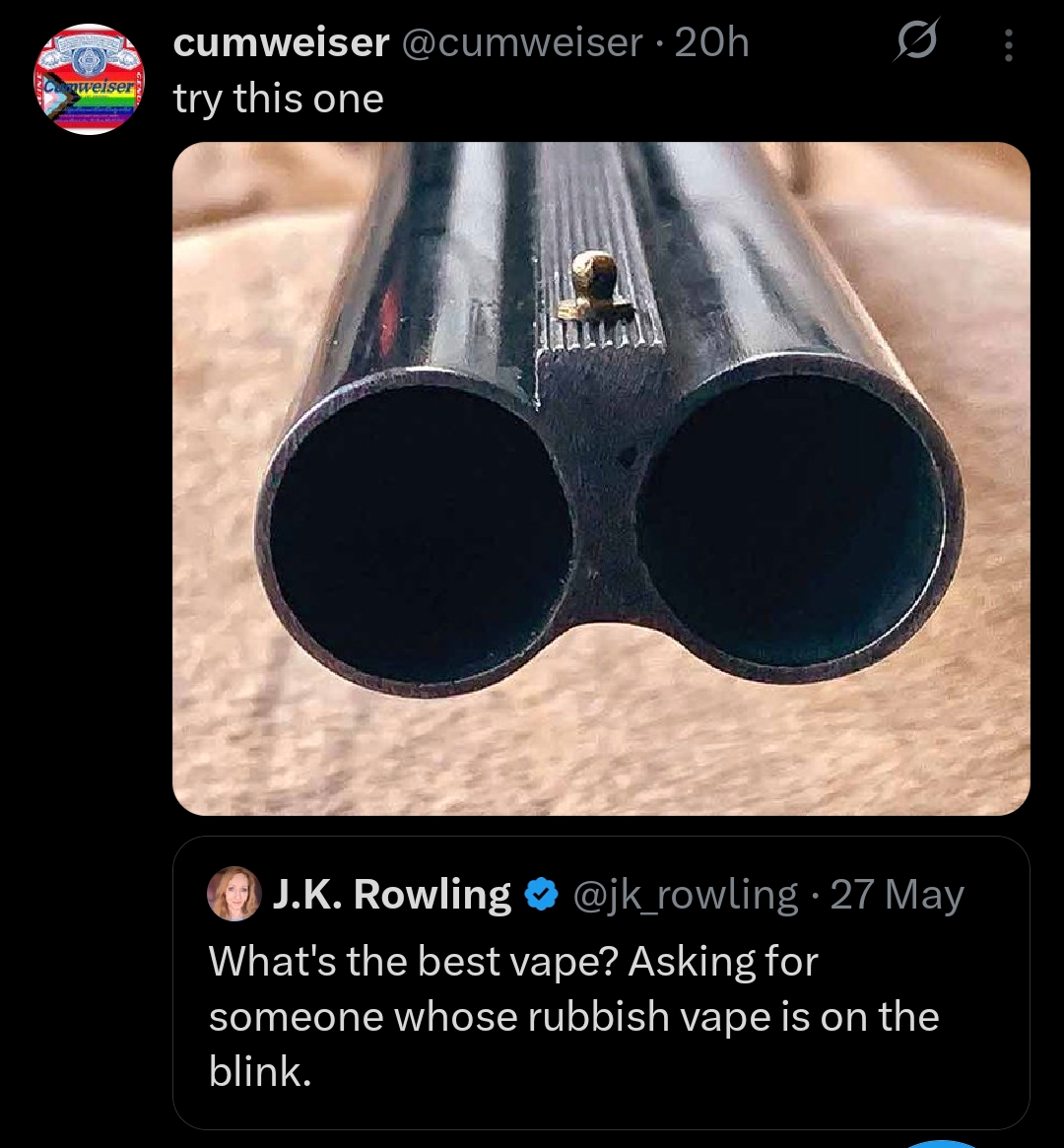
Fun fact: double barrel shotguns are not considered firearms in the UK and a shotgun certificate is significantly easier to get than a firearms certificate. Also there is no minimum age for issuing one, either. It can and has been issued to 10 year olds.
unfortunately that is misinformation. You can read the docs here: https://www.gov.uk/government/collections/firearms
while sports shooting has been licensed to some younger people, their parents still maintain responsibility and both the licensee and their parents need to pass the interviews, inspections, paperwork, fees and renewal procedures to obtain and maintain their licensed status.
Is that any break barrel or strictly doubles? Seems a weird distinction regardless, but then they’re slower to operate than a semi or pump. I remember my grandfather teaching me to shoot with an old single barrel .410 (probably the same one my uncles learned with). I couldn’t have been eight, and only ever shot pump and springer BB guns prior, but then I’m also in the States.
Here is the full description (note these are interpreted legal guidelines in layman’s language, not official legal documents which are longer and more strictly and technically worded)
Chapter 2: Definition and Classification of Firearms and Ammunition
2.1 This chapter provides definitions of firearms, component parts, shotguns, deactivated firearms and defectively deactivated firearms, imitation and realistic imitation firearms, including readily convertible imitations, some information on antiques (which are covered more fully in Chapter 8), and firearms conversion. It goes on to define various types of firearms and ammunition for which no certificate is required, including certain types of air weapons.
2.2 The definitions of ‘firearm’, ‘lethal barrelled weapon’, ‘shotgun’ and ‘ammunition’ for the purposes of the Firearms Acts are set out in section 57 of the Firearms Act 1968 (“the principal Act”) and are set out below. The definition of ‘firearm’ extends to certain imitation firearms (see paragraphs 2.32 to 2.36).
Definition of ‘firearm’ and ‘lethal barrelled weapon’
2.3 Section 57 of the principal Act (as amended) defines a ‘firearm’ as (i) a lethal barrelled weapon of any description from which any shot, bullet or other missile can be discharged with kinetic energy of more than one joule at the muzzle of the weapon (ii) a prohibited weapon and (iii) any relevant component part (see below and Chapter 12) of such a lethal barrelled or prohibited weapon.
Definition of ‘airsoft’ gun
2.4 An ‘airsoft’ gun as defined in section 57A of the 1968 Act is not regarded as a firearm for the purposes of that Act. Section 57A defines an airsoft gun as a barrelled weapon of any description which is designed to discharge only a small plastic missile (whether or not it is also capable of discharging any other kind of missile) and is not capable of discharging a missile of any kind above the permitted kinetic energy thresholds at the muzzle of the weapon (see below). A ‘small plastic missile’ is defined in section 57A(3) as a missile that:
a) is made wholly or partly from plastics;
b) is spherical, and
c) does not exceed 8 millimetres in diameter.
Section 57A(4) sets the maximum permitted kinetic energy levels for airsoft guns at:
a) 1.3 joules if the weapon is capable of discharging two or more missiles successively without repeated pressure on the trigger, and
b) 2.5 joules in any other case.
Definition of ‘relevant component part’
2.5 A ‘relevant component part’ of a lethal barrelled or prohibited weapon is a firearm in its own right and is defined in section 57(1D) of the 1968 Act as:
a) a barrel, chamber or cylinder,
b) a frame, body or receiver,
c) a breech block, bolt or other mechanism for containing the pressure of discharge at the rear of a chamber, but only where the item is capable of being used as a part of a lethal barrelled weapon or a prohibited weapon.
Definition of ‘shotgun’
2.6 A “shotgun” is defined in section 1(3)(a) of the 1968 Act and means a smooth-bore gun (not being an air gun) which:
a) has a barrel not less than 24 inches in length and does not have any barrel with a bore exceeding 2 inches in diameter. The length of the barrel is measured from the muzzle to the point of ignition (breech face). For a muzzle-loading gun, the point of ignition may be taken as the touch-hole or nipple that is nearest to the breech;
b) either has no magazine or has a non-detachable magazine incapable of holding more than two cartridges (see paragraphs 2.12 to 2.14 for further information). It should be noted that under section 1(3A) of the 1968 Act a gun that has been adapted to have such a magazine only meets this criterion if the magazine bears an approved mark and the adaptation has been certified in writing either by one of the two Proof Houses or by such other person as the Secretary of State has designated, as having been carried out in a manner approved by the Secretary of State; and
c) is not a revolver gun (that is, a gun containing a series of chambers, which revolve as part of the firing cycle).
2.7 When considering the classification of smooth-bore guns, special attention must be paid to the length of the barrel and the overall length. With the exception of those chambered for .22 rim-fire cartridges, section 5(1)(ac) of the 1968 Act raised to the prohibited category (see Chapter 3) all self-loading and pump-action models which are either short-barrelled (under 24 inches) or short in overall length (under 40 inches). For the purpose of calculating overall length any detachable, retractable or other movable butt-stock should be disregarded. References to ‘shotguns’ in the 1968 Act may be taken generally to mean shotguns which fall within section 2 of that Act, rather than those subject to sections 1 and 5 of the 1968 Act, unless otherwise stated.
2.8 While overall length is not a relevant factor in regard to the classification of traditional single and double-barrelled smooth-bore guns and repeating shotguns with a bolt or lever-action, any such guns with barrels under 24 inches in length are subject to control under section 1(3)(a)(i) of the 1968 Act. Also controlled under section 1(3)(a)(ii) is any repeating shotgun, not otherwise prohibited by virtue of its barrel length or overall length, with a magazine capacity in excess of two cartridges.
2.9 Section 5(1)(ad) of the 1968 Act raised to the prohibited category any smooth-bore revolver gun other than one that is chambered for 9mm rim-fire cartridges or is a muzzle-loading revolver gun. The first exemption is understood to cover ‘ratting’ or ‘garden’ guns. Since section 1(3)(a) of the 1968 Act does not permit any revolver gun to be regarded as a ‘shotgun’, smooth-bore revolver guns which are chambered for 9mm rim-fire or muzzle-loading guns are classed as firearms and subject to control under section 1 of the 1968 Act.
2.10 For the purposes only of sections 3(1) and 45(2) of the 1968 Act, and in the definition of ‘firearms dealer’ in section 57(4), the term ‘shotgun’ also includes any component part of a shotgun and any accessory to a shotgun designed or adapted to diminish the noise or flash caused by firing the gun. For the purposes of all other sections/Acts, the component parts of shotguns are not subject to control under the Firearms Acts. See section 57(4) of the 1968 Act