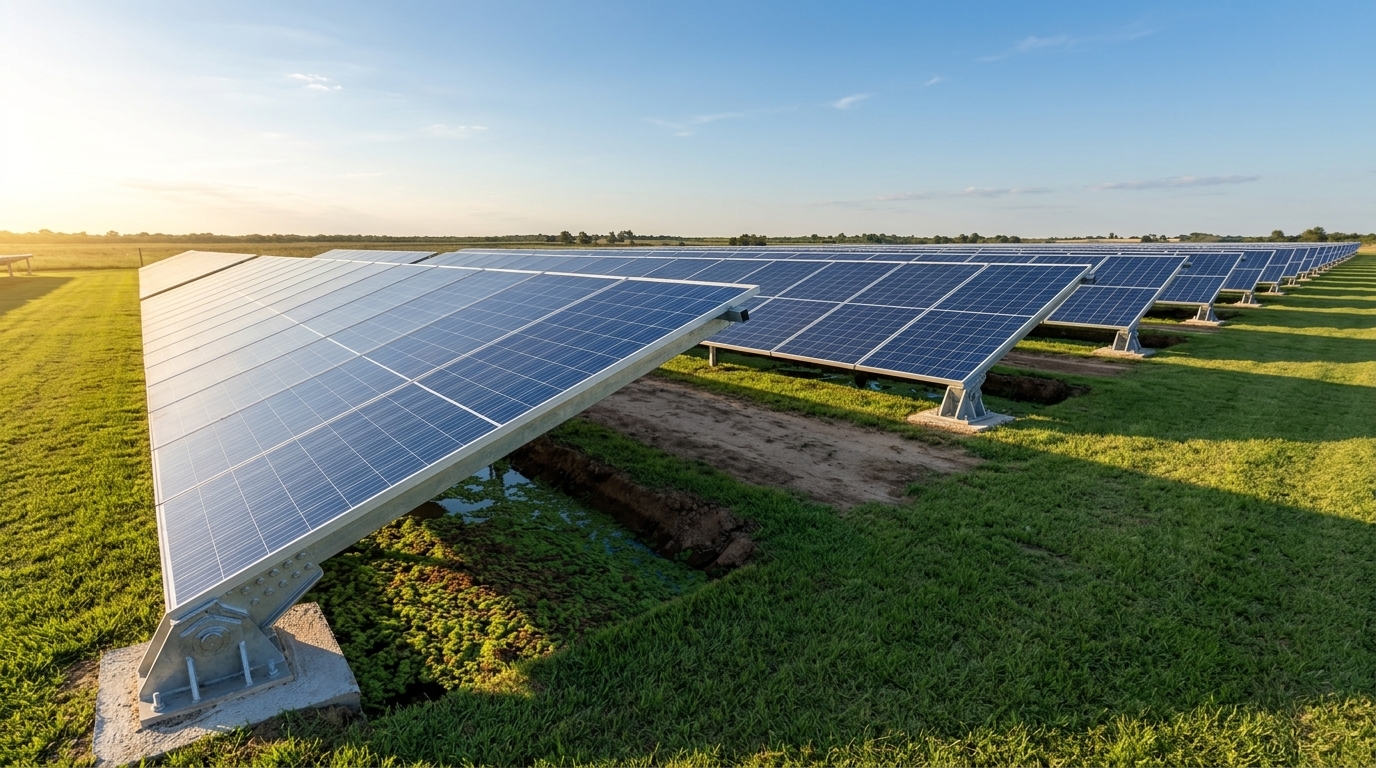
You have the solar panels protecting the lower ponds of azolla which don’t like direct sun. The solar panels provide excess electricity and power any machinery used to harvest the azolla. The azolla grows over TEN TIMES as fast as grass or any other plants, so you are cycling it rapidly producing truckloads of green biomass on a monthly basis.
You must log in or register to comment.
It’s not that easy to grow azolla. And what do you want to do with the harvested biomass?
The biomass can be sold as animal feed or biochar.
A lot of grown azolla is eaten by organisms in the pond, which can also contaminate the feed. It spoils quickly, so best fed onsite. Biochar requires dehydration, which isn’t easy for wet biomass that quickly starts to rot.
Yea it would need to be squeezed and dried for cakes. Thankfully you’d have a bunch of solar electricity to do that.
Dehydration can be done with vacuum, perhaps?
If it’s animal feed, then the absorbed carbon is just going back into the atmosphere when the animal produces waste, dies, or gets eaten. That doesn’t remove it from the cycle.


@jaykrown There’s been longstanding schema to cover increasingly evaporating water sources, with solar panels, in conjunction with #agrovoltaics and #battery #storage.
#FossilFuels has done a stellar job in suppressing it, along with most other more sustainable solves.
Yes and now is the time to push it, because solar cells and batteries are now cheap enough for the average person to start deploying. It doesn’t matter how hard anyone tries to suppress it, solar is the cheaper option now. I think we should post any discuss this as much as possible to encourage people to recognize it. And I predict solar will be come even cheaper as time goes on. Batteries and solar cells were cost prohibitive 10 years ago, now they are just becoming accessible to most people.