

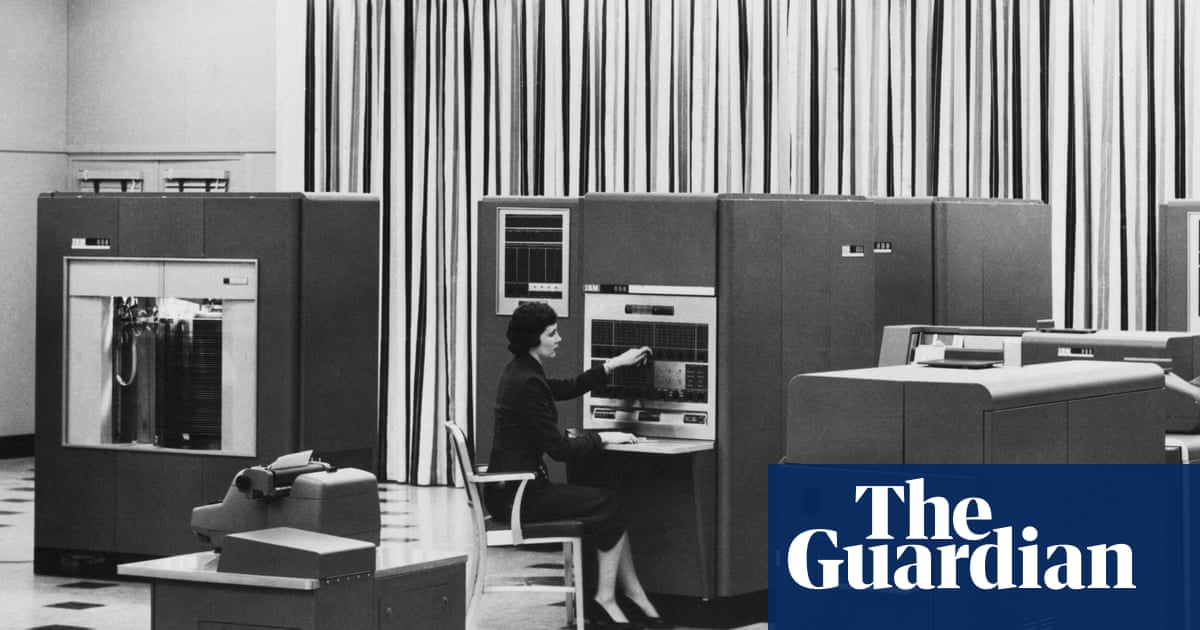
One of the stranger things about this dizzying, headlong moment in time is that it doesn’t have much of a past. Everything is about the future of this, the future of that: the future of work, the future of humanity, the future of the planet. It’s as if everyone is screaming (some ecstatically, most terror-stricken): robots are taking over the world! Meanwhile, you can’t put down your phone, unplug, delete your AI apps, tell Zoom to piss off; it feels as if you are racing toward something, and can’t stop, or look back, or think straight.
But of course this weird moment in history does have a past. It comes from somewhere. It wasn’t inevitable. Things could have turned out differently. They still can. And if you look back, one thing you’ll see is that a lot of people saw this all coming. They foresaw our present when it was still the future. They thought it might turn out fabulously, a computer utopia. And they worried it might turn out disastrously. Above all, they issued warning after warning about the rise of what I call the artificial state, the replacement of the liberal democratic nation-state, the consent of the governed, with the rule of people by machines. They warned of a future in which democratic deliberation would be replaced by prediction by calculation, the public sphere would be supplanted by data-driven commerce, and drones would take the place of the demos. Why didn’t anyone listen?