

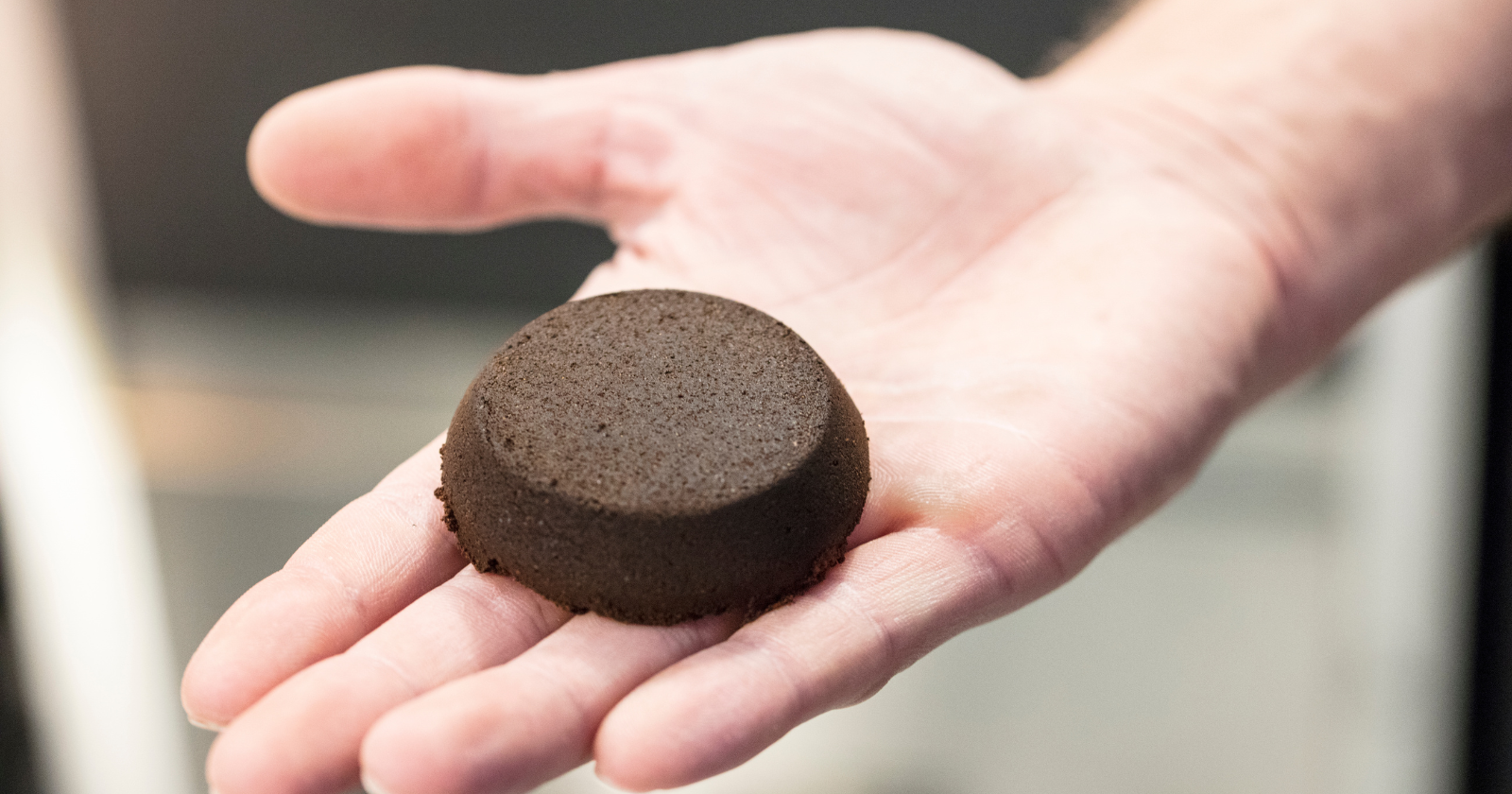
but coffee isnt actually a good source, as growing it seems very problematic to begin with.
The title says used coffee grounds. It’s turning trash into something useful
The article is bad and the author should feel bad. (Zoidberg noises)
Replacing parts of concrete by e.g. carbon is nothing new. Using graphite as a cheap graphene proxy is cheap and effective. (Graphite is basically graphene and extra bits and pieces)
Posing this as a way to get Coffee grounds out of landfills is misleading as there is no reason to send them there to begin with.
They don’t highlight why coffee grounds may be better suited than other organic waste.
You can use manufactured sand in concrete to get a very similar end product. Changing processes is work and hence avoided. But it is perfectly possible.
While it’s nice to use a bit less sand, charring at 350°C doesn’t sound like negligible energy usage. Especially if done with fossils. Always good to have options, I guess?
Last I heard we are running out of sand to use in concrete so it might not be an environmental thing just a cost. Like they can’t just use any ol’ sand. Beach sand is too smooth or something so it has to be river sand I believe.
Other way around. Beach sand is new and this rough. A surprising amount of it is parrotfish poo, chewed up coral. River sand, and desert sand, is weathered and smooth.
I’ve seen a machine for pulverizing glass bottles into basically sand. Smooth desert sand > glass packaging, used for food, glass packaging > concrete aggregate?
Sand ain’t the fucking problem in concrete it’s the clinker/Portland that’s releasing massive amounts of CO2 that would be otherwise trapped by rocks. Destroying habitats for sand sucks but we’ve got bigger fish frying us.
Sand is a big problem because we are slowly running out of it. And transporting suitable sand takes a lot of ressources, minimizing the use is good.
Plus why can’t we tackle two problems at once?The greater point I’m getting at is whatever aggregate you use to make more concrete, making the concrete with Portland is still 8 percent of CO2 emissions. You can protect local environments and maintain concrete production, but what use is that when you’re cooking the planet with the concrete in the first place? Gotta stop liberating the CO2 from rocks, not green wash it.
Why is there CO2 in rocks why are they breathing
Okay yeah this is true.
Uh, more than half of the earth’s crust is made from silica.
How are we running out?
Coffee grounds are better used in compost. Less work and takes advantage of its actual content.
That article is sensationalist.
The wrong “shape”. That is a misnomer and only matters to some applications. And even that is easily overcome by an added manufacturing step that would arguably be a lot easier than collecting/baking coffee grounds.
The silica is not going anywhere. In concrete and silicone, it is recapturable and re-usable.
Add on to that, the amount of used coffee grounds don’t even come close to making any impact at all.
Sure you can replace 15% of sand, in a mix, with these grounds, but good luck finding enough grounds to even cover that for one building.
Should I trust BBC or a random dude from the internet? It’s a hard choice.
I don’t give a shit if you trust me or not.
You shouldn’t depend on either of us. If it’s important to you, do your own fuckin research.
Someone shows up that disagrees and your like, “I don’t know who to believe!”
FFS, you are part of the problem. Grow a fucking spine.
Yeah im part of the sand problem. Lol
I’m going to trust the bbc on this one sluggo.
With an almost 30 percent in compressive strength, the amount of cement can also potentially be reduced. Anything is better than nothing, eh? Or should we deny anything that’s not everything?
I’m all for reduction, but if you priced in the externalities even that would likely favor other materials in many applications that are extensively cement based. Including bitumen in some cases. I just think we have to be aggressively against cement usage because theres no stoichiometric way to get it to not be a massive source of carbon if we keep using it the way we do.
My problem with the don’t throw the productive economy out by just trying to decarbonize argument is really structural though. It just gets to the point that we can’t outgrow destroying the commons. Who cares if we maintain rapid development if the resulting assets are worthless?



