

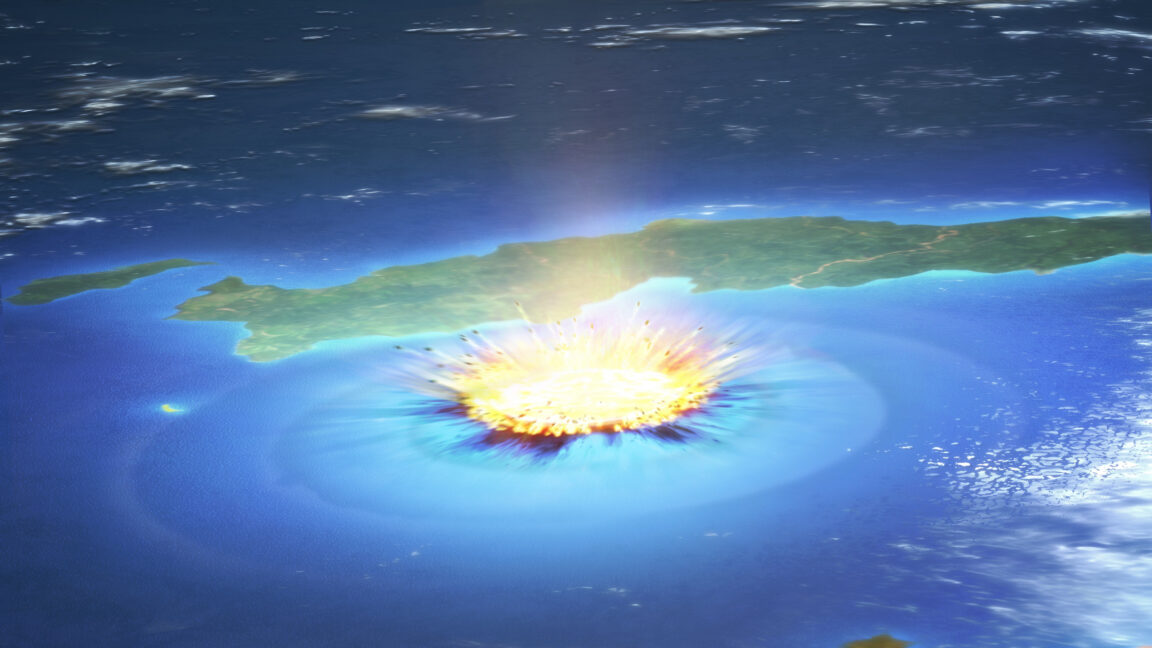
The collision was intense enough to cause deformation far beneath the surface. Subterranean effects reached 35 km (almost 22 miles) down, and included the melting an immense amount of rock. Exposure to seawater made that rock porous. As hot water seeped into the pores, a hydrothermal system formed. The hot water gushing into an isolated region of the freezing depths could have attracted microorganisms and possibly other life forms that were otherwise struggling to survive.
It gives hope to all of us out there that feel like massive craters of former vibrant life! We can be something one day too!
That’s true, but this is talking about the crater not the meteor
Hol’up. Are you implying that meteorite craters rarely contribute to the impacted substrate with their own composition?
Seems to me that differentiating between the two here is simply a question of time along that same line, and ripe for finessing of the data to feed a narrative. 🤷🏼♂️