(Mainland France) When I was a kid, my parents decide to move to a big ancient house with thick stone walls with a lot of repairs, we talked a lot about these things. back then, in the 90s, stone walls were considered superior than average insulation, as it was mostly inexistant at the time.
Nowadays, it is much inferior and you really need to add insulation to be a bit efficient.
If you have more thermal mass, for example in caves or underground structures, you can have the mean temperature of an entire year.
Yep, here 13-14°C is the temperature of all the caves (that are not high in the mountains, altitude is a factor) and incidentally the temperature considered ideal to keep red wine.
This can be used with heat wells: have a way to exchange deep heat, with circulating water for instance, and in winter you can pre-heat your home at 14°C before adding energy. It is heavy work though to bury these pipes, and the efficiency of heat pumps nowadays makes this a bit irrelevant, but it is a nice low-tech possibility.


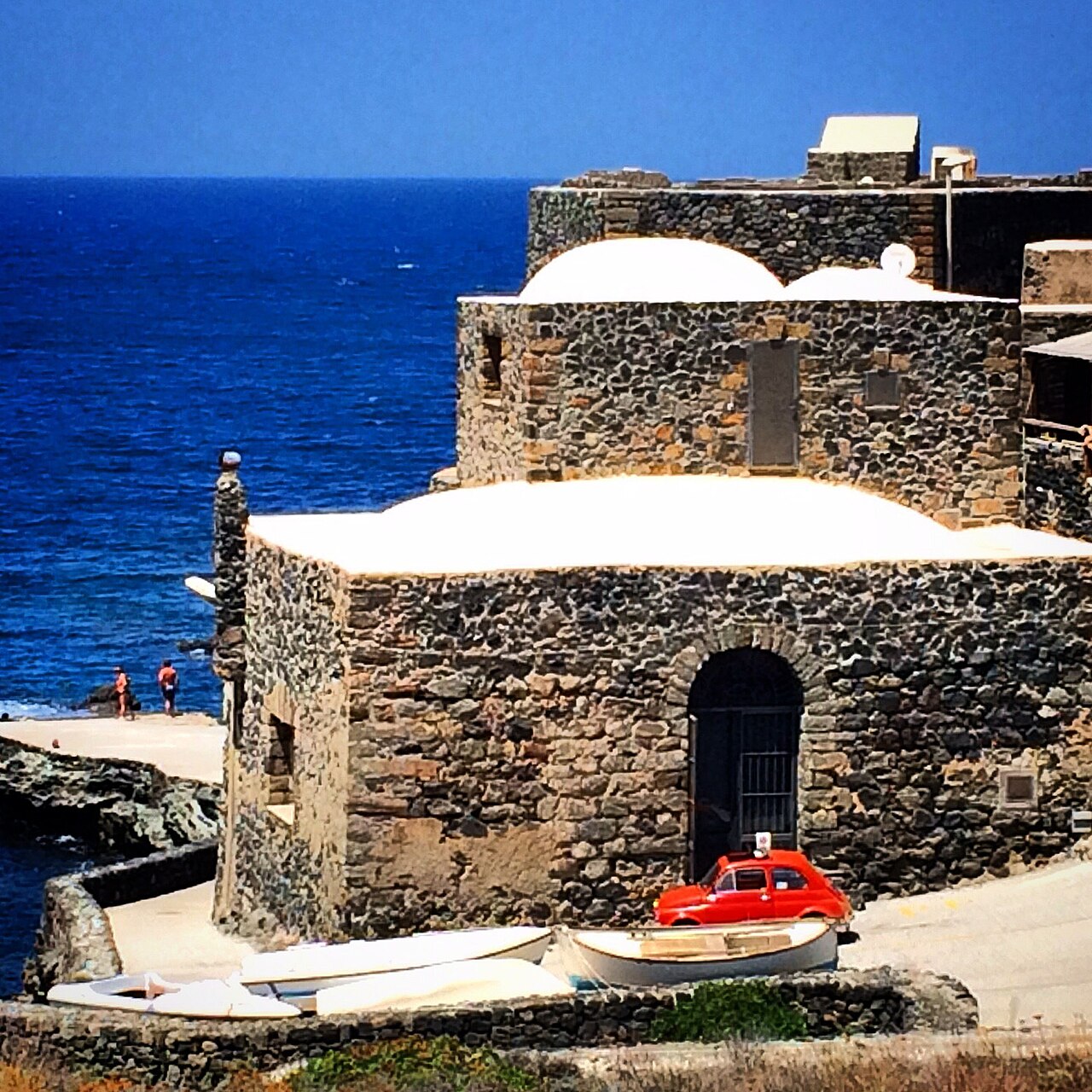
(Mainland France) When I was a kid, my parents decide to move to a big ancient house with thick stone walls with a lot of repairs, we talked a lot about these things. back then, in the 90s, stone walls were considered superior than average insulation, as it was mostly inexistant at the time.
Nowadays, it is much inferior and you really need to add insulation to be a bit efficient.
Yep, here 13-14°C is the temperature of all the caves (that are not high in the mountains, altitude is a factor) and incidentally the temperature considered ideal to keep red wine.
This can be used with heat wells: have a way to exchange deep heat, with circulating water for instance, and in winter you can pre-heat your home at 14°C before adding energy. It is heavy work though to bury these pipes, and the efficiency of heat pumps nowadays makes this a bit irrelevant, but it is a nice low-tech possibility.