It should evacuate it slowly through radiation and transfer to the air that will flow through it by convection.
Normally passive cooling like that can’t keep up with a typical modern desktop computer. But given how extremely heavy and large surface area it has, it might work. Provided that it is big enough and that the iron can conduct heat away from the source and spread it throughout its mass fast enough. Usually we use copper or aluminium for that for their better thermal conductivity.
Yes, but no. Iron is still a good conductor of heat. It is just slower than aluminum and copper, so it is a poor material for making small materially efficient heat sinks. But it is perfectly fine for making large heavy heat sinks.
The reason it is said iron retains heat in cooking is because it has a high thermal mass (this is mainly because cast iron is so dense and non-ductile(so it has to be made thicker to not break)). It takes a lot of energy transfer to cool down a heavy cast iron pan. Conversely, it takes a lot of energy transfer to heat up a heavy cast iron pan. As long as heat-in<heat-out it will work as a cooler.
Agreed, but regarding the second part I think there’s no way to tell, and I would expect real intelligence to be even heavier on resources until we change something fundamentally, like growing neurochips out of real neurons.


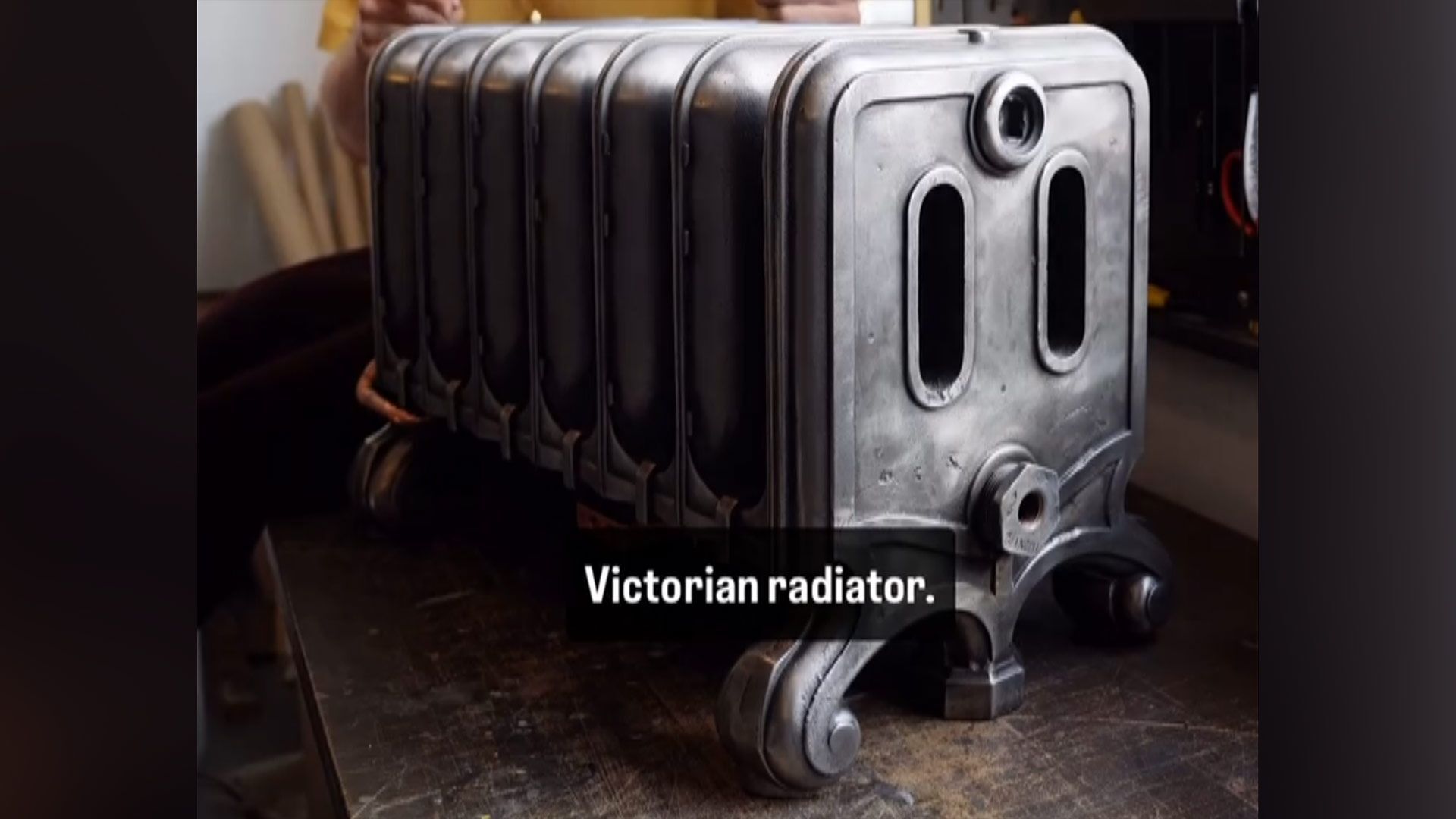
iron? wont that retain heat?
It should evacuate it slowly through radiation and transfer to the air that will flow through it by convection.
Normally passive cooling like that can’t keep up with a typical modern desktop computer. But given how extremely heavy and large surface area it has, it might work. Provided that it is big enough and that the iron can conduct heat away from the source and spread it throughout its mass fast enough. Usually we use copper or aluminium for that for their better thermal conductivity.
Yes, but no. Iron is still a good conductor of heat. It is just slower than aluminum and copper, so it is a poor material for making small materially efficient heat sinks. But it is perfectly fine for making large heavy heat sinks.
The reason it is said iron retains heat in cooking is because it has a high thermal mass (this is mainly because cast iron is so dense and non-ductile(so it has to be made thicker to not break)). It takes a lot of energy transfer to cool down a heavy cast iron pan. Conversely, it takes a lot of energy transfer to heat up a heavy cast iron pan. As long as heat-in<heat-out it will work as a cooler.
It isn’t as good as Al but that is still a massive heat sink.
Al is a money and power sink.
Never mind that it’s not even “I”, just “A”. Real AI won’t require nearly so much resources because it won’t be faking it.
Agreed, but regarding the second part I think there’s no way to tell, and I would expect real intelligence to be even heavier on resources until we change something fundamentally, like growing neurochips out of real neurons.