I would get headaches from watching PAL (50Hz) CRT TVs for a long time. 60Hz monitors were noticeably better, and 75 or more was good to endure all day. Modern screens don’t go blank between refreshes (except PWM-based AMOLED) so the refresh rate is mostly irrelevant unless you want to shave off a few milliseconds of latency for serious gaming (then it’s best to match the refresh, render FPS and video signal).
But as I’m walking down the street and move my eyes, I notice cheap lighting whose drivers don’t smooth the 100Hz ripple of rectified AC. Especially if they reach 0% brightness during the ripple. This applies to:
sodium and mercury vapor lights in street lamps
single-board (aka mains-voltage) LED modules in cheap, powerful reflectors
any LED bulb or fixture with a constant-current driver whose mains smoothing capacitor is too small or has failed due to heat (however, some such as EMOS and Solight spherical 18W ones refuse to turn on if the capacitor gets too bad, making for an easy repair)
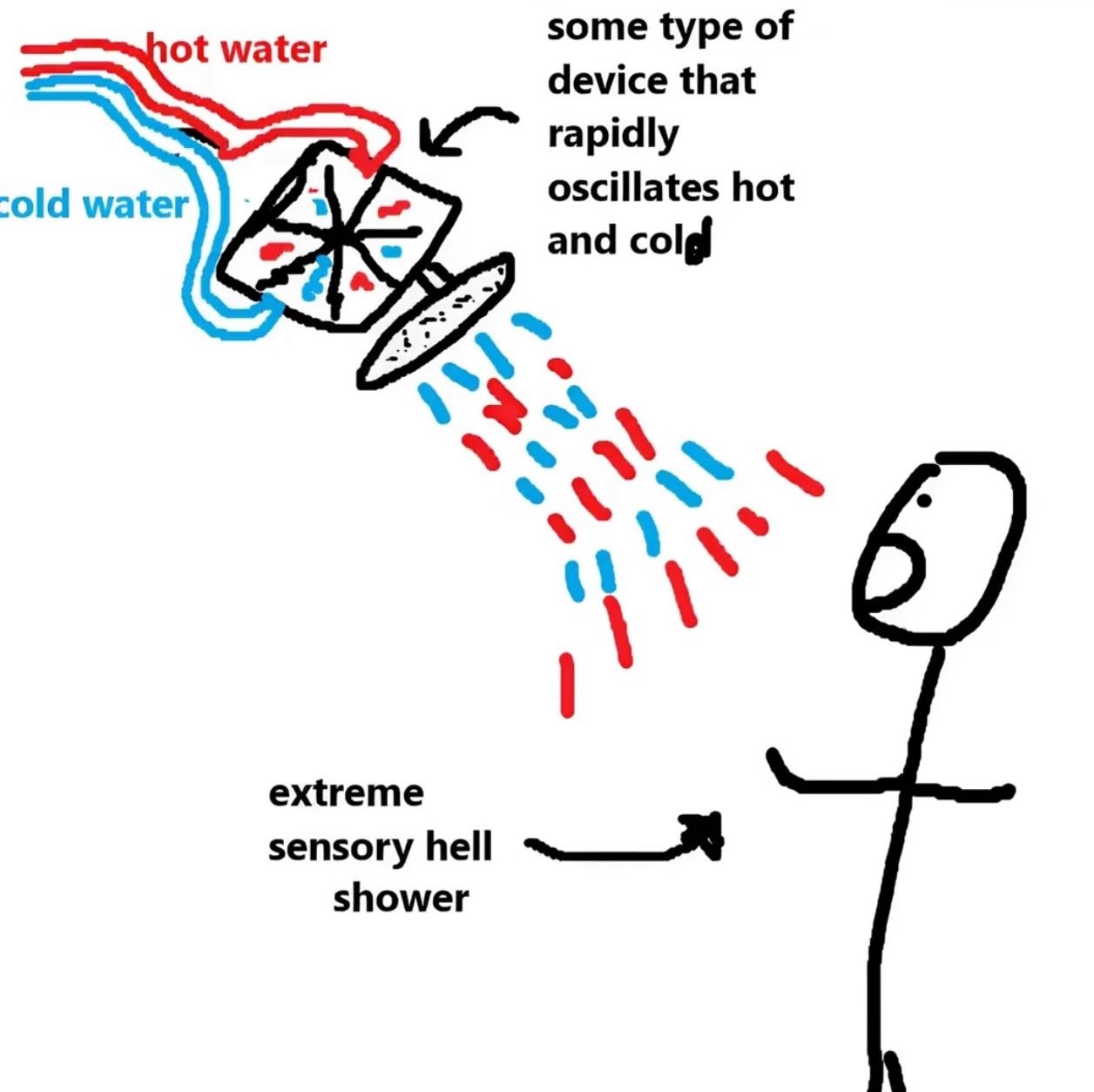
any dimmable light powered from DC (like 12V and 24V non-addressable LED strips with those cheap flat remotes, or multi-mode flashlights) whose manufacturer was too cheap for a constant-current driver (fair enough) but could have very easily set a higher PWM frequency YET DIDN’T and therefore deserve a PWM shower.
This is especially annoying with RGB ones because the hue changes during the cycle, creating off-color fringes or even “rainbows” when moving my eyes. I can’t believe some people use things like that in/on/around their battlestation: this would totally distract me as my eyes dashed around the monitor while gaming.
multiplexed displays, especially with low duty cycles (look up charlieplexing, chances are your powerbank or similar gadget uses that to minimize the pin count of its chip) - these are usually over 100 Hz though
So yeah, it’s not unhealthy, especially above 60 Hz. But it’s annoying for me to look around badly smoothed Christmas lights. And if they are of different phases (this is uncommon for Christmas lights (and even impossible in most American homes because they have 180° aka split-phase 240 V, not 120° 400 V) but always the case with multiplexed displays), I say a long rolling R to vibrate my face and see them wiggle.
When very drunk, I’ve seen the flicker of normally-functioning fluorescent lights and was theorizing whether my “nervous system was desynchronizing” or if it was nystagmus-related, or if there was even a difference between those two.
The ends of fluorescent tubes with traditional EM ballasts flicker at 50/60 Hz because the filaments take turns being the cathode and anode based on the current polarity of AC, which is perceptible in peripheral vision. And some long tubes have waves on their arcs, causing travelling ripples of bright spots. But without a more advanced ballast, there’s just the phosphor smoothing the 100/120 Hz ripple, which is not very effective (and usually, yellow phosphor lasts longer than blue, resulting in color banding in video) but that’s not normally perceptible.
I never thought alcohol would make the brain work faster though, thanks for sharing!


I would get headaches from watching PAL (50Hz) CRT TVs for a long time. 60Hz monitors were noticeably better, and 75 or more was good to endure all day. Modern screens don’t go blank between refreshes (except PWM-based AMOLED) so the refresh rate is mostly irrelevant unless you want to shave off a few milliseconds of latency for serious gaming (then it’s best to match the refresh, render FPS and video signal).
But as I’m walking down the street and move my eyes, I notice cheap lighting whose drivers don’t smooth the 100Hz ripple of rectified AC. Especially if they reach 0% brightness during the ripple. This applies to:
So yeah, it’s not unhealthy, especially above 60 Hz. But it’s annoying for me to look around badly smoothed Christmas lights. And if they are of different phases (this is uncommon for Christmas lights (and even impossible in most American homes because they have 180° aka split-phase 240 V, not 120° 400 V) but always the case with multiplexed displays), I say a long rolling R to vibrate my face and see them wiggle.
When very drunk, I’ve seen the flicker of normally-functioning fluorescent lights and was theorizing whether my “nervous system was desynchronizing” or if it was nystagmus-related, or if there was even a difference between those two.
The ends of fluorescent tubes with traditional EM ballasts flicker at 50/60 Hz because the filaments take turns being the cathode and anode based on the current polarity of AC, which is perceptible in peripheral vision. And some long tubes have waves on their arcs, causing travelling ripples of bright spots. But without a more advanced ballast, there’s just the phosphor smoothing the 100/120 Hz ripple, which is not very effective (and usually, yellow phosphor lasts longer than blue, resulting in color banding in video) but that’s not normally perceptible.
I never thought alcohol would make the brain work faster though, thanks for sharing!