

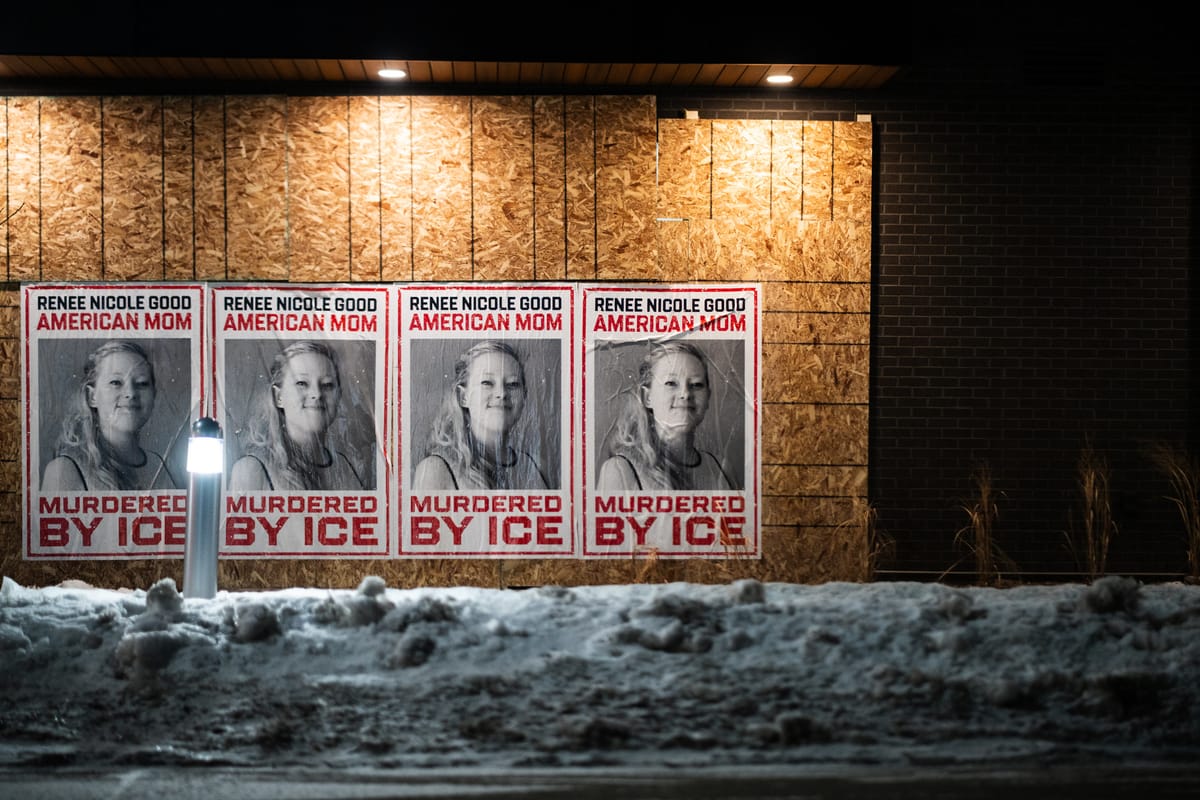
In a post-Kirkified world, this impulse to bastardize Good’s image after her death emerged immediately on mainstream social media, boosted by influential right-wing influencers, and mutated alongside the rapid spread of misinformation about her. It’s an unfortunate tangling that’s likely to be repeated, as political and state-mandated violence becomes more normalized. Even before widespread generative AI and Kirk’s death, the “Trayvoning” trend, which mocked the death of Trayvon Martin, a teenager who was shot and killed in 2012 by George Zimmerman, generated outrage and clicks. It involved people posting photos of themselves in Martin’s death pose, wearing a black hoodie, with his dropped convenience store snacks splayed on the ground.
AI makes all of this easier and faster, omitting the slow, arduous process of Photoshop artistry. And in the scramble to make the fastest, most viral meme, people latch onto and spread misinformation in their rush to denigrate the dead for engagement. We can see this in how an image misidentified as Good became the main source material for numerous “Reneeified” memes. In one popular example, shared by right-wing author and journalist Matt Forney, an incorrect image of a woman who isn’t Good is seen as a fountain. It’s based on an AI “Kirkified” meme from September 2025, in which Kirk’s fatal neck wound is seen as the structure’s water source.