This article really reads like an ad for this GigaCopper product rather than actually giving much real info.
They claim that the way the house was wited necessitates this, but don’t really go into details about how the house was wired or how this product overcomes that.
I did something similar to my own house several year ago- without buying a product like this. I had existing Cat5 cable that was originally installed for phone service. I cut the lines near the box from the phone company and terminated them with RJ-45 connectors then put my router there and plugged them in. Replaced the face plates with RJ-45 ones too. I didn’t have any daisy chained lines, but even if I did a simple and cheap switch would solve that problem AND give you some extra ports you probably need anyways.
Maybe there’s some other esoteric way of wiring phones that was used. I’ve heard of cases where they split out wires from the Cat5 (phones can get by with just 2 wires, but Cat5 has 4 pairs). Even then I’ve only heard of that being used for stuff like more than one phone in the same room, or having phones on either side of the same wall.
I’m sure there are some scenarios where this product is necessary but the article doesn’t really explain why it was in this case.
I did something similar to my own house several year ago- without buying a product like this. I had existing Cat5 cable that was originally installed for phone service.
We did this in about 92 with regular phone (cat3) wiring to get a link into a back bedroom. It was clean, but not fast by today’s standards. Fast for back then, though. The only thing we needed to wire was some rj11-to-rj45 connectors with corrected pins, and a two-port wall jack rewired for the crossover at the demarcation.


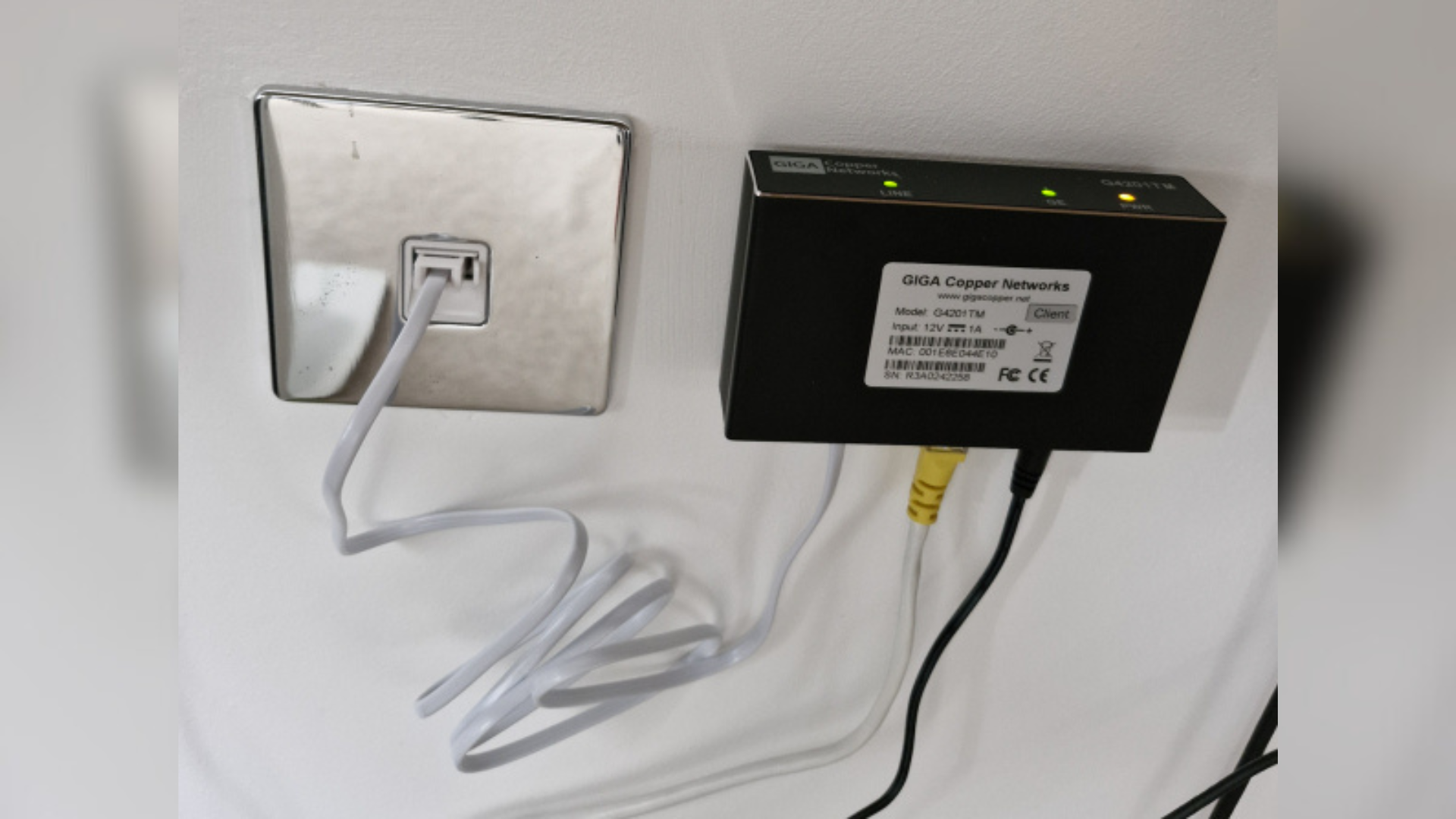
This article really reads like an ad for this GigaCopper product rather than actually giving much real info.
They claim that the way the house was wited necessitates this, but don’t really go into details about how the house was wired or how this product overcomes that.
I did something similar to my own house several year ago- without buying a product like this. I had existing Cat5 cable that was originally installed for phone service. I cut the lines near the box from the phone company and terminated them with RJ-45 connectors then put my router there and plugged them in. Replaced the face plates with RJ-45 ones too. I didn’t have any daisy chained lines, but even if I did a simple and cheap switch would solve that problem AND give you some extra ports you probably need anyways.
Maybe there’s some other esoteric way of wiring phones that was used. I’ve heard of cases where they split out wires from the Cat5 (phones can get by with just 2 wires, but Cat5 has 4 pairs). Even then I’ve only heard of that being used for stuff like more than one phone in the same room, or having phones on either side of the same wall.
I’m sure there are some scenarios where this product is necessary but the article doesn’t really explain why it was in this case.
We did this in about 92 with regular phone (cat3) wiring to get a link into a back bedroom. It was clean, but not fast by today’s standards. Fast for back then, though. The only thing we needed to wire was some rj11-to-rj45 connectors with corrected pins, and a two-port wall jack rewired for the crossover at the demarcation.