

cross-posted from: https://beehaw.org/post/24650125
Because nothing says “fun” quite like having to restore a RAID that just saw 140TB fail.
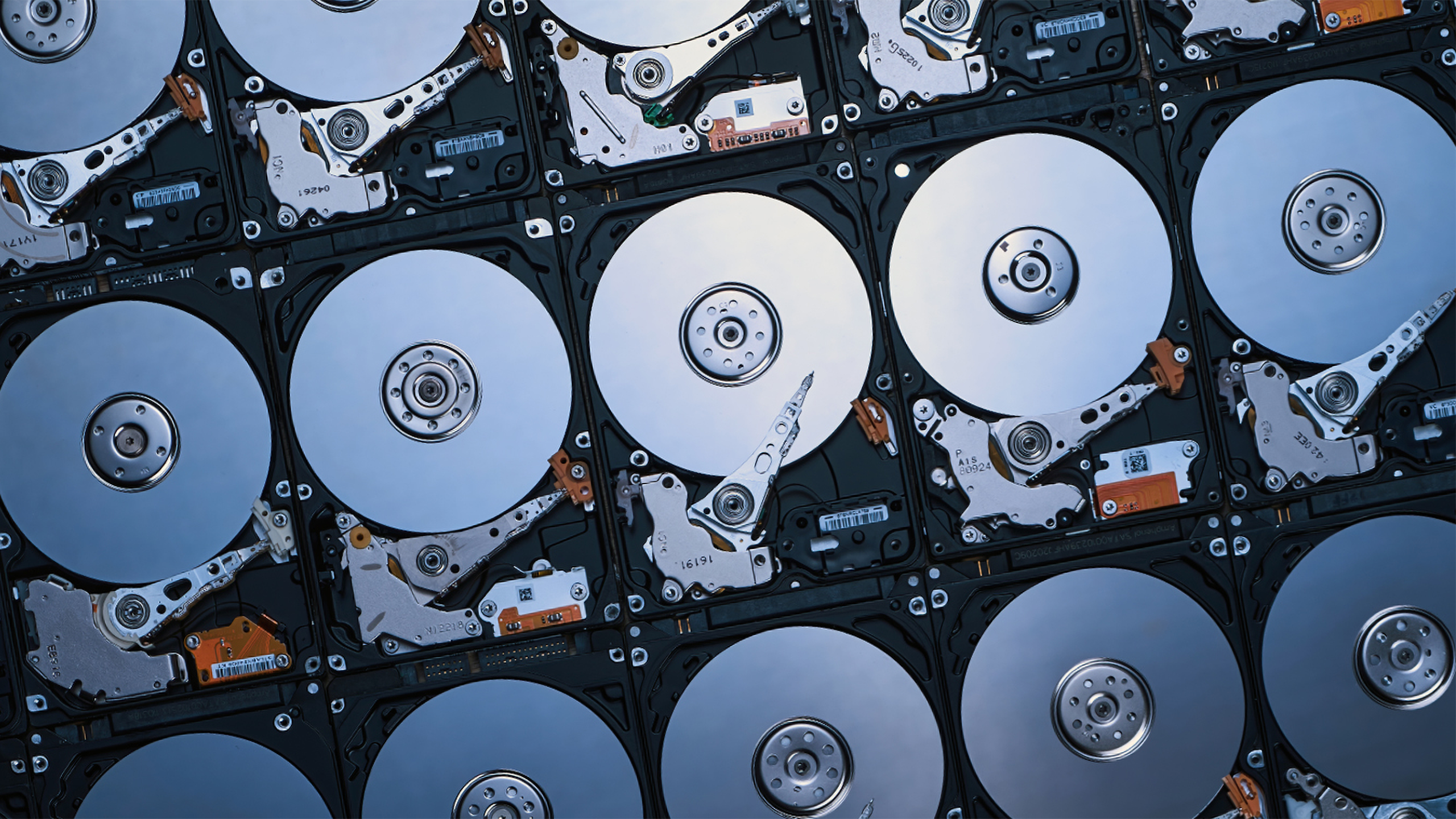
Western Digital this week outlined its near-term and mid-term plans to increase hard drive capacities to around 60TB and beyond with optimizations that significantly increase HDD performance for the AI and cloud era. In addition, the company outlined its longer-term vision for hard disk drives’ evolution that includes a new laser technology for heat-assisted magnetic recording (HAMR), new platters with higher areal density, and HDD assemblies with up to 14 platters. As a result, WD will be able to offer drives beyond 140 TB in the 2030s.
Western Digital plans to volume produce its inaugural commercial hard drives featuring HAMR technology next year, with capacities rising from 40TB (CMR) or 44TB (SMR) in late 2026, with production ramping in 2027. These drives will use the company’s proven 11-platter platform with high-density media as well as HAMR heads with edge-emitting lasers that heat iron-platinum alloy (FePt) on top of platters to its Curie temperature — the point at which its magnetic properties change — and reducing its magnetic coercivity before writing data.
I was thinking the same. I would hate to toast a 140 TB drive. I think I’d just sit right down and cry. I’ll stick with my 10 TB drives.
This is not meant for human beings. A creature that needs over 140 TB of storage in a single device can definitely afford to run them in some distributed redundancy scheme with hot swaps and just shred failed units. We know they’re not worried about being wasteful.
Rebuild time is the big problem with this in a RAID Array. The interface is too slow and you risk losing more drives in the array before the rebuild completes.
Realistically, is that a factor for a Microsoft-sized company, though? I’d be shocked if they only had a single layer of redundancy. Whatever they store is probably replicated between high-availability hosts and datacenters several times, to the point where losing an entire RAID array (or whatever media redundancy scheme they use) is just a small inconvenience.
Fairly significant factor when building really large systems. If we do the math, there ends up being some relationships between
Basically, for a given risk acceptance and total system size there is usually a sweet spot for disk sizes.
Say you want 16TB of usable space, and you want to be able to lose 2 drives from your array (fairly common requirement in small systems), then these are some options:
The more drives you have, the better recovery speed you get and the less usable space you lose to replication. You also get more usable performance with more drives. Additionally, smaller drives are usually cheaper per TB (down to a limit).
This means that 140TB drives become interesting if you are building large storage systems (probably at least a few PB), with low performance requirements (archives), but there we already have tape robots dominating.
The other interesting use case is huge systems, large number of petabytes, up into exabytes. More modern schemes for redundancy and caching mitigate some of the issues described above, but they are usually onlu relevant when building really large systems.
tl;dr: arrays of 6-8 drives at 4-12TB is probably the sweet spot for most data hoarders.
I’d imagine they are using ceph or similar.
You have disk level protection for servers. Server level protection for racks. Rack level protection for locations. Location level protection for datacenters. Probably datacenter level protections for geographic regions.
It’s fucking wild when you get to that scale.
True, but that’s going to really be pushing your network links just to recover. Realistically, something like ZFS or a RAID-6 with extra hot spares would help reduce the risks, but it’s still a non trivial amount of time. Not to mention the impact to normal usage during that time period.
Network? Nah, the bottleneck is always going to be the drive itself. Storage networks might pass absurd numbers of Gbps, but ideally you’d be resilvering from a drive on the same backplane, and SAS-4 tops out at 24 Gbps, but there’s no way you’re going to hit that write speed on a single drive. The fastest retail drives don’t do more than ~2 Gbps. Even the Seagate Mach.2 only does around twice that due to having two head actuators.
100%. But the post i was responding to was talking about recovering a failed array from other copies, not locally.
This is for like, Smaug but if he hoarded classic anime and the entirety of Steam or something. Lol
Yeah I’m running 16s and that’s pushing it imo