- cross-posted to:
- technology@piefed.social
- technology@lemmy.world
- cross-posted to:
- technology@piefed.social
- technology@lemmy.world
You must log in or register to comment.
Just in time for RAM, SSD, and HDD prices to skyrocket and make personal computers unaffordable.
I guess if you can afford one now, at least you’ll be able to repair it.
When buying a laptop in 2026, you really need to consider how easy it’s going to be to keep it running with parts you’ve scavenged from other road-warriors.
Old off-lease ThinkPads from corporate fleets as always.
deleted by creator
You could buy an anemic one now, and then upgrade the RAM & storage once prices come down.
prices come down.

They will come down after the AI bubble inevitably pops. Maybe not back to where they were before but they will come back down.
Once the bubble pops, assuming it doesn’t take economies with it, none of the product will be compatible with consumer devices. Manufacturing will have to be reoriented back to consumer products, then those parts will need to be manufactured, then the rush of people trying to get the parts will have to pass. THEN maybe prices will come down.
I suspect the datacenters will just pivot and repurposed to rent consumers “cloud compute” and cloud subscription services and continue to fuck the entire consumer market for years to come.
But then again I now hate everything so maybe I’m just pessimistic.
none of the product will be compatible with consumer devices.
…why would it need to be?
I suspect the datacenters will just pivot and repurposed to rent consumers “cloud compute” and cloud subscription services and continue to fuck the entire consumer market for years to come.
I mean they already have been and will continue to be, yes.
…why would it need to be?
It doesn’t need to, but if it were that would be the only reason I’d say prices might drop anytime soon. A glut of used consumer-compatible parts would push prices down. That or maybe if the rising Chinese suppliers manage to ramp up and find a way to enter the western market.
The price is currently high and is rising because resources and manufacturing capacity are limited. Those who own the capacity have found that providing for a small number of companies that are flush with cash and will throw money around just to ensure their competitors don’t gain an advantage is far more lucrative than providing for consumers or businesses that integrate parts into consumer devices. The entire market segment is shifting away from consumer and focusing on datacenter hardware.
The longer this goes on, the further the major players will be from being able to pivot back to consumer products… and there are only major players in the memory and NAND industry. You can’t just form a new memory or NAND company and start manufacturing this stuff. It takes years and a lot of investment to build the facilities and the kind of capacity we’re used to.
Edit: I’ve also seen a number of non-tech folks excited for cheap used datacenter memory and gpus to flood the market after the bubble pops, as if the parts were at all compatible with consumer devices. I wanted to make sure that was not part of your calculation.
but if it were that would be the only reason I’d say prices might drop anytime soon
…how about cratering demand? Basically the opposite of what we have now? That’s not enough?
Oh stop it. Plenty of used computers are perfectly fine. There isn’t a single thing you need done that can’t be done with a 15 year old PC. You don’t need “agentic AI” to generate horse slop in your home, you don’t need terabytes of pirated content you can’t watch anyway, you don’t need video games.
We live in the golden era of thrifting PCs and disconnecting from the slop and nonsense of modern computing.
My apologies! I didn’t realize you were the arbiter of what I do and don’t need. I feel so relieved now that I can just ignore all of the demands on my life and just hand over such authority to some opinionated jackass I met on lemmy.
deleted by creator
Nor batteries externally removable like used to be.
This would be a major sacrifice to form factor and would be strictly detrimental to 99.999% of users. Regarding benefits outside repairability, basically nobody in 2026 is going to think to carry around a second, fully-charged laptop battery. Regarding repairability, you might have to replace the battery once during the laptop’s lifespan, and the procedure is extremely straightforward.
With an external battery, you end up with a laptop that’s not only substantially thicker, but which – because it’s stuck with a large battery either on the back or on the bottom – likely has worse airflow.
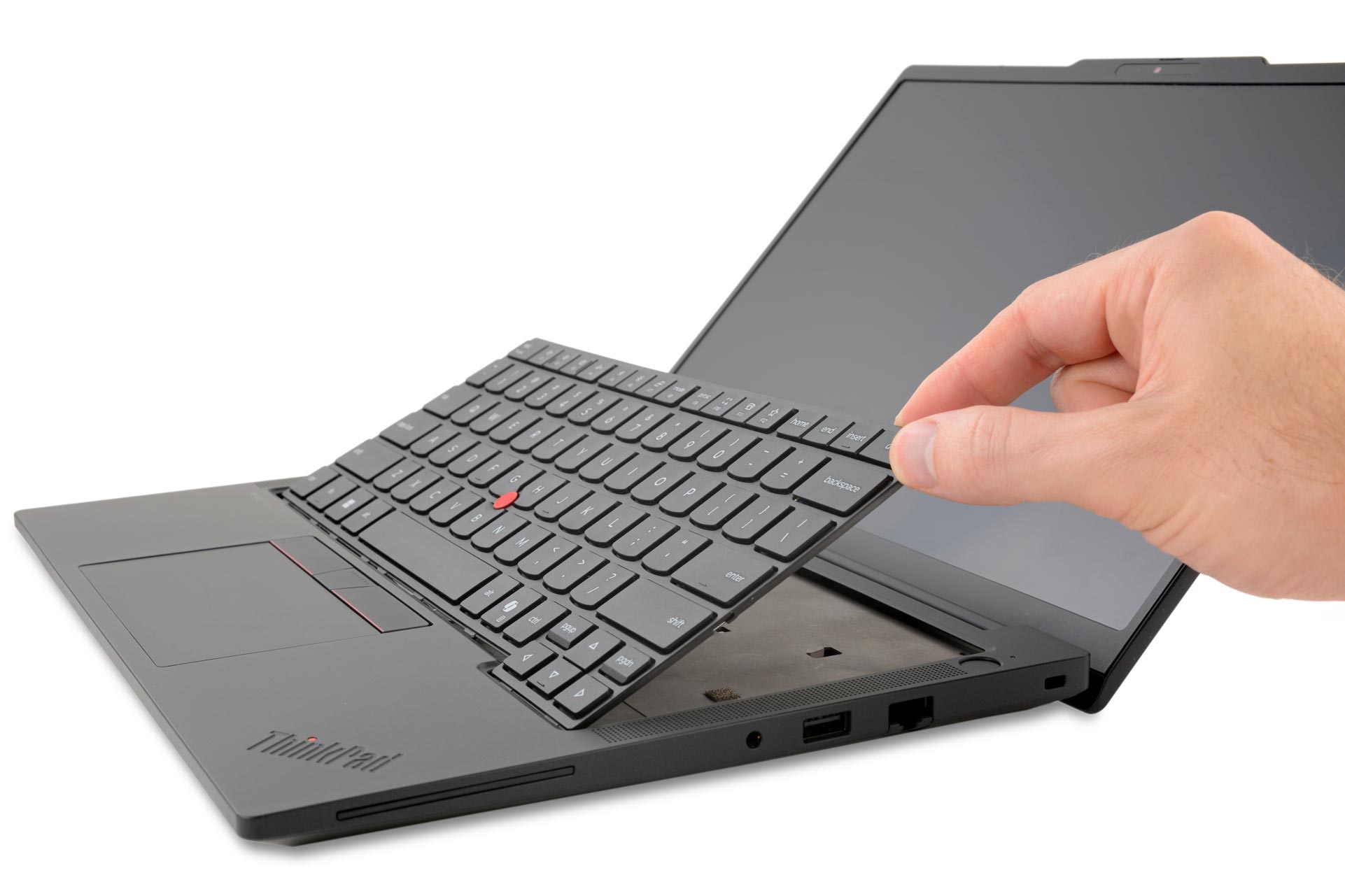
Notably for this repair, there are seven captive Phillips-head screws (seen plenty of hexalobular etc.), you can just use your fingers to remove the base cover (seen plenty where you need/want a pry tool), removing the base cover already removes the battery’s screw(s), and most importantly, you just pinch to disconnect instead of lifting a fragile connector off the board. Swapping the replacement external battery once you have it is probably about 30 seconds; this is about five minutes – practically no difference accounting for how infrequently it’ll need to be done. There’s an exception for people with a physical disability like Parkinson’s, but if you can phone a friend, the process is straightforward enough for basically anyone else to do it on your behalf.
Edit: On a whim, I decided to look to Framework for a comparison. It’s worse there for battery replacement.
- You have to first undo five captive hexalobular screws on the bottom.
- Then you have to lift the magnetic top panel, being sure not to damage the ribbon cable while you disconnect it.
- You have to pull out the connector for the battery using a small, black flap.
- Then you unscrew three more captive hexalobular screws.
As far as I can tell, the T14 is the easiest battery replacement you’re going to find being sold today. If you’re able-bodied enough to use a screwdriver and it not being external is somehow still a serious concern for repairability, I don’t know what to tell you.
And yet still not as serviceable/durable as older ThinkPads.
Uh, have you ever replaced the motherboard on older ThinkPads? You have to tear the entire machine apart and it’s a 30+ minute job. Around the time they removed the water spouts they switched to the bottom opening instead of top opening and replacing the main board went down to a 10 minute job. Even just replacing the thermal paste on some older machines required full disassembly.
They may not have water spouts that let you pour a gallon of water through the keyboard, but they do have plenty of plastic shields that prevent water from going further into the computer. If you knock over your soda your computer will probably be fine.
So they made it easier to kill the motherboard and also easier to replace it.
Any you’re trying to paint that as a good thing instead of greed?
They don’t even have water spouts in the keyboard/chassis
…hhhhhwat
I fix lenovos on a pretty regular basis and still see water spouts on some models (assuming you’re referring to the plastic coverings over components), primarily the T-series
I mean I never had any issues with ThinkPad repairs ever, I think you still get parts for like real dinosaurs.
hell ya for being able to buy these used as office surplus in 5 or so years
First time I’ve seen CAMM memory in a real product. Pretty cool, but not sure if I prefer it to traditional DIMM slots though.
But the removable ports are a fucking godsend. So sick of a broken port making an entire motherboard unusable.
Honestly the only thing more I can ask for is for the battery to be on the outside of the case (like old school laptops) so you can replace it without opening it which not everyone is comfortable with doing. Otherwise this is really good. The only thing stopping me from buying this laptop is the fact that my current 6 year old Lenovo still works perfectly after I replaced the battery (honestly Thinkpads have always been pretty repairable, this is going above and beyond).
I have the previous gen T14, and I had to replace the entire motherboard because the Wi-Fi chip is soldered. It’s still soldered on this one I see.
Huh, I feel better about my recent Latitude 5450 purchase then, damn. I didn’t realize we were soldering on WiFi chips now too. (In addition to ram soldering thats been going on for a while now)
I once bought a HP Elitebook on the basis of a very good repairability score from iFixit. It was a shit laptop but the big problem was that as it started breaking I found it impossible to find parts for it. It doesn’t matter if it’s held together by torx screws with no glue if you can’t actually get any parts.
That’s surprising but so least Lenovo sells parts directly so you can skip eBay (though probably more expensive ofc)
Occasionally it’s cheaper to buy a second Lenovo laptop on eBay than it is to buy a replacement part…also from eBay. Found this out with mine recently: mainboard was bad, equivalent board was $500, identical laptop with damaged chassis was $300. Bought the second laptop and swapped the mainboard into the good chassis, but now I also have spare a WiFi card, DIMM, keyboard, touchpad, battery, and screen. I’d call that a win.
I had an HP laptop at work where the keyboard went haywire. I saw a replacement keyboard online and thought “hey, why not, I’ll just replace it”. I didn’t even look up any videos or anything because I’d never think there would be a problem. So after needing to disassemble everything to get to the front plate, I was very happy to find out that the keyboard is riveted to it (about 20 or so rivets). I looked up a video and they suggested drilling out every rivet and then replacing them. I had never been so frustrated with a piece of technology before. Luckily, a can of contact cleaner solved the problem
Did you go to their parts website? They sell parts for even their shitty(er) laptops.
Sure the parts I needed weren’t available. Which is probably the problem with these iFixit scores. They should really wait for the laptop to be a few years old and then look and see if the stuff that’s actually breaking on the laptop are actually repairable with the parts available.
For this particular laptop even though it had a really good iFixit score, I couldn’t even buy a new touchpoint nub (or whatever HP calls it). The old one completely disintegrated but the nub was different than other HP laptops, so the ones I tried to buy (even for other elitebooks) wouldn’t fit. The nub the laptop needed simply wasn’t available anywhere.
deleted by creator
They say in the article that they (Lenovo) see the 10/10 as a baseline so they are going to improve.
deleted by creator
deleted by creator