
Consumer PCs have long abandoned the multi-GHz race for core count and NPU inflation.
Those were awazing times.
Within 5 years I basically went from a 16 MHZ CPU to a 1,4 GHz CPU.And going from minimal graphics card to a 3D-accelerated one was equally mind-boggling.
Progress after that era essentially felt like a technological standstill.
Definitely. The prices were much higher (accounting for inflation) though, and to make it worse with everything moving so fast it all was obsolete so much quicker.
Today you can ride a high end gaming PC 6-8 years. Imagine taking a Win98/EarlyXP machine to Windows 7. Nah.
But we lost the excitement with the longevity.
with everything moving so fast it all was obsolete so much quicker.
*looking confused in Linux user since 1998* ;-)
My first real PC from 1996 was a Pentium 100 which admittedly wasn’t cheap (~1800€ today including inflation), but had an easy and low-price upgrade path to a K6-2 400 with decent amount of RAM which was later being used by my father until 2010.
1996…used until 2010
It’s super cool to use stuff like that. What did he use it for, word processing? I don’t think the average consumer of 2010 would’ve found it adequate though. That was the height of flash-filled websites and multimedia.
My dad did mostly some word processing and web browsing on his favorite bunch of sites.
Processing power was less a problem in the end than the very limited memory (192 MB), even with the super-small-footprint Linux Distro.
You have to remember, 2008/2009 also was the time of the EEE-PCs, that weren’t that much more powerful compute-wise, but already had at least 1GB of memory…
its a shame we will never have another era of wonder like that again.
a flash in the pan that lead to a magical explosion of technological development and progress, with all kinds of wild and crazy ideas being thrown at the wall to see what stuck, while things like computational power screamed ahead at supersonic speeds.
I even remember first heat spreaders and later fans on top of them on Pentiums, probably.
My Pentium 100 already had a (small) CPU fan, friend still had a 386 which only had a passive heat sink.
Yep, that’s what I remember, could phrase it better I suppose.
“awazing times”
Watch your W’s and M’s.
Handwriting recognition doing things :-)
Take it as indication l am not Al.
I’m taking it as indication that you’re Wario.
You must confuse me with someone, I am Wultiplexer!
Or that AIs are now making forced errors to seem more real. 🤔
You are absolutely right!
Let’s give you a better version:… thinking …
I recall going from a Tandy 1000… To a Packard Bell(Pentium 60 with 16(upgraded from 4) MB RAM and like 1 GB HDD (also upgrade).
Then a Celeron 500 I pieced together cheap(used parts) in middle school. Which didn’t last long! I recall building it. Don’t recall what happened to it!
I blame that Athlon… I had the XP 1600+(palomino), which was 1.4 Ghz. On an Abit motherboard. First time getting DDR memory. That one lasted quite a few years. Until dual cores, etc etc.
SSDs have been the most exciting thing since then. I really don’t need many cores. It’s pretty insane how much difference SSDs can make even on 10-15 year old hardware.
Almost the same as for me!
1996 I was still using an Atari ST (with 8, not 16 MHz…), end of 96 I got a Pentium 100 with 16 MB, switched to a Pentium 200 MMX and later to an overclocked K6-2@400 MHz in the same socket.
End of 2001 I got the same Athlon XP 1600+ as you.
Motherboard supported both SD- and DDR-RAM, so could reuse my old 192 MB :-)Agree with the SSDs, only significant perceived performance boost during the last 25 years (although multicore is in some special parallelized usecases also significant, e.g. when building software).
I’ve upgraded from OCed Celeron 300A to this, made my first homemade water block (thx grandpa for all the help <3) & custom loop for it.
Good times.
Just 3 years before a Pentium 333 was top of the line.
Ugh. Those old charcoal colored clamshell Dell cases. Don’t miss that crap.
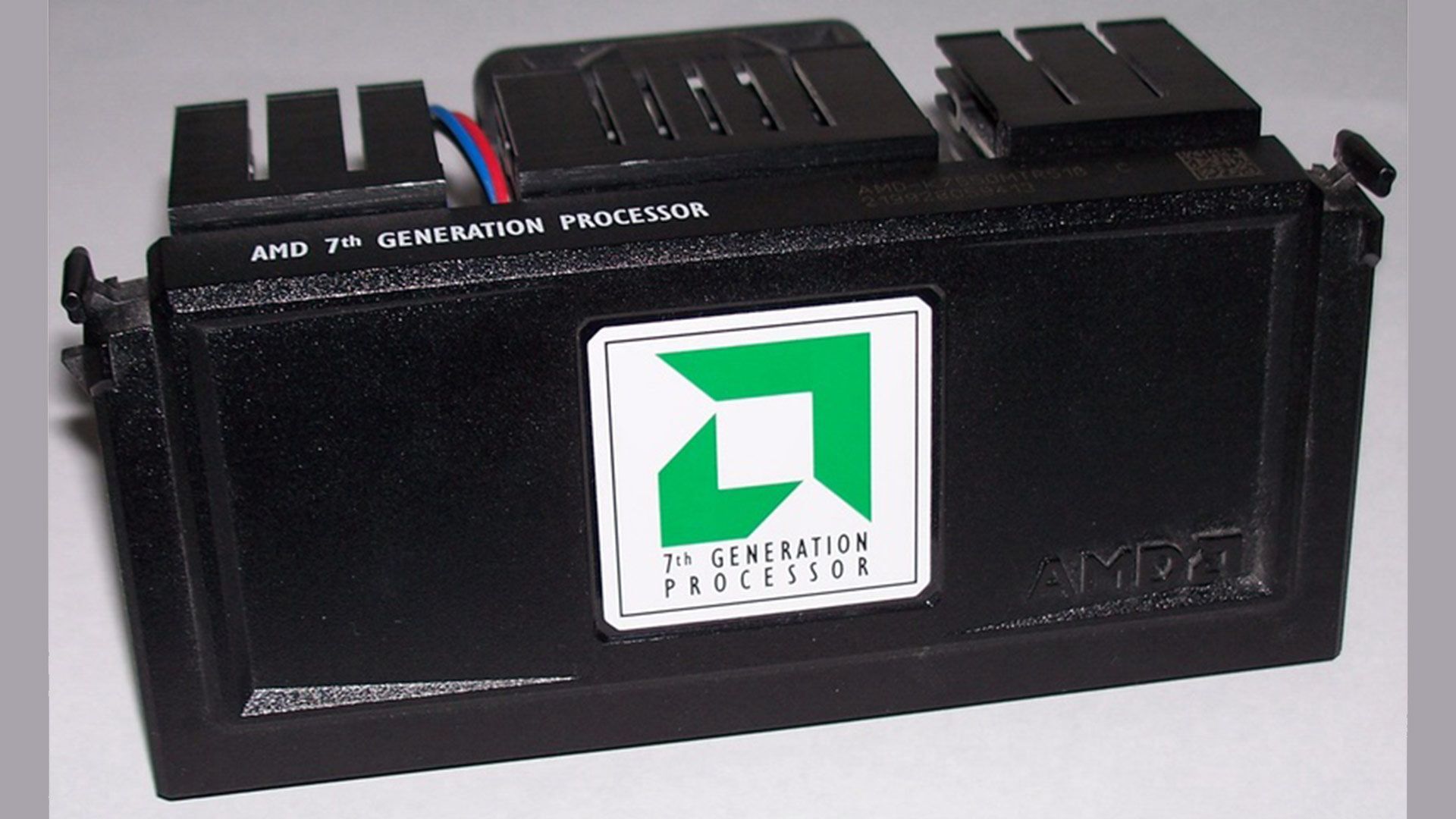
I had one of those Slot A Athlons. It was great but it was hot, oh yes
Isnt it that at some point the GHz just aren’t useful anymore or rather not physically possible. I think they abandoned it for a good reason.
I think there are two parts to this. There are factors beyond clock rate; clock rate alone doesn’t give a full picture. Going from say 166 MHz to 1 GHz brings radical performance improvements without too many drawbacks, once you go above 3-4 GHz, the marginal increase in clock rates becomes increasingly expensive in terms of heat management.
EDIT: Didn’t realize there was difference between mHz and MHz.
Watch out for your prefixes, 166 mHz would be one operation every 6 seconds.
I don’t think there ever has been a CPU that slow ;-)(small letter “g” doesn’t exist as a prefix, but could be easily confused as the unit gram-Hertz)
I once made an incredibly limited cpu on paper, basically had the whole cpu in logic gate on a piece of paper. Tried to run the most basic programm on it by hand and i can assure you thet it was much slower than 166mhz XD
Haha )
You get rate limited by cache. The literal physical distance between cache(3) (tiny ram(s) in the processor) and processor can’t be zero. So those signals must travel over a distance at the speed of conduction. Having multiple processors allows tasks to be done simultaneously, effectively multiplying processing speed.
But more speed is particularly useful with bad/legacy software(single thread). SolidWorks is a good example.