

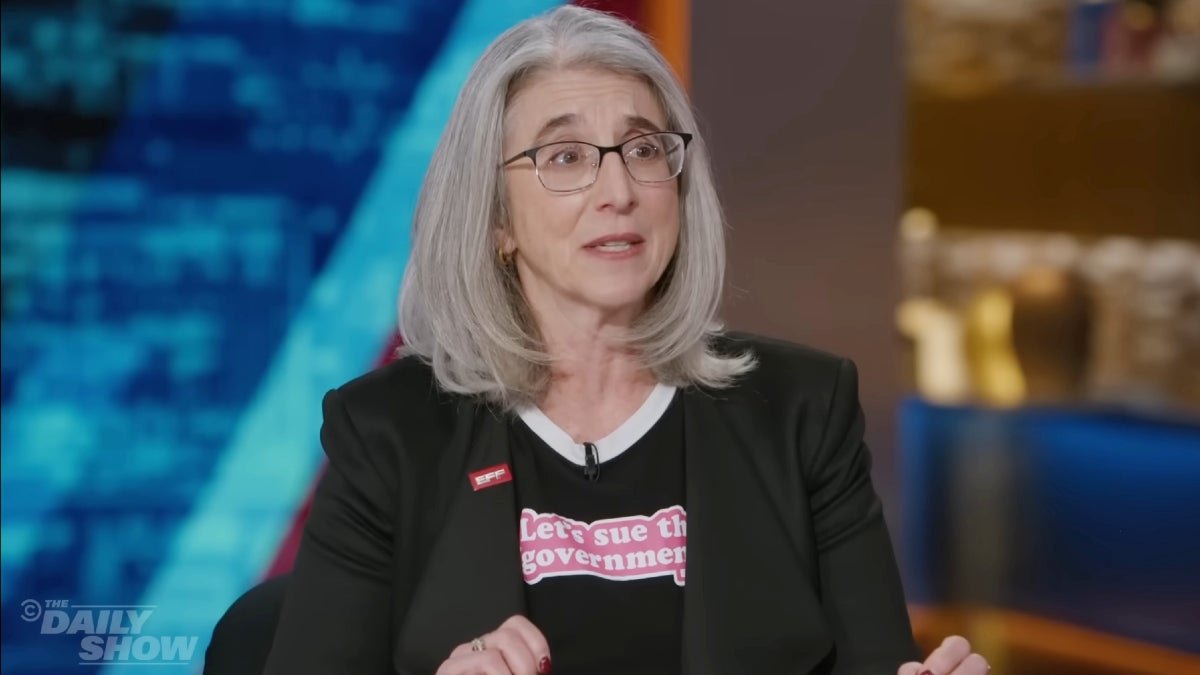
I suggest watching the video, https://m.youtube.com/watch?v=QkC1aK7jfLo but the article has an OK summary.
Also a Mastodon shout-out in the video.
I suggest watching the video, https://m.youtube.com/watch?v=QkC1aK7jfLo but the article has an OK summary.
Also a Mastodon shout-out in the video.
The point of the critique is that individuals have no power to make Twitter less important, or at least, not the audience of this show. Who she should be bringing that critique to is someone like Jon Stewart himself, not to Jon Stewart’s audience. And actually, Jon is a great example of someone who did exactly this, with his Crossfire video.
Jon didn’t go on Crossfire and tell Crossfire’s audience to stop engaging with the content. He went on Crossfire and told the people in power to stop. Broadly, if you are ever doing something where you are shifting responsibility from those in power, to those out of power, you are doing the job of the oppressor.
Literally, Lemmy does not matter whatsoever to reddit, and likewise, Mastodon does not matter whatsoever to Twitter. Those things do not matter. Moving to lemmy or mastadon might make you feel better, but it has made not one iota of difference to those platforms.
Regulation, changes from those in positions of power, those can make a meaningful difference. But its utterly disingenuous to put things that require systemic reform as “collective reform”. Its utterly bonkers, and shields those in power, who can make different decisions, from needing to do so.
I think it would be a mistake to paint those two courses of action as mutually exclusive categories.
Yes, governments need to regulate businesses and industry if we want to have a meaningful impact on climate change. Blaming the consumer and putting all the impetus for change on them is misguided at best and deliberate obfuscation in many cases. But that doesn’t mean consumers should feel no responsibility at all. If two companies offer different options, we should as consumers choose to support the company with the more ethical business practices.
Likewise, governments need to regulate big tech companies. But users switching to the fediverse are choosing to be part of the solution rather than the problem, and the more it grows the more it looks like a viable alternative for others who don’t care about the ethics of the platforms they’re supporting. And when FOSS platforms reach a critical mass, it will eat into the corporations’ bottom lines.
Governments need to hold corporations accountable and meaningfully regulate them, but effectively giving consumers license to do whatever they want even if that means supporting corporate tech, and pretending it ultimately doesn’t matter, is kind of defeatist. It’s like saying “Why should the workers go on strike? That’s the union’s job.”
I think we can manage to advance on both fronts at the same time if we really try, but if for a time we can only advance on one front, then we should hold the other on as best we can while we advance on the one we can. Cause the time may come when we have to hold that front, but are able to advance on the other.
Individuals can make accounts on the fediverse meaning they no longer exclusively rely on meta/twitter meaning meta/twitter becomes less important.
I get that a lot of people have all their family on facebook/twitter or whatever, or business page etc. but just make an account on mastodon too, now the fediverse becomes a more attractive place for everyone else.
The “Gee thanks I’m cured” theory of social change.
But individuals do have power to make Twitter less important. Well, maybe not Twitter, just because it’s 95% bots, but social media companies are usually only valuable if they have users. There are people who depend on Twitter, Facebook or Instagram for their business but 99% of users absolutely do not need to use those services. The analogy with recycling and climate fall flat because it takes many orders of magnitude more effort to avoid most/all plastics/packaging/fossil fuels than it does to just avoid IG/FB/X. The biggest barriers to getting rid of these shit companies is 1) too many people don’t realize how awful they are 2) too many people just don’t give a shit and 3) too many people are addicted to the dopamine hits from these trash sites.
Seriously, just don’t use them. When you’re presented with something that tries to force you to use them, say “sorry, I don’t use Meta products, do you have another way for me to get [the pop-up dates, the invite, etc]”