

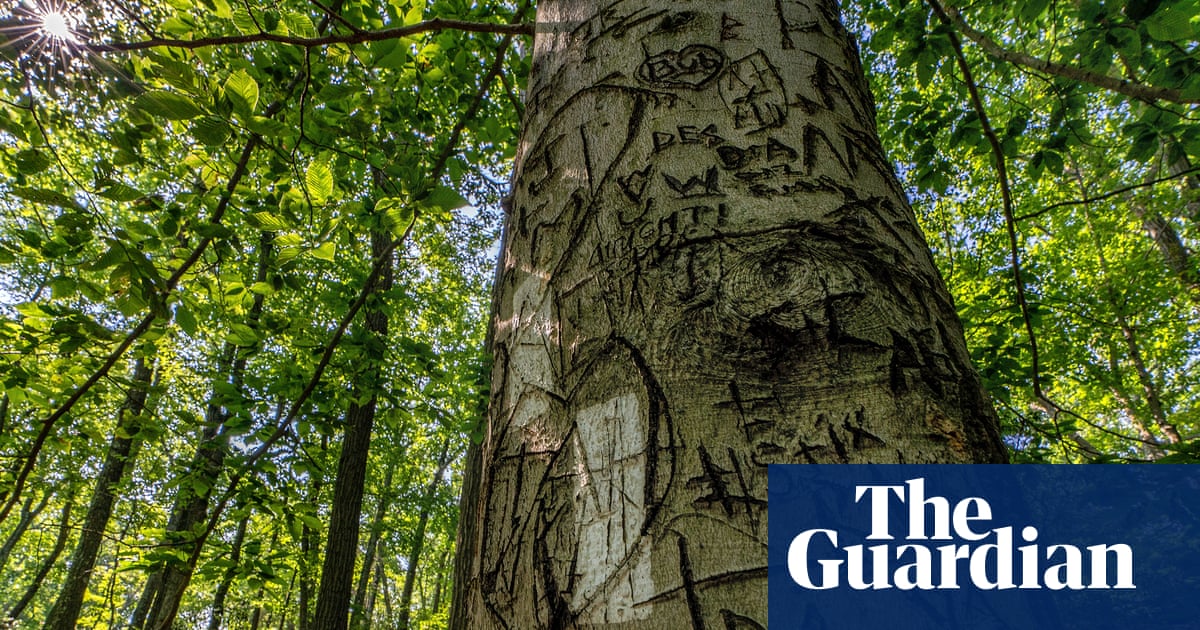
Outdoor recreation often slips into what I call an achievement-based relationship with nature. I’ve been guilty of it myself. Whether it’s “bagging peaks”, racing to finish the AT, or stamping the land with machines and monuments, the focus shifts from ecology to ego.
Being obsessed with Peak Bagging is not Solarpunk.
Nature is not your personal obstacle to challenge yourself against, it is a shared place of discovery you trample when you only see it as a place to endlessly, exhaustingly conquer.
Some of this seems quite strange to me. I hope you don’t mind me asking a bit about it / challenging some of it
Regarding the balance of physical exertion vs awareness of the natural world around you: with the exception of seriously gruelling climbs, surely nothing stops you from climbing a mountain or otherwise going on a tougher hike at the same slower pace that you describe enjoying? I certainly don’t hurry up mountains when I climb them. I take detours if I see something interesting, stop to watch wildlife if I see it, break for lunch when I find a nice viewpoint (and take all litter with me, of course). It does indeed take me a lot longer, but there’s nothing wrong with that, I just have to account for it when I’m planning. What you’re describing seems to me more like going for a run through a local forest than going for a pleasant walk through it. Sure, there’s no way to do Everest casually, but Everest is not what most people who consider hiking to be a hobby they partake in are usually doing
I don’t think that videos and photos can meaningfully replace the experience of being somewhere yourself. I’m sure you would not consider photos of your local forest to be a replacement for your walk in that forest. It is absolutely worthwhile and important to consider the impacts of going somewhere, and if someone cannot go to a place without vandalising it then they probably should not go, but that doesn’t invalidate the power of a personal experience
With all due respect, there is. You’re not advocating for walks around industrial estates or by the side of a busy road or just doing laps of your own home. You’re right that there’s a great deal of good to see in places that are less obviously notable, and also that many people miss out on that good by failing to consider it, but I don’t think we do anyone any favours by pretending that there’s no such thing as a more interesting landscape
I can’t speak for SuperSquirrel, but I certainly advocate for that. I found a killdeer nest in the back of an industrial park not too long ago. Got a pic, and then talked to the property owners about putting up some flags so it didn’t get destroyed. Good times.
Not only am I advocating for that but I am saying this is the only actual path to connecting with nature. The western/american idea of “going to the frontier” we insist on reliving over and over again as a fantasy never brings us any closer to nature even though we surround ourselves with the aesthetic experience of it, rather most of the time it distances us from nature even as we trample all over it.
I wouldn’t say “only”, but it’s certainly the most accessible for the largest amount of people.
Nice work! I do agree that there’s a great deal of interesting stuff in less visually-appealling places, but I wouldn’t want to tell someone that there’s no value in bearing witness to natural beauty on a grander scale than what can be found behind a warehouse
I wouldn’t say there’s “no value” in seeing natural beauty. I just don’t think that visiting tourist areas is more valuable than finding the beauty that surrounds you on a daily basis.
Some of this is probably because I don’t have the money to travel, and it was really bumming me out that I couldn’t go anywhere “valuable”. It took a shift in mentality to realize that there is also value in the stuff right outside my front door, like these pixie cups.
There’s a reasonable distintion to be drawn between tourist areas and areas that are just a bit wilder / grander / less-accessible, surely? The two categories can overlap, sure, but they’re not the same thing
Yeah, I think that the distinction can be drawn. However, when I read OP’s article, I understood it to be about the more tourist-y areas.
Ahh, I see where you’re coming from. I was meaning to reply more to OP’s comments on the in-the-moment experiences of hiking as opposed to the article talking about the ramifications that the hobby can have outside of that
See, I also interpreted OPs comments as being about more popular attractions, haha.
They spoke quite highly of the more wild nature preserve they visit and bemoaned the capitalist urge to take a beautiful and wild area, and turn it into a profitible tourist attraction that pulls the kind of hiker that doesn’t really respect nature.
Somewhat besides the point of the conversation, that’s a really nice photo. I nornally feel like my cheap phone’s camera is good enough with a bit of creative usage, but stuff like that lovely narrow band in focus really shows what it can’t do
Thanks! This was taken with my Note 8, which is a ten year old phone. It’s got dual cameras though, one for landscape and one for close-up shots.
Well actually your body does, as we begin to enter into a cardio workout state our brain releases drugs making us feel good and encouraging us to exercise more and push harder. The entire time someone is hiking/running there brain is saying in their head “go go go go go go”. This is a very obvious aspect of 99.99% of hikers to me? Why do you think most hiking groups have so much trouble waiting up for slower people? It is because we always eventually succumb to that headspace of pushing harder and getting higher, even if the pace of someone slower is justtttt a bit slower than us we will walk at the speed our body demands even if it creates social conflicts.
When your body is working hard your awareness plummets, this is just an aspect of being a human being. You can balance it while hiking, but almost no one does because it is mentally exhausting to keep holding your feet back from tackling the exhausting challenge you know is ahead… and even if you do you simply will never be able to be anywhere as aware of the nature around you than if you had taken a slow walk instead.
Well yes I agree but given the obsession of car culture in most places in the world, this is actually MUCH harder to do than people assume. The mass migration of everyone using personal ICE vehicles to “connect with the outdoors” is, when seen holistically, a process of strangling natural spaces not honoring them.
Yes I am, explore the landscape you are surrounded by absolutely.
That’s not an absolute in any way, though. If it was, you’d have the same issue on any walk and you’d just wind up sprinting through the forest or local park or whatever as fast as you can because that too is a physical challenge
I don’t know what it’s like where you are, but that’s definitely not my experience. Across both my personal friends and family and random people I bump into while out and about hiking myself, there’s a broad mix of the kind of people you describe and people who are doing it in a much more relaxed and casual manner. Why do hiking groups push harder? I don’t know, I only ever go either by myself or with friends and family. To borrow the term instrumental play, such instrumentalisation is common across many hobbies. If you start playing a videogame then the online lobbies might be sweaty as hell, but that doesn’t stop you playing it casually so long as the game gives you plenty of stuff to do and engage with that doesn’t require the online lobby. A lot of people will be playing that game much less instrumentally, but they may be much less visible. I would argue that a mountain or similar does, in this analogy, generally have plenty to engage with other than physically testing yourself