

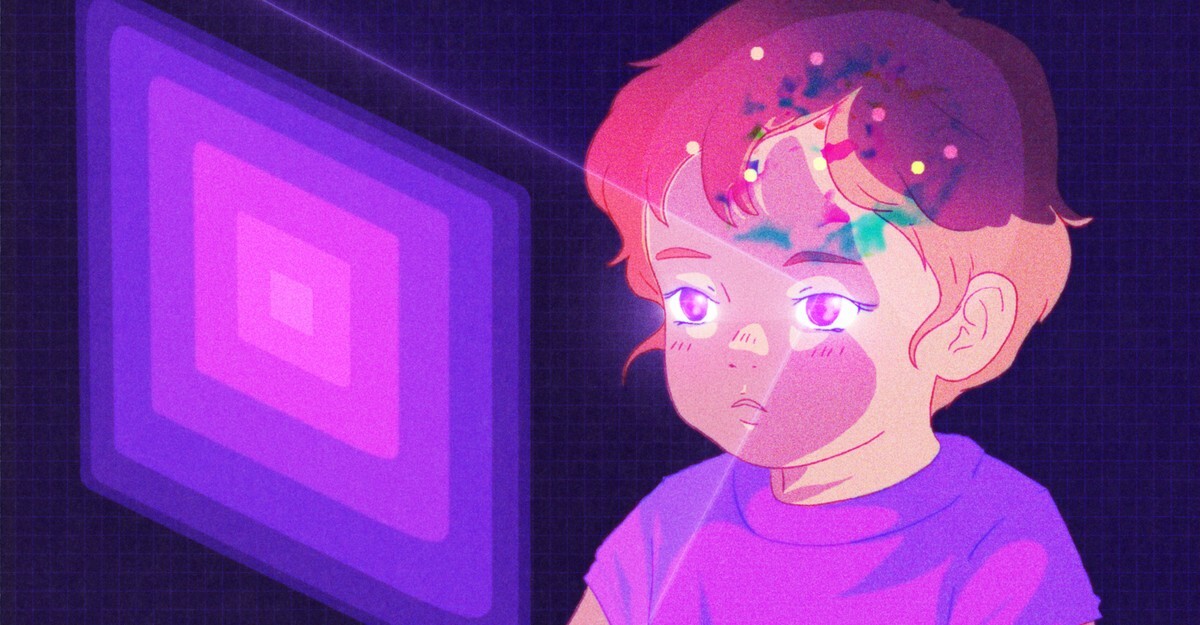
The human brain has evolved to learn from specific instructors. When a child hears a gentle spoken word or a soothing lullaby from another person, when their cry is responded to, their brain lights up. Nurturing interactions, or what child-development experts call “serve and return” exchanges, help shape and strengthen the 1 million new neural connections taking place in a child’s brain every single second. Every time a child cries or serves up a bid for attention and receives a caregiver’s response, that back-and-forth helps build the circuits underlying their communication, learning, and emotional well-being. No other input, not even Johann Pachelbel’s Canon in D performed by the Berlin Philharmonic, is capable of activating the neural circuitry the way human interaction does.
Until now. Generative AI may be the first technology in history sophisticated enough to mimic the social interactions that build our brains. Research has demonstrated that infants as young as six months old respond physiologically to interactions with humanoid robots in ways that mirror their response to live humans; another, small-scale experimental study recently found that, after young children interacted with a chatbot, most of them for the first time, they asserted that the AI could perceive the world with humanlike senses and understand and learn as people do.
This technology is already showing up in children’s lives. The talking plush robot that purports to be a child’s best friend is obviously driven by AI, but many parents may not realize that their Amazon Echo recently received a software update that converts the Alexa voice assistant into a full-blown chatbot, using the same fundamental tech that fuels ChatGPT; toddlers asking for information about animals or a joke or a bedtime story may quickly find themselves in the habit of engaging socially with a large language model.
As a pediatric surgeon, researcher, and technologist who has spent decades studying how children’s brains develop, I am concerned about these technologies rolling out and being used by children in the home and at school before we have a full sense of their safety and what they do to young minds. And I am compelled to point out what we do know about human development: that human connection, in all of its imperfection, is foundational to brain development. It can’t be engineered or recovered later.
And you’re wrong. Let the guy’s kid have the chance of basking in the sun and develop muscles. His/her intellect will develop from interacting with the real world to cultivate intuition. How out of touch with reality you have to be to suggest electronic games before real human interactive games in his/her development? How they say nowadays, touch some fucking grass.
In most countries by the age of 6 or 7 most kids would be in school and sat in a chair for most of their waking hours. What sort of Captain Fantastic utopia with with sunshine, rainbows and developing muscles do you imagine contemporary childhood to be?
If by the age of 15, as the original comment suggested, a kid has never touched a screen they would be ostracised by their classmates and most likely have lasting trauma.
Of course it’s nice to spend weekends and holidays outside, but a blanket ban on screentime is something else completely.
Then again, parents are entitled to their own opinions and as I’ve said, it’s none of my business what these opinions are.
I reckon it is less of my choice than I would like. His peers and friends will have a development, and it is beneficial to follow social norms and standards. That being said i still prefer that kids only get ipads and smartphones at around 15.