idk about that, the regularly cited reason Na-ion batteries are mainly being looked at for grid storage rather than vehicle applications is their bad Wh/l and W/kg numbers compared to Li-ion. the table in the Na-ion article seems to use “1000W/kg” without a source, and it shows lithium as being about a third of that even though the Li-ion article quotes figures up to 10kW/kg.
seems the editors of the two articles aren’t cross-checking eachother.
Anyway, most of the lithium-ion chemistry variations drop off relatively fast in capacity over repeated charge cycles (the exception being LiFePo4). If the sodium-ion chemistry is better that way, and drops off less in the cold, it’s still worth exploring for vehicle use even if the energy density is a little lower.


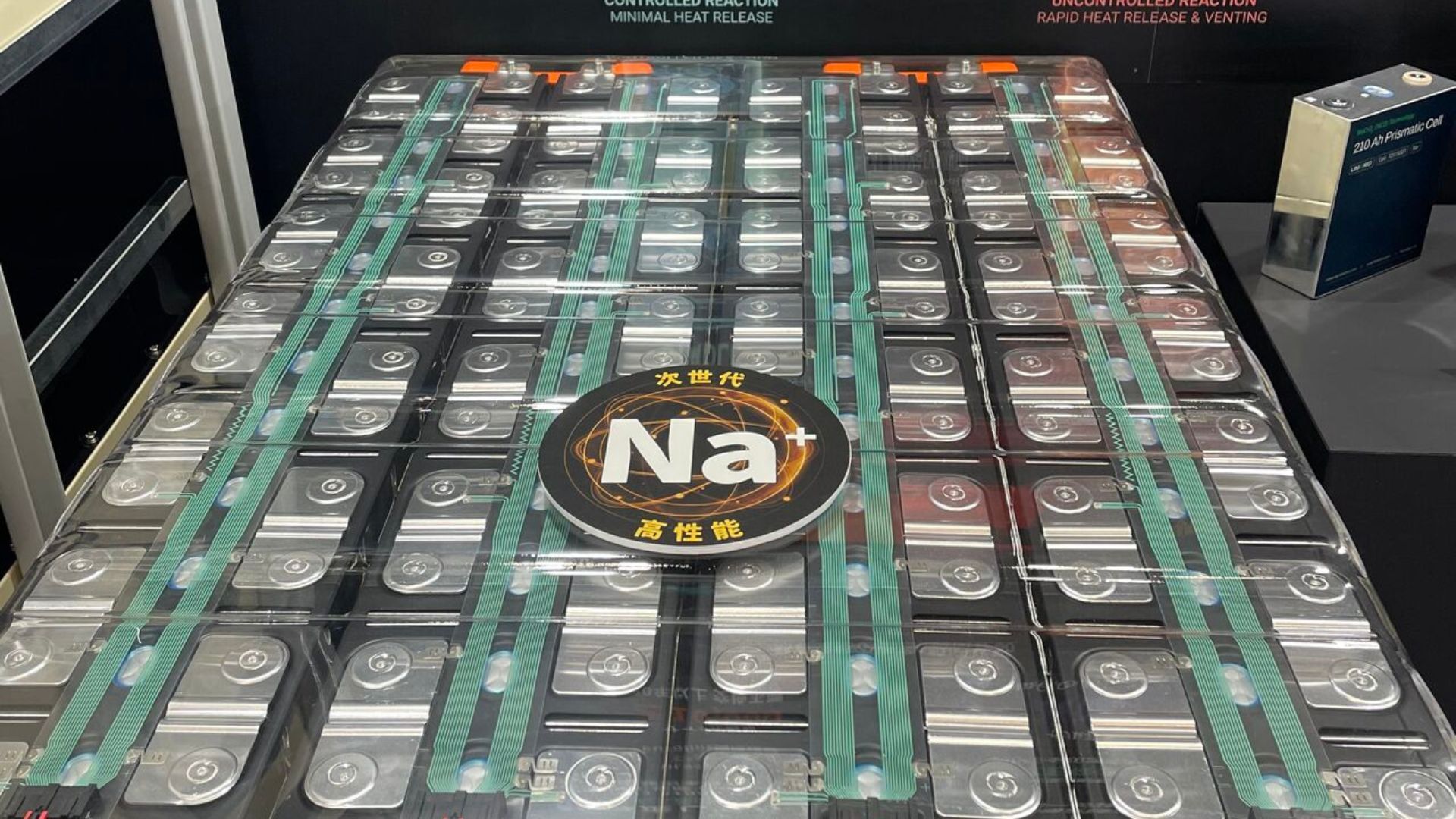
Any info about energy density?
I think they are testing Unigrid battery model 72173207 (terrible name). That is their 210Ah NCO prismatic cells.
I found this spec sheet. No definitive metrics, but someone else could do the napkin math.
CATL’s that went into mass prod sometime ago are 175Wh/kg.
According to Wikipedia:
Looks like power to weight it much higher, while energy per volume and energy per mass is comparable to existing lithium ion batteries.
idk about that, the regularly cited reason Na-ion batteries are mainly being looked at for grid storage rather than vehicle applications is their bad Wh/l and W/kg numbers compared to Li-ion. the table in the Na-ion article seems to use “1000W/kg” without a source, and it shows lithium as being about a third of that even though the Li-ion article quotes figures up to 10kW/kg.
seems the editors of the two articles aren’t cross-checking eachother.
Googling says 175 whr/kg for catls sodium car battery that’s already in production cars vs 270 whr/kg for Tesla’s lithium.
The “1000W/kg” figure appears to be from Wikipedia, which claims https://www.idtechex.com/en/research-article/sodium-ion-batteries-will-diversify-the-energy-storage-industry/30405 as a source. Wikipedia has the information in a table flagged as “Needs update”.
Anyway, most of the lithium-ion chemistry variations drop off relatively fast in capacity over repeated charge cycles (the exception being LiFePo4). If the sodium-ion chemistry is better that way, and drops off less in the cold, it’s still worth exploring for vehicle use even if the energy density is a little lower.