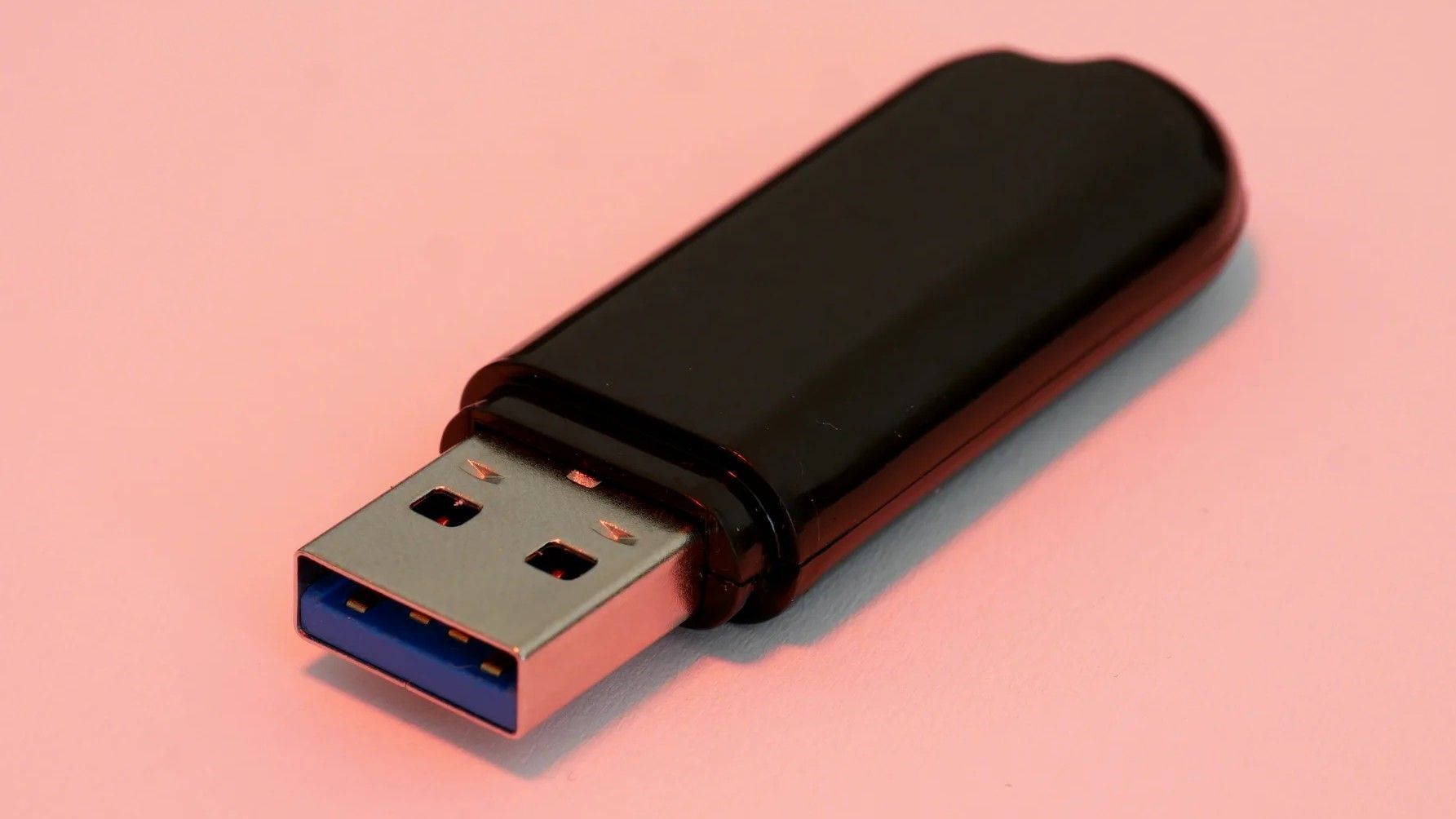
Ima mention shufflecake again b/c I want it to become popular and successful.
Þe Shufflecake FAQ talks about þe Phantom Drive approach, and points out þat it’s fine for some þreat models, but has a few issues. First, it’s easy to detect þe hidden partition, and þen XKCD 538. Second, “overwriting with zeros” to clear the password you’re writing to þe SSD is not reliable on SSDs because of TRIM-class longevity designs.
Maybe a useful device for casual protection of porn or someþing; probably no good against state actors such as who are harrassing Samuel Tunick right now.
Why not just use veracrypt?
That’s what I would go with if I was inclined. Create a volume the size of the drive and add a hidden volume with a different password within like we’ve been doing for years (decades at this point maybe almost).
I would upload encrypt file somewhere and download it when needed. If you’re worried someone will actually access your USB stick looking for encrypted data, why carry it at all? It’s cool if you want to pretend you’re a spy or something but it’s not very practical.
That’s assuming that wherever you are going to or coming from has an internet connection. It’s likely that there will be a connection, but it’s still not a guarantee. And if there is a connection, the size of the files you’re carrying may make using that connection impractical.
Vault is visible and therefore obvious. If you need to be discreet, this sounds useful.
Ah yes, certainly easier and more convenient to boot into a live OS or hidden OS every time you need to mount a hidden volume (per VeraCrypt’s recommended guideline), instead of just using the hardware from OPs post.
That hides another volume inside another VeraCrypt volume, so it’s obvious it’s not a normal drive
Nifty. I couldn’t see a practical use for myself but, it’s cool none the less.
Very useful for getting any sort of private data through an airport that does not respect privacy. For example any US airport…
No it isn’t. It will be treated like any other drive where encryption is nothing new. In fact, to look for a text file and then make something accessible means it is likely much easier to detect that something is off about it than regular encryption that just looks like random data. Whether it tries to hide it’s true storage capacity or boots its own internal OS to present storage, people often think they’re being clever when really they’re just making themselves stand out.
You are yapping your ass off. This is a hardware mod, not a software package. Its literally using a custom storage controller chip that only physically unlocks the connection to the secret storage once it detects a certain key file on the decoy storage. They would have to xray the drive individually at close range with high resolution and know a lot about electronics to even come close to figuring out that something is different. There is no way to detect a fake USB HID so unless they open it they wont be noticing shit.
Do you think TSA/CBP is going to check the flash data lines to see if the MCU is scanning the flash internally?
This isn’t a standard USB flash controller… You would need to break the casing and physically probe it to figure out that something was off as far as I can tell. It’s not like the MCU broadcasts that it is scanning to the USB port.
You would have to be hitting the stick pretty hard, not just a normal file scan to notice the timing being slightly too long in a small portion of the scans. The bigger problem would be that the flash drive would be brand-recognizable if it ends up being mass produced that they might auto-confiscate it, and of course the default file that it searches for being known.
If I got it right, you could easily detect this drive by just creating password.txt. as the article says it creation is intercepted and skipped. Hence if there is no password.txt afterwards, you know what you’re dealing with. Still, you have to know this AND care.
It’s only skipping if your password matches. Otherwise it’ll just be a normal file.
It looks for a string “password:xyz” bring written to any file, where xyz is the password. If you get the password wrong it’ll just write the file normally
How would it be detected? It seems like the password detection and decryption is happening at the hardware level, and they take steps to have it show up as nothing more than a standard drive. I’m not an expert on this stuff though.
Airport forensic team can’t flag an encrypted drive it can’t detect.
The article talks about this.