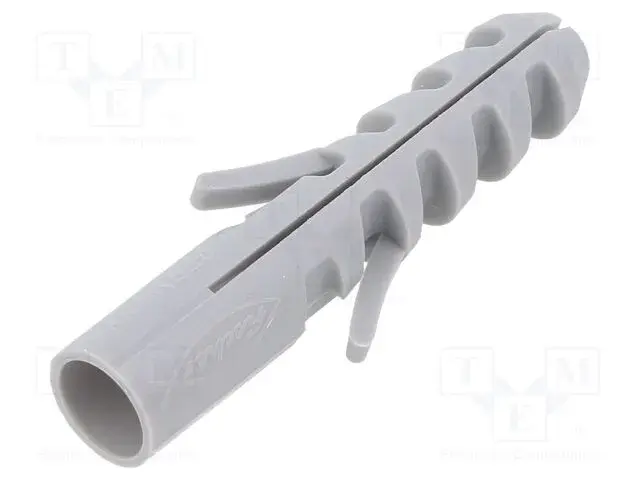
I used a 10mm masonry bit to drill for a 10mm plastic anchor like that pictured. The anchor spins freely in the hole, which I think is expected. I thought I read somewhere that the screw size should be 2mm less than the anchor. Thus 8mm for a 10mm ø anchor. But an 8mm screw is fat enough to rub sides of the anchor as it is inserted because I suppose the anchor is only 1mm thick at the opening. The guy at the shop confirmed that 8mm is too big. He said a 6mm screw matches and sold me those. After installing and loading, the anchor started to pull out.
Do I need a 7mm ø screw? Odd sizes get decreasingly common above 5mm. Yet 10mm sleeves are very common… so it’s not adding up.
I would like to have a reliable PDF chart of bore,anchor, and screw sizes – in metric. It seems there are plenty of such charts for Imperial/English units, like these:
- http://nfaspace.com/services/Forms_files/Anchor Classification Guide.pdf
- https://anchors.dewalt.com/anchors/_documents/uploads/DWANF_ICDWANCHSG_r01.pdf?1659150839
I’m not sure what a “#10” screw or anchor is (sometimes also written as “№10”). Does that refer to the metric size despite being in an imperial system?
(update)
The brick is rendered over with ~10mm plaster. The anchor is flush with the wall so about 10mm of the anchor is wasted. I think the anchor needs to be pushed in to be flush with the brick. But that’s a struggle. I think the proper approach is to screw in the screw just a couple rotations and then to hammer on the screw. But the anchor is either too big for the hole or something. The screw drives in but the anchor does not go with it. I think I will try softening the anchor with a heat gun and then try to push it in deeper. Or maybe I need a fatter screw just to drive the anchor in more.
The problem is worsened by the fact that as I screw, the anchor is coming out by about 5mm. So it’s even shallower than when I start screwing.
(update 2)
Now I see why I cannot get the anchor to be flush with the brick: I only drilled the hole deep enough for the anchor to be flush with the plaster layer.
So one theory is that I need to drill 10mm deeper so the anchor can be flush with the brick not the (useless) plaster. OTOH, the collar of the ancher seems a bit useless anyway for about 10mm.
deeper hole, longer anchor (and longer screws) to take into account the ~10mm of plaster. If the brick is also soft your drill bit may be making a larger diameter hole than intended - careful drilling will be needed.
The anchor should be tight and need to be hammered in until the lip is flush with the surface.
Unless you are mounting like a single paper plate, I would throw it out and get something that looks like this:

That looks like it’s for a hollow wall. The middle looks like it’s meant to bend to a huge diameter. If that were inside a brick hole, wouldn’t it just make around 1mm of contact at the point where it bends?
You are right; my mistake! I meant to suggest a wedge type that theoretically functions similarly to the one you posted, using friction between the anchor and the pilot hole, but is made of metal. An important variable I didn’t notice if you mentioned is how much weight you intend to hang. This is what I was imagining:

Make sure to get one that includes a masonry drill bit to remove the hole diameter guess work!
I think some of us are struggling when we see you wanting to use a plastic anchor in masonry. It just doesn’t make sense unless the load will be very low.
Even if the anticipated load weight is low: if you hang, say, a shelf on a brick wall, people who place things on the shelf in the future are likely to assume you used a stronger anchor than plastic.
Edit: I see in other comments you are plenty experienced on the topic of anchors. It seems the brick integrity is your big unknown variable. Maybe I would go with this type if I wanted to avoid chemical:

But an 8mm screw is fat enough to rub sides of the anchor as it is inserted because I suppose the anchor is only 1mm thick at the opening.
It is really unclear what you mean by this.
Using these plastic anchors is basically a destructive process, so I don’t see an issue with the screw cutting into the plastic.
Another issue is often that you have hollow core bricks and thus the anchor ends up partially in the air, maybe double-check that this isn’t the case?
Using these plastic anchors is basically a destructive process, so I don’t see an issue with the screw cutting into the plastic.
I don’t care about the plastic but my concern is that I would make it so tight that it cracks the brick.
Another issue is often that you have hollow core bricks a
I’m sure the bricks are solid; likely 150+ years old, back when all bricks were solid. But since they are old, they are probably fragile despite being solid.
Hmm, yeah. Old burned bricks can be too powdery for regular anchors to hold well. There are anchors meant to be used with an special putty you put into the hole first and which seep into the brick to some extend.
Sounds like chemical anchor, which is a 2-component epoxy. I used that when installing anchors on my roof to use for abseiling. Did that because my life depended on it. But otherwise I try to avoid chemical anchors indoors because they cannot be removed later. I could get out an angle grinder at that point, but there may be a day when I decide to remove all the render to expose the natural brick, in which case the anchor would always be an eyesore.
Otherwise I quite like chemical anchors because there is less stress on the wall, and yet they are stronger than mechanical anchors.
I think you drilled too large a hole. I always need to tap the anchors in, they don’t spin freely. No instructions on the package?
The substrate is brick (and I think it’s solid brick not the modern day hollow bricks). But brick seems to not have the ingrity of concrete as it crumbles. So after I drill I vaccum out the debris. There are no instructions because I am in fact reusing an anchor (in the same hole). I had a 6mm screw in it before and I think it spun freely before until screwed. I removed the screw to hang something slightly heavier (and thicker, thus need a longer screw). The two little wings are a bit out of shape which I think is why it spins. But I suppose that’s just to ensure it doesn’t spin while screwing and likely does nothing w.r.t pull-out strength.
Now that you triggered me to think on this more… I suppose that’s my problem. I either need a new anchor or I need to pack something in to stop it spinning when screwing. Since 6mm worked previously I suppose it should continue to work.
Those plastic anchors do not work very well with masonry. Even when used in the correct materials, it’s unlikely they would stay very long with that much weight.
Your easiest option would be to use tapcom masonry screws. Be sure to clean out the debris from the hole beforehand and be sure to not over torque the screw otherwise it will strip the brick.
Your second option would be to use a masonry anchor. I like the lead shield anchors as they work in both hollow and solid bricks.
Youre right about the wings.
Youre right the thing shouldn’t spin.
Why were you drilling if it’s an existing hole? You’re using a masonry bit with a hammer setting right?
I wouldn’t re-use this thing. This is the cheap type that comes free with things that need to be fixed to a wall.
Get a new plug matched to the hole and a new screw matched to the plug.
Yeah, that type of plug in particular is really flimsy, just but some new ones that are a bit more sturdy
Why were you drilling if it’s an existing hole?
It was not a freshly drilled hole. I would always use the same size bit as the anchor diameter so I remembered that. A 10mm anchor in a 12mm hole would also be very loose which is not the case here.
I just now drilled a bit more after realising that the anchor should probably be flush with the brick, not the 10mm of plaster layered on top of it.
You’re using a masonry bit with a hammer setting right?
Yeah, and in fact it’s not just a hand drill with a hammer setting but a proper ~10kg hammer drill with a shock absorber, a grease reservoir, and STS mounted bits (or whatever they are called). Before I bought this big gear that makes me feel like Rambo, I used a standard drill with hammer setting on poured concrete and it melted one of my bits because it had a weak hammer and spun fast enough to make the bit molten red hot.
I wouldn’t re-use this thing. This is the cheap type that comes free with things that need to be fixed to a wall.
Maybe too late to change now but I might consider a different anchor if it fails to hold my bicycle. I ended up drilling 10mm deeper so that I could push the anchor to be flush with the brick (thus 10mm recessed below the plaster layer). I also added a metal shard about the size of a toothpick between the anchor and brick. It’s holding for now but does not feel rock-solid.
As silly as it sounds, depending on what you’re wanting to mount you may be best off just either putting some paper/toothpick/matchstick (without the head) into the hole so the raw plug is tight enough that it won’t spin as you drive the screw in. (Would only suggest this if its for picture frames or similar weight)
Out of curiosity is it plasterboard or brick that you’re trying to mount to?
Raw plugs shouldn’t spin freely, you should need to gently tap them in with a hammer/wooden block/back of the drill, often its better to use a slightly smaller bit (9.5mm) particularly as the hammer drill setting will often make the hole just a tiny bit bigger or if drilling plasterboard as its so easy to make the hole too big
The anchor spins freely in the hole, which I think is expected.
Sounds like your hole is too big, you normally want to start with the plug being an interference fit. Try tapping it in with something to take up the extra space around it.
Jfc read the fucking instructions
what instructions?
If there had been instructions supplied, do you think they would cover the scenario of 10mm of gypsum plaster rendered over brick?
These anchors are designed to be tight in the hole before you even put a screw in. If it spins freely then the hole is too large and you need a larger anchor. When in the hole the anchor should fit fairly snuggly on it’s own.
Is that anchor meant for masonry? I’ve only ever used metal masonry anchors.
Plastic ribbed anchors will work on concrete/brick/masonry (though I assume only solid brick, which is what I have).
The difference is load. One of the charts I linked gives a quite low load rating for plastic anchors compared to metal ones. I think they have incorporated a big safety factor but in any case I am below the load limit.
Worth noting that pro scaffolding installers drilled holes in my brick and used this same shape of ribbed plastic to secure scaffolding that workers’ safety depends on. Those were very long 12mm anchors IIRC.
I used a 10mm masonry bit to drill for a 10mm plastic anchor like that pictured. The anchor spins freely in the hole, which I think is expected.
First mistake. For crumbly material you should use a 9.5 or a 9. The plug should fit tightly, as tight as possible while still getting in with some gentle hits with the butt of the screwdriver or even a hammer.
The screws are alright, I guess. For a 10mm plug, you’d use 5-7mm screws (read the instructions on the packaging, sometimes on the plug itself). It should be at least a bit longer than the plug, and the hole a bit deeper than the screw length.
Now there might be a solution to the hole too wide. You need to get the screw a bit screwed in, as it gets in the plug will spread and hold to the wall. If you can do it with the plug out of the wall it’ll be easier, depending on what you’re fixing to the wall and how, once it opened a little and it’s a tight fit, hit them all together (with any braces or whatever that needs to be with the screw) into the hole until the plug is flush with the wall, screw it all the way in, and then tighten it. If you cannot and you have to do it with it in the wall, another trick is to try screwing in the screw with fast, short bursts (hand screwdriver or electric / power drill). If the plug don’t even have enough grip for this and it keeps spinning in the hole, try to keep it from moving with the tip of a small flat screw driver or electrician scissors, once the screw is going in it’ll start to hold by itself.
The part where you tighten it after the screw is all the way in is important. This makes the screw pull from the end/middle of the plug and deforms it, shaping it to the hole so it gets a proper hold.
The problem is worsened by the fact that as I screw, the anchor is coming out by about 5mm. So it’s even shallower than when I start screwing.
(update 2)
Now I see why I cannot get the anchor to be flush with the brick: I only drilled the hole deep enough for the anchor to be flush with the plaster layer.
The plug doesn’t need to be flush with the brick, you can see that part of the plug is completely flat and smooth, and doesn’t make anything for support or grip, is there because of the plaster. The hole needs to be deep enough for the screw tho, or it will push the plug out.
These are the worst possible wall plugs you could buy. Toss them and get better ones. I only use Fischer DuoPowers myself.
There are different plugs for different types of wall and application.
These plugs, however, are good in none of those.
I have never had luck with those things. If I must use them I epoxy them in. Mostly though I use metal anchors in concrete.
Looks like you’re using the wrong kind of anchor dude. If you are mounting into brick you will need a specific type of anchor designed for brick. More like one of these

The plastic ones are designed for light loads and exclusively for plaster/drywall. Once you put the screws in and tighten it down the fins of the plug flare put behind the plasters it cant be pulled out without tearing out a chunk of wall. The brick anchors will flare out within the hole clamping itself against the inner wall of that hole.
These are for concrete when you need to hold 2000lbs. They’re not for brick.
There is so much wrong with this image I can’t help but wonder about the accuracy of those anchors.
This shows ribbed plastic as suitable in masonry.
The load is a bicycle. The bike is probably around 15kg. It’s at a 45° angle so the load would be a little more than half the weight (assuming it’s the cosine of 45°, not sure), plus the rack… all of which is well supported by cabinet hooks that take the sheer load. So the anchor in question is just holding the 45° angle of it all. After drilling deeper and adding a metal toothpick (effectively), it’s holding. But it does not feel solid so I am still looking at options.
The metal anchors you show would take on much more load. I’m not sure if I need them. How removable are they?
(edit) to give an idea of what I rigged up, the bike hangs like this:
It is a sleeve expansion bolt, sleeve is designed to blow out effectively into the material as the bolt tightens, so I think in general these are somewhat destructive, permanent fixtures. II think most of the time to fully remove requires a re-drill with a larger bit, so you could re-drill and then patch/fill. They can withstand crazy loads/force. Overkill for a bike, but would def work as a permanent solution - not what I would go for.
Sure you want to keep hat nice floating effect, minimal aesthetic. Those plastic insert sleeves should be fine if the hole is drilled precisely. You should blow out the bore hole to remove debris. You could glue the insert into the masonry, let that fully cure, and then drive the screws to get better expansion. Screws would be removable, but the plastic sleeve wouldn’t be. Good luck.
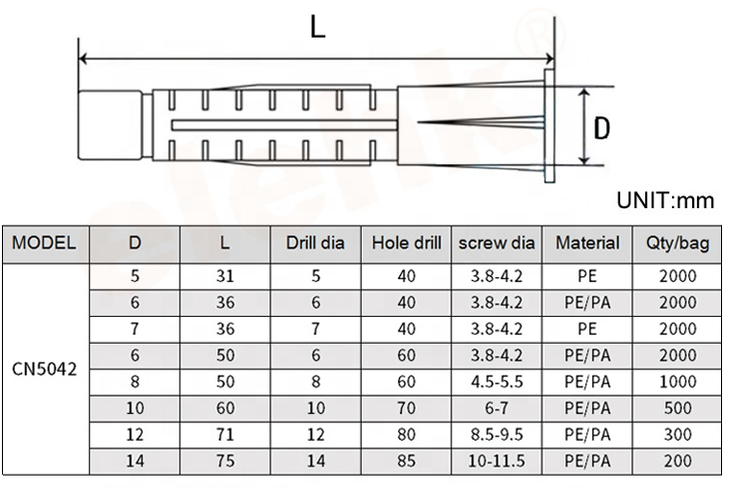
Don’t worry too much about the specific model, as almost all of them have quite similar specs
Thanks! That answers my original question. 6 or 7mm will work according to this spec.
Stick some toothpicks in the hole!