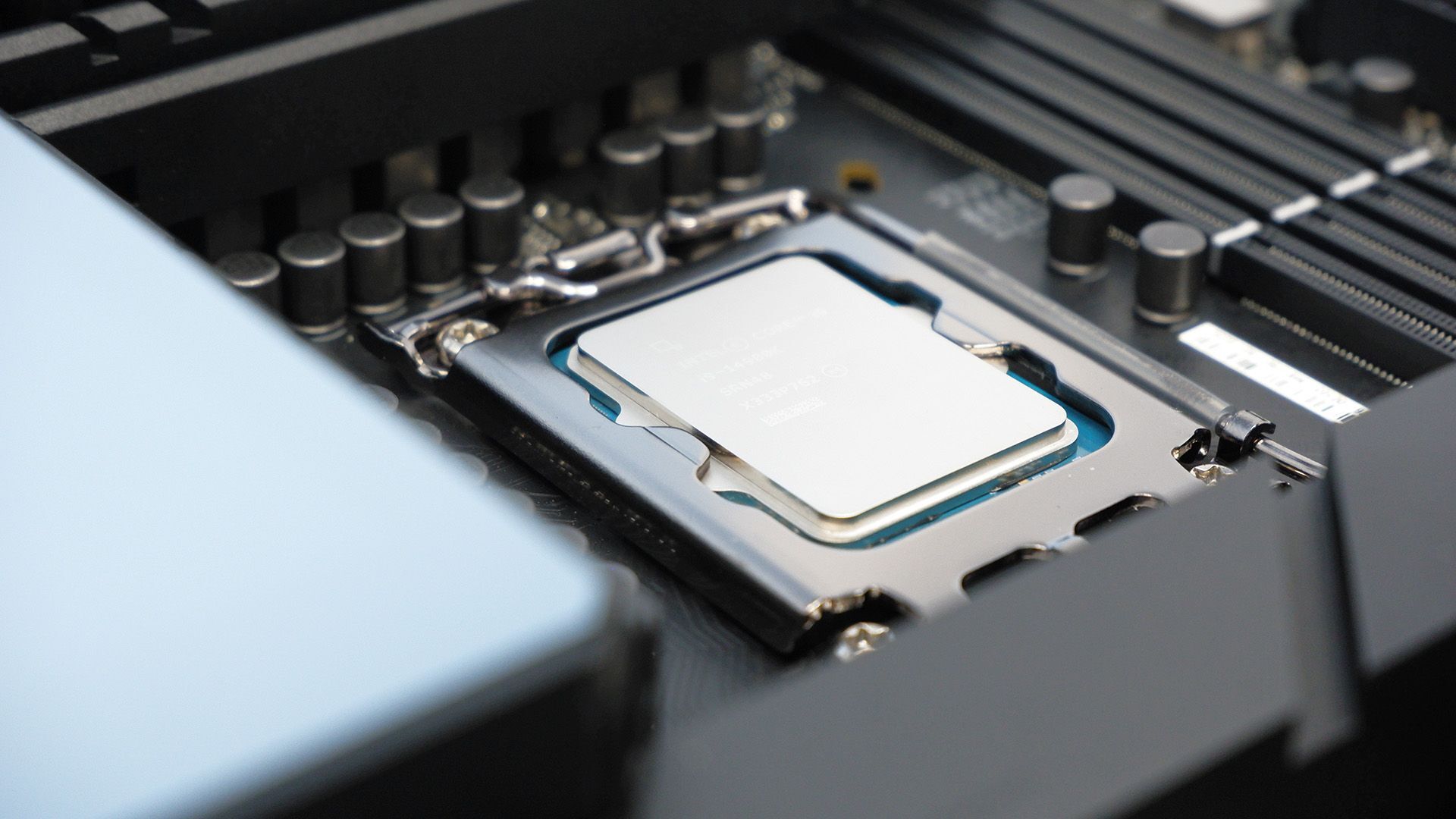
So you mean to tell me they had the technology the whole time to make upgraded modular chips and sell them for pre-existing computer architecture but chose not to because they knew people would pay for the shiny new toys.
There’s a chip crisis and SUDDENLY!!! We’re all able to use new technologies on old computer architectures…
Call it supply and demand but I think that’s fucked up nm which way you look at it.
I read that and then immediately thought to myself, so they just chose not to release upgrades for old architectures and speed released a shit load of new hardware they knew people would pay OTA for.
This whole time they could’ve actually been making old computers better than they are and make it so the consumer didn’t have to spend a fuck load on upgrades but waited till a chip shortage to do it…
We’re all able to use new technologies on old computer architectures…
Except we’re not? They’re still the same raptor lake CPUs. Maybe a bump in clock speed, maybe a change in core counts. But the underlying technology is still the exact same. The only new tech I’d expect on these boards is WiFi 7 instead of 6e. But most WiFi cards on desktop are M.2 and you can already swap them out.
The only mew thing is that they’re making them again, and making new versions of them. Otherwise it’s the same stuff. It’s just giving people a second chance to upgrade to this older stuff.
Feel like it’s more “when designing an upgrade you do it all at once not piecemeal” so it never made sense to use old tech before because you’ll just cause a bottleneck.
Even though I still feel like using “the fastest” ram used to just end up giving you more problems and crashes…
AI is causing human regression. That’s what this is.
Is one thing to poison the minds of idiots, but this is technological regression.
Things are getting bad.
The monopolists realized that their product is no longer unique so they have to create bottle necks in order to force out competition.
Humans are causing human regression. The tool is different, the pattern is the same.
i would say it’s causing a capitalism growth spurt which is “too fast” for the owning class to really keep up, especially with more and more working class realizing capitalism is the problem, not ai, chips, socket types…
i am hoping this growth will be what will cause its downfall.
Its almost as if its planned obsolescence or somethin
These are only “new” chips in a marketing sense.
From a tech standpoint, they’re more or less the same chips that Intel was making for LGA1700 3-4 years ago refreshed with a new name and model number. They may have slight tweaks to the clocks and the core configs, but other than that there’s really nothing new about them. It’s the same silicon that Intel launched back in 2022.
The only reason Intel is doing this is because LGA1700 supports DDR4 and that’s kept the demand for it alive with how expensive DDR5 is now.
Some of those chips have new configurations and power demands. There’s now a 8+12 that is 65w, and the substitute for the 14600K is a 8+8.
I currently have a 13700K, but if one of those new CPUs have a 8+12 version that’s better than the 14700K and doesn’t turn into a literal furnace I’ll be interested in getting one.
The change in tdp doesn’t really change how the chip fundamentally acts. If you want a non furnace CPU then underclock it and power limit it. Maybe these new CPUs are 0.1% more power efficient as the manufacturing process has improved. But other than the core counts you can do the exact same thing with the existing chips.
Does this mean I can finally upgrade my i7 from 2018 without ditching my mobo and ram?
No.
We’re talking about fresh spins on Raptor Lake and Alder Lake here, which previously made up the 12th/13th/14th Gen, and were last released as a major launch in 2023.
Lol remember when they software locked LGA1511 to prevent 8th and 9th gen CPUs from working on existing 6th/7th gen motherboards, and then the modding community bypassed it with some BIOS mods and Teflon tape.
This whole time they could’ve actually been making old computers better than they are and make it so the consumer didn’t have to spend a fuck load on upgrades but waited till a chip shortage to do it…
This isn’t anything new in the component industry. Nvidia is even more guilty of this with their RTX ray tracing scam which now looks comically small next to their subsequent AI bubble.
I’ve personally preferred AMD for this reason because they actually thought ahead of Intel on several occasions like x64, multicore processors, more efficient laptop CPU power consumption, actually funding next gen hardware specs, etc.
In my eyes, the last time Intel was even “on top” of AMD was the skylake overclock era where single thread performance was still sought after heavily.
Hilariously though my servers are all Intel xeons because of their sheer production volume making used parts much cheaper than AMD.
Memory controllers used to be on the motherboards. So your motherboard would determine the type of RAM you used.
As you may know the something called the chipset these days they used to be called south bridges and we had a north bridge. And the North bridge had things like Memory Controller and other IO stuff. South Bridge hasn’t changed much in terms of what it does. More IO.
It’s basically like cache tiers. The closer you are to the CPU the faster you can be.
I thought North and south bridges still existed. That architecture stopped in 2008… Wtf
Cool I’ll buy some DDR4 before I gets expensive… Annnnnd. It’s gone.
It’s almost like planned obsolescence is a well document and viable business strategy.
For…40 years? Demand for older consumer CPUs has dropped to zero over a few years because the new ones are demonstrably more capable and basically the same price. That’s the whole idea behind Moore’s Law. There are niche applications where that hasn’t been true that were mostly filled by recycled hardware or single board computers. But in general people want the more capable device.
There’s a whole conversation to be had about software bloat that that chain enabled but planned obsolescence it ain’t.
I think they’re talking about planned obsolescence for the mobo / socket not the CPU. Yeah most people want the latest CPU but they don’t necessarily want a mobo upgrade too, but Intel will release a new socket so that you have to get the new mobo.
If they just released an updated CPU on an old socket plenty of people would buy that but Intel chose not too to juice mobo sales.
I think a really good ‘for instance’ of what we are talking about is the Pentium Overdrive released in the early-mid 90s. It was a Pentium class processor designed to fit the 486 (previous generation, also where the Pent part of Pentium came from) socket. They have never not been able to backport new instruction sets they just don’t and now we have even more evidence of that.
Lightbulb moment
The old hardware still works perfectly fine though
I mean AMD has been able to reuse sockets for multiple generations of actual new cpus. Intel has just never done it that way.
Since I was a wee lad, when the internet was just an idea, to this day, it’s the first time that “innovation” doesn’t go “higher, further, faster!” But the opposite…
I don’t know about you, but I’ve gotten sadly accustomed to tech “innovation” being more about novel ways of squeezing money out of people way more often than “higher, further, faster” or anything that makes our lives easier, more interesting, or more enjoyable.
Hence i said “innovation”… It was rarely really an innovation. And the more recent, the more your description fits.
Sadly so, I might add.
AI: the gap years.
I hate this movie.
they had the technology the whole time to make upgraded modular chips and sell them for pre-existing computer architecture
I’ve heard that it’s also possible to make consumer motherboards with ECC RAM and no built-in wifi as well, but surely someone would’ve tried that by now if is was technologically possible.
Maybe the RISC-V RVA23 push will be able to figure it out.
SuperMicro makes a lot of these.
I wasn’t aware of any for consumer level chips. All I really want is a basic motherboard+processor with ECC RAM and solid electronics with good capacitors and power filters like the manufacturers seem to be doing for the high end gaming rigs, but without a lot of bells and whistles that need to be turned off as part of the “new computer” process.
crapitalism breeds innovation…