The troubles definitely had religious overtones and justifications, but it was a war about colonial control and cultural repression. You’d be hard pressed to find a British soldier who was fighting to defend protestantism instead of “the empire” or the queen, and you’d be hard pressed to find an IRA member who cared more about Catholic dominance in Ireland than independence.
The wars of religion basically used religion as a cudgel in a fight to dominate Europe and over tensions between the power centers of the Vatican and European royal courts. Entirely political but with religious marketing and pageantry.
Even the Sunni/Shia conflict, most Sunnis and Shias around the world have no issue with each other. Most of the time there’s violence assigned to sectarianism, it’s just like Ireland and Europe, that sectarian divide is inflamed by bad actors instigating artificial tensions and then using them to justify political and economic conquest. ISIS wanted to get rich by snapping up all the oil fields in a largely lawless region. Iran wants regional political dominance and economic control over the straight of hormuz. Israel wants to control the entire Middle East apparently. All of them have religious overtones to the conflict but the religion isn’t the reason for the conflict.
The last real religious wars were the crusades. Europe stood to gain nothing but “God’s favor” by taking back the holy land, it was nothing but a burden to repeatedly invade and fund intermittently occupying. Going back further, Muhammad’s early Muslim conquests are another example of a true “religious war”.
Weren’t the crusades also just a Papal project to reduce the intensity of European wars by dumping excess military capacity into colonising the Middle East?
Partly. The first Crusade had a lot to do with the Seljuks winning at Manizkert, which left the Byzantines needing help from Western Europe to take back their lands. They also wanted to direct knights violence at a common enemy as you said, but from the soldiers and knights to the 4 princes to Peter the hermit and Pope Urban II, all of them truly believed they were religiously called to reclaim the holy land. It’s kind of the opposite of those modern conflicts, it was a religious war with political overtones. The balance of religion and politics as motivating factors is different for each crusade.
Similarly, you could make an argument that Muhammed was motivated in his early conquests by political and territorial ambition, but he and his followers truly believed they were following divine orders. There’s always a mix of the two in those conflicts and it’s a sliding scale.


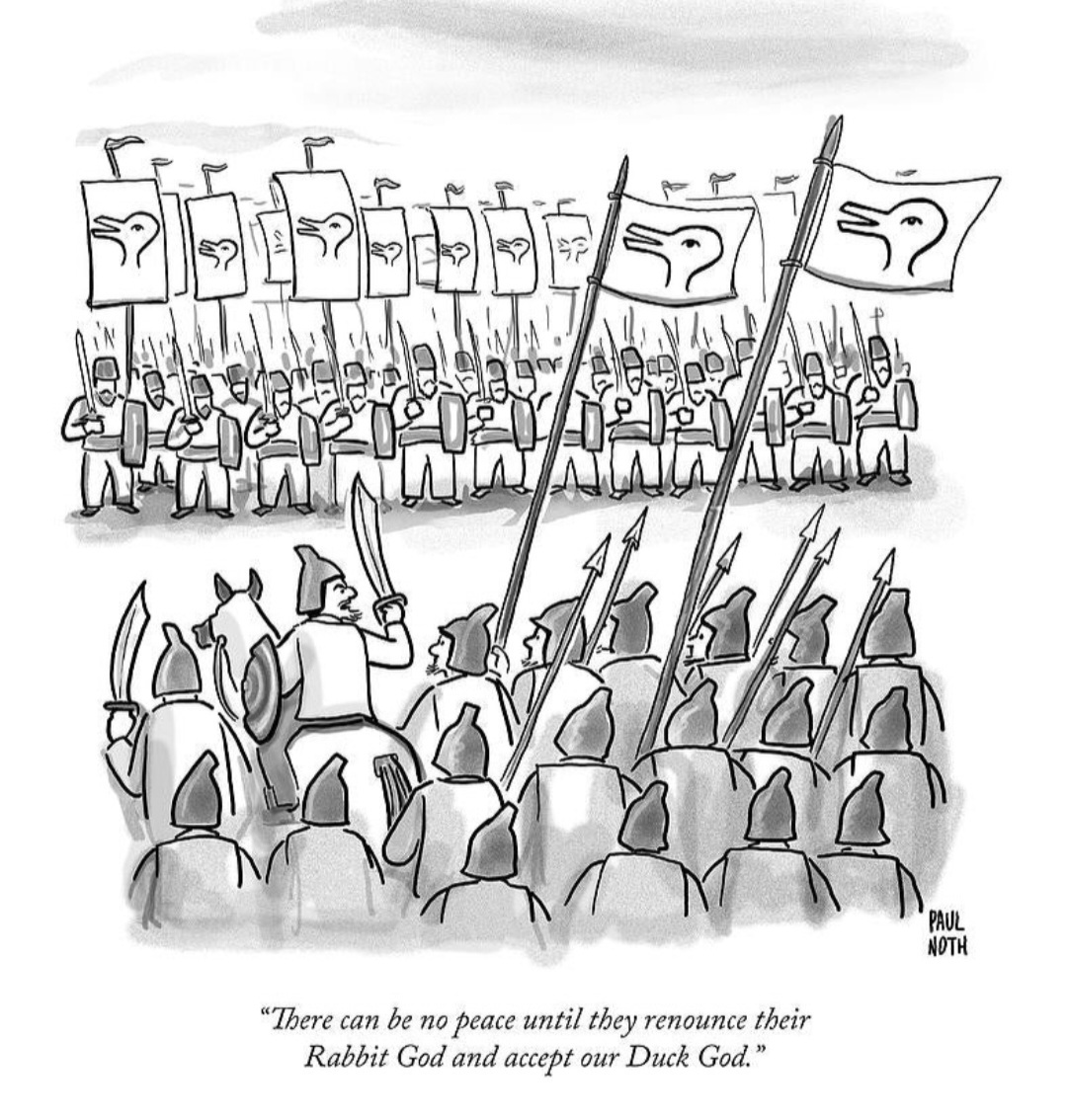
The troubles definitely had religious overtones and justifications, but it was a war about colonial control and cultural repression. You’d be hard pressed to find a British soldier who was fighting to defend protestantism instead of “the empire” or the queen, and you’d be hard pressed to find an IRA member who cared more about Catholic dominance in Ireland than independence.
The wars of religion basically used religion as a cudgel in a fight to dominate Europe and over tensions between the power centers of the Vatican and European royal courts. Entirely political but with religious marketing and pageantry.
Even the Sunni/Shia conflict, most Sunnis and Shias around the world have no issue with each other. Most of the time there’s violence assigned to sectarianism, it’s just like Ireland and Europe, that sectarian divide is inflamed by bad actors instigating artificial tensions and then using them to justify political and economic conquest. ISIS wanted to get rich by snapping up all the oil fields in a largely lawless region. Iran wants regional political dominance and economic control over the straight of hormuz. Israel wants to control the entire Middle East apparently. All of them have religious overtones to the conflict but the religion isn’t the reason for the conflict.
The last real religious wars were the crusades. Europe stood to gain nothing but “God’s favor” by taking back the holy land, it was nothing but a burden to repeatedly invade and fund intermittently occupying. Going back further, Muhammad’s early Muslim conquests are another example of a true “religious war”.
Weren’t the crusades also just a Papal project to reduce the intensity of European wars by dumping excess military capacity into colonising the Middle East?
Partly. The first Crusade had a lot to do with the Seljuks winning at Manizkert, which left the Byzantines needing help from Western Europe to take back their lands. They also wanted to direct knights violence at a common enemy as you said, but from the soldiers and knights to the 4 princes to Peter the hermit and Pope Urban II, all of them truly believed they were religiously called to reclaim the holy land. It’s kind of the opposite of those modern conflicts, it was a religious war with political overtones. The balance of religion and politics as motivating factors is different for each crusade.
Similarly, you could make an argument that Muhammed was motivated in his early conquests by political and territorial ambition, but he and his followers truly believed they were following divine orders. There’s always a mix of the two in those conflicts and it’s a sliding scale.