The morphological characteristics of extinct relatives of the giant panda suggest that while the ancient giant panda was omnivorous 7 million years ago (mya), it only became herbivorous some 2–2.4 mya with the emergence of A. microta.[64][67] Genome sequencing of the giant panda suggests that the dietary switch could have initiated from the loss of the sole umami taste receptor, encoded by the genes TAS1R1 and TAS1R3 (also known as T1R1 and T1R3), resulting from two frameshift mutations within the T1R1 exons.[54]Umami taste corresponds to high levels of glutamate as found in meat and may have thus altered the food choice of the giant panda.[68]
Wikipedia says otherwise, despite them still having many carnivore/omnivore features. It’s also -very- unlikely there haven’t been suitable prey species in their range in the last 2.4 million years.
Their faces, bodies, behavior, and various aspects of their metabolism are adaptations for bamboo-eating. They were omnivores, but they are no longer.
Two of the panda’s most distinctive features, its large size and round face, are adaptations to its bamboo diet. Anthropologist Russell Ciochon observed: “[much] like the vegetarian gorilla, the low body surface area to body volume [of the giant panda] is indicative of a lower metabolic rate. This lower metabolic rate and a more sedentary lifestyle allows the giant panda to subsist on nutrient poor resources such as bamboo.”[62] The giant panda’s round face is the result of powerful jaw muscles, which attach from the top of the head to the jaw.[62] Large molars crush and grind fibrous plant material.[64]
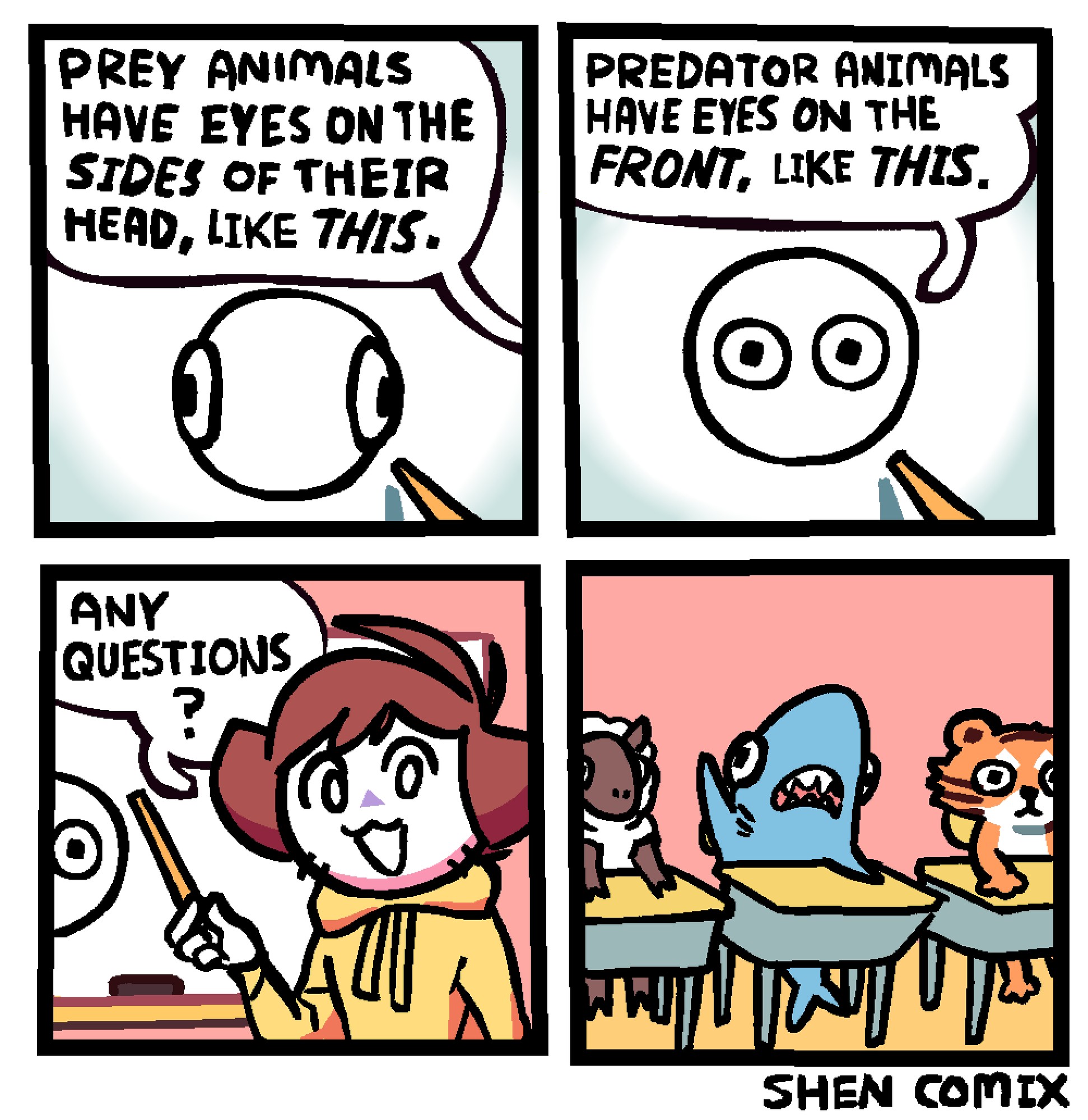
I like how everyone replying to me is giving pandas all these special asterisks to their classification that don’t actually exist or matter, when it’s literally just an exception to the predator rule, and has been for over 2 million years.
That article says exactly what I said about Panda’s:
Despite its taxonomic classification as a carnivoran, the giant panda’s diet is primarily herbivorous, with approximately 99% of its diet consisting of bamboo. However, the giant panda still has the digestive system of a carnivore, as well as carnivore-specific genes, and thus derives little energy and little protein from the consumption of bamboo. The ability to break down cellulose and lignin is very weak, and their main source of nutrients comes from starch and hemicelluloses.
While primarily herbivorous, the giant panda still retains decidedly ursine teeth and will eat meat, fish, and eggs when available. In captivity, zoos typically maintain the giant panda’s bamboo diet, though some will provide specially formulated biscuits or other dietary supplements.
They have developed some minor digestive traits that help them process bamboo, but they don’t have the four chambered stomach of a cow or the extra-long hindgut of a gorilla to thoroughly digest plant matter. They have to seasonal migrate to get the amount of nutrients they need from young bamboo shoots and mature bamboo leaves. Their bodies could easily process a carnivorous diet, but their metabolism has become too slow for then to manage to hunt almost anything besides plants.


Wikipedia says otherwise, despite them still having many carnivore/omnivore features. It’s also -very- unlikely there haven’t been suitable prey species in their range in the last 2.4 million years.
Their faces, bodies, behavior, and various aspects of their metabolism are adaptations for bamboo-eating. They were omnivores, but they are no longer.
https://en.wikipedia.org/wiki/Giant_panda
I like how everyone replying to me is giving pandas all these special asterisks to their classification that don’t actually exist or matter, when it’s literally just an exception to the predator rule, and has been for over 2 million years.
That article says exactly what I said about Panda’s:
They have developed some minor digestive traits that help them process bamboo, but they don’t have the four chambered stomach of a cow or the extra-long hindgut of a gorilla to thoroughly digest plant matter. They have to seasonal migrate to get the amount of nutrients they need from young bamboo shoots and mature bamboo leaves. Their bodies could easily process a carnivorous diet, but their metabolism has become too slow for then to manage to hunt almost anything besides plants.