

- cross-posted to:
- hardware@lemmy.world
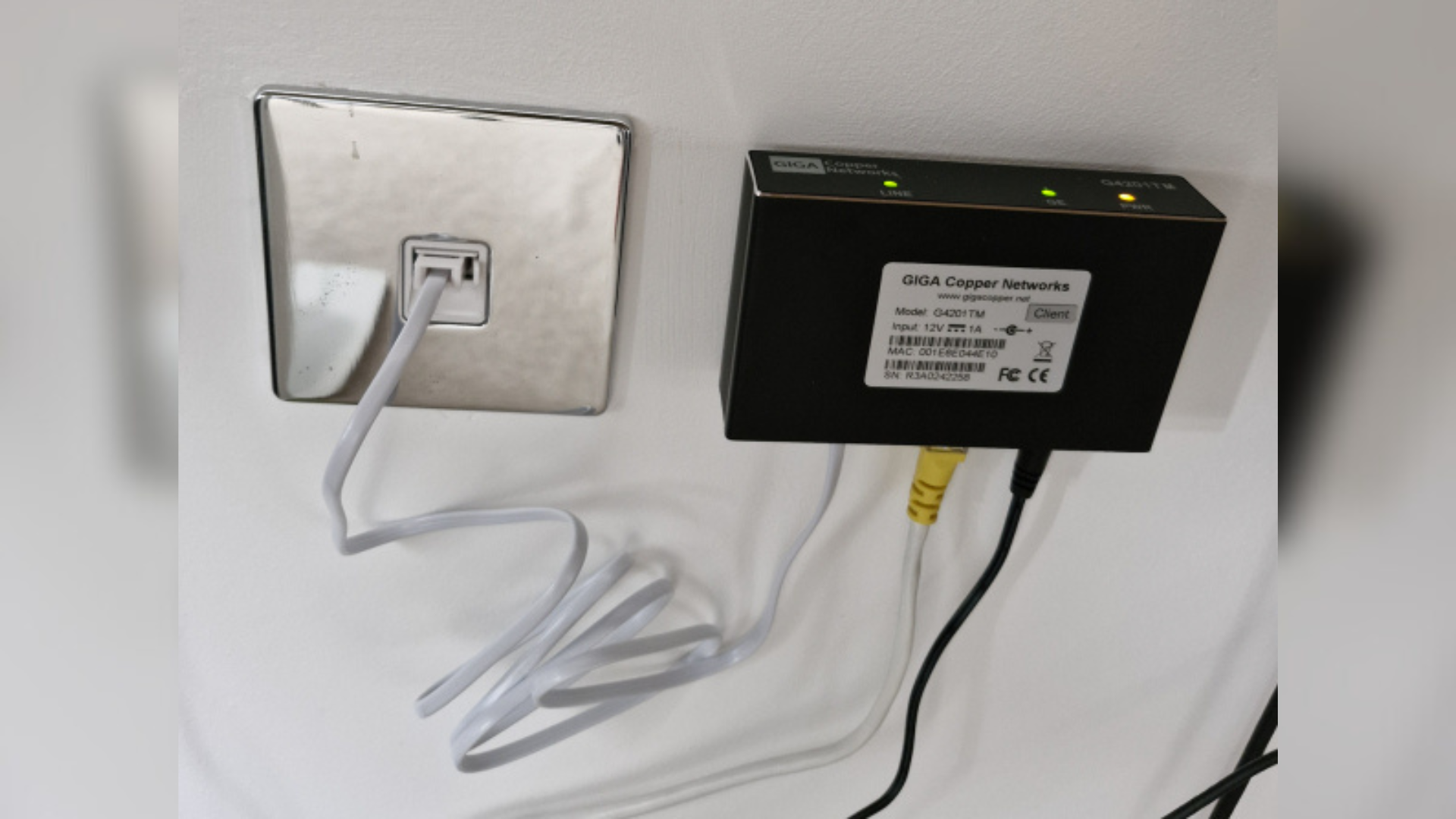
Powered by GIGA Copper modems.
Dull Brit successfully repurposes CAT5 wiring for ethernet throughout his vintage home
This article really reads like an ad for this GigaCopper product rather than actually giving much real info.
They claim that the way the house was wited necessitates this, but don’t really go into details about how the house was wired or how this product overcomes that.
I did something similar to my own house several year ago- without buying a product like this. I had existing Cat5 cable that was originally installed for phone service. I cut the lines near the box from the phone company and terminated them with RJ-45 connectors then put my router there and plugged them in. Replaced the face plates with RJ-45 ones too. I didn’t have any daisy chained lines, but even if I did a simple and cheap switch would solve that problem AND give you some extra ports you probably need anyways.
Maybe there’s some other esoteric way of wiring phones that was used. I’ve heard of cases where they split out wires from the Cat5 (phones can get by with just 2 wires, but Cat5 has 4 pairs). Even then I’ve only heard of that being used for stuff like more than one phone in the same room, or having phones on either side of the same wall.
I’m sure there are some scenarios where this product is necessary but the article doesn’t really explain why it was in this case.
I did something similar to my own house several year ago- without buying a product like this. I had existing Cat5 cable that was originally installed for phone service.
We did this in about 92 with regular phone (cat3) wiring to get a link into a back bedroom. It was clean, but not fast by today’s standards. Fast for back then, though. The only thing we needed to wire was some rj11-to-rj45 connectors with corrected pins, and a two-port wall jack rewired for the crossover at the demarcation.
“Repurposed telephone wiring” is a funny way to say “completely replaces telephone wiring”
But he’s using the existing telephone lines. He plugs a special modem into the rj11 jacks in the wall, on each side of the connection.
“Our guy chose the GIGA Copper G4201TM which uses G.hn modulation to break the signal into lots of tiny sub-carriers spread across a wide frequency band. Then, it basically plays a game of tug of war, balancing bit-loading in real time with robust error correction.”
I misread that entirely. So really he did nothing but install an adaptor at each port.
Which is a capability that shouldn’t be ignored, even if the guy in question did nothing interesting and used an off-the-shelf product.
Utilizing existing wiring without needing to make changes is extremely useful. It’s the basis of technologies like HomePlug (Ethernet over power line) and MoCA (Ethernet over coax). Adding an option to use old phone lines (note: this is HIGHLY dependent on what wiring was used) would be a welcome alternative.
“Repurposed telephone wiring” is a funny way to say “completely replaces telephone wiring”
is a funny way to say “i didnt read fhe article at all but heres an assumption i made about the headline”
C’mon, I said I “misread” the article. Which is a form of reading. Of the article.
I actually misunderstood a large swathe of the article, as I didn’t understand at first read that it was just an advertisment for this type of modem that the guy had to install 5 of in his house. Might have been cheaper to rewire with Cat6.
