

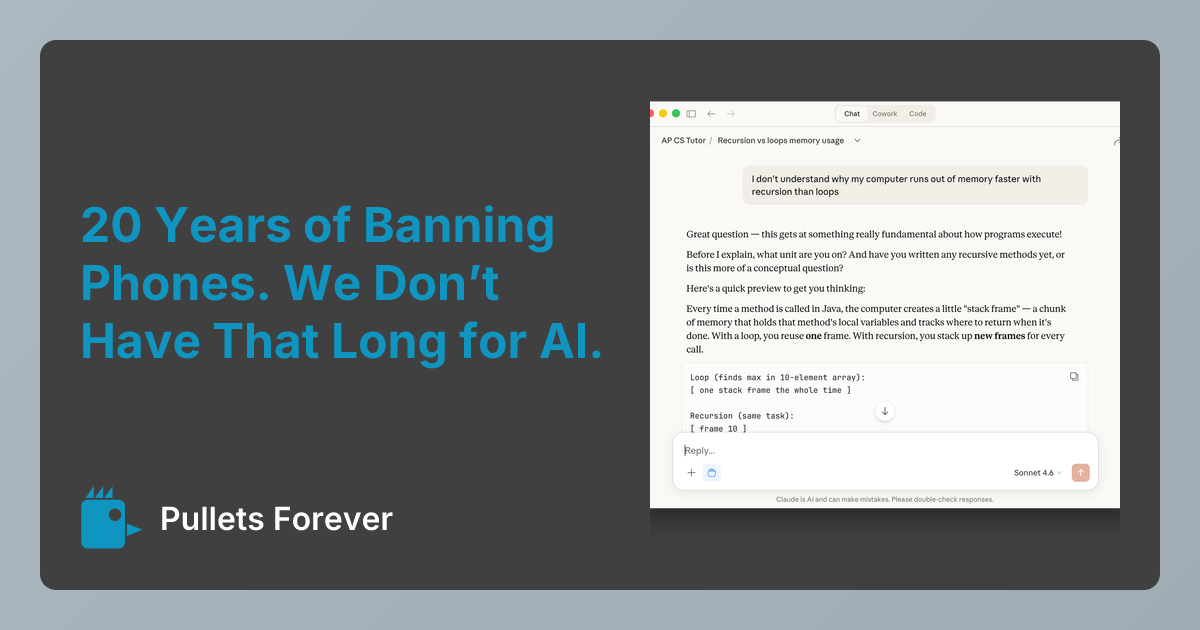
I co-teach AP Computer Science A through Microsoft’s TEALS program. The classroom runs on Chromebooks, Google Classroom, and code.org (AWS). Corporate infrastructure top to bottom. This year I added an AI tutor. That’s apparently the controversial part.
The research is interesting: a Wharton study found students using standard ChatGPT performed 17% worse on exams—the “crutch” effect. But students using AI with pedagogical guardrails showed no negative effect. The problem isn’t AI in education. It’s unguided AI. So I built a tutor that asks probing questions instead of giving answers. I’m sharing the prompt I use and how to set one up yourself.
While, China made AI education mandatory for six-year-olds this year. We’re still deciding whether to block ChatGPT.
Yeah, no. The state of affairs is sad, but a common complaint about AI in the classroom is there is no open source, federated, or other ‘free’ version. It sucks, but we need to work with the tools we have.
The usable free LLMs that can be run on-prem sucks? Is that what sucks? Because there are some.
Do the complainers know they’re complaining about a non-issue? Can you use that situation to help describe what Beggaring the Question means?
No, de decisively don’t “need to work with the tools we have”. We have to teach our students the dangers if that abomination and ways to disrupt, hamper, poison and destroy this stuff.
Don’t the tools we have include internet and even (gasp) book literacy rather than going to a chatbot? At very best, evidence AI helps anyone is shaky. At worst, we are witnessing a reverse Flynn effect in education right now, and this alleged tool - besides not doing what was promised and can’t even make enough money to prop itself up - has been caught enticing children into suicide. If a billionaire genius like Sam Altman can’t code in a guardrail to save a child’s life, how can you?
Why encourage it?
Are the children being taught a tool, or are they being used as guinea pigs?