One scenario could be that there was a large regional conflict, and refugees from many areas gathered in one camp (maybe a sanctuary or a neutral area). Then whoever killed them realized afterward that not all of them were from their intended enemies.
I didn’t read all of it, but one part suggests that the unrelated genetics could mean that the dead are from a larger settlement rather than a small village.
Suppose there was an uprising or rebellion in a region, the men fought, but lost and many were killed in battle and the remainder were in hiding. As punishment a woman from each family was slaughtered.
This might explain why they were killed violently but buried with reverence.


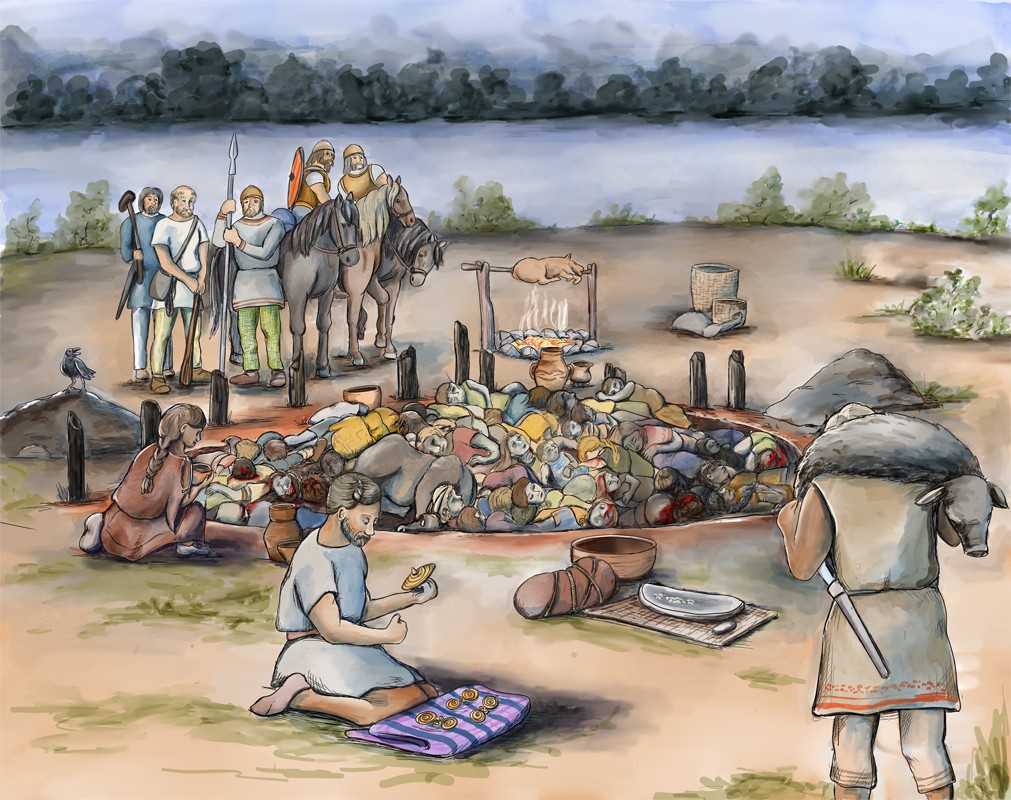
This is puzzling me:
I couldn’t find a single good explanation for all three things. Specially the last one, it seems contradictory.
One scenario could be that there was a large regional conflict, and refugees from many areas gathered in one camp (maybe a sanctuary or a neutral area). Then whoever killed them realized afterward that not all of them were from their intended enemies.
There’s more detail and analysis in the academic paper:
https://www.nature.com/articles/s41562-025-02399-9
I didn’t read all of it, but one part suggests that the unrelated genetics could mean that the dead are from a larger settlement rather than a small village.
Suppose there was an uprising or rebellion in a region, the men fought, but lost and many were killed in battle and the remainder were in hiding. As punishment a woman from each family was slaughtered.
This might explain why they were killed violently but buried with reverence.