1,036 km (644 miles) on a single charge under China’s CLTC testing standard.
Does anyone know how realistic this range is? You can get some absurd range from a vehicle if you’re driving on a closed course at 60kmh with no air conditioning or entertainment.
The CLTC testing accounts for the country’s higher congestion levels with more frequent stop-and-go and lower speed limits, which lead to increased low-speed driving and longer idling times that benefits electric vehicles.
Right. Open road should be more around 770Km. I have a BYD Han 2023 that has a claimed range of 550Km, and I get just about 420Km realistically, at a steady 110Km/h with a few bursts of up to 150Km/h to get away from idiots doing 80 on a 100 (or just to show off the torque to other types of idiots like BMW and some Tesla drivers 😏). I do still get a bit over the claimed 550 if I don’t leave the city and drive as if I was afraid of tickets.
with a few bursts of up to 150Km/h to get away from idiots doing 80 on a 100 (or just to show off the torque to other types of idiots like BMW and some Tesla drivers 😏)
Yeah, they’re the idiots. Not the one going 50 over while showing off…
For better or worse, it’s one of those sticking points keeping many away from electric. I was like that several years ago, but I’ve noticed my driving patterns since then. I can’t do electric because I can’t afford a new car and even worse I’m an apartment dweller, so there’s no infrastructure. But if I could, I absolutely would get a vehicle. Long as it had a couple hundred miles of range, that’s all I need (we have a second car anyway, so if we needed longer trips, we’re covered). And less battery means moving less mass means even cheaper to run.
But my dad went looking a few years ago and ended up with a gas car again - because they do take trips and drive sometimes, and so the idea of having to recharge, even on infrequent trips, was a sticking point. But with 500 miles of range, it’s getting to the point where that’s getting close to a day’s comfortable driving for a lot of people, and if you can charge overnight, then it becomes enough for trips and it helps eliminate the range anxiety.
I think once people start transitioning over to electric, their second vehicle might have less range…
I can attest that the blade battery doesn’t seem to care if you take it all the way to 100% or drop it as low as 5% regularly. I’ve had my car for over 3 years now, and the battery degradation has been negligible. I’ve lost 1% over all this time, and both our cars (BYD HAN and Tang) are consistently allowed to drop under 10% before we decide to go charge them back to 100%. Granted, we live in the Caribbean, so we don’t have to deal with cold weather ever.
Edit: This was all wrong. I forgot I have a battery saver mode on my phone that lowers “fully charged” to something like 80%, so it is ideal to keep it “fully charged”.
Never heard the “above 80%” thing. I’m pretty sure you’re wrong about this. With lead-acid batteries, this was optimal. I’m pretty confident that lithium ion batteries it’s best to keep the charge as high as possible. Ideally you’d only ever use it fully charged. It’s health is harmed by draining it low/fully.
I don’t own an EV, but I know enough about it that I’m pretty sure this is the case. You should look it up for your vehicle though. This advice also applies to phones and other lithium ion batteries too. Lead-acid was damaged by keeping the charge high, but lithium ion is damaged when low, and almost all devices are lithium ion now.
Lead acid batteries like to be kept fully charged all the time and don’t like to be discharged below 50% state of charge.
Lithium batteries like to be kept around half charged. They degrade quicker when kept at a high or low state of charge. Running lithium batteries from 20-80% does extend the lifespan, but charging to 100% is fine when you need to go on a longer trip. Just don’t keep it at 100% for long periods of time.
I think the BYD blade batteries can go down to 20% and up to 100% weekly. Though tbh I probably keep mine too high, I should lower it a bit closer to 80%…
Lithium ion batteries have a sweet spot of around 60 to 80 percent charge where very little wear takes place to charge or discharge. If you could keep it to just that 20-30 percent usage in that range it would pretty much last ten thousand cycles.
Charging to 100 or discharging below 50-60 percent accelerates the wear on the battery, but it is still much better than the wear rate on lead acid batteries that are cycled in a similar manner.
1000km range is fucking stupid. No one should be driving that far at once, and they rest of the time you waste energy and money just carrying around thousands of pounds of batteries.
Then there is the fun of a car crash and shorting out over 120KW of energy.
Yes, there are parts of Canada that remote that still have roads. I grew up in one of them. Let’s posit an urgent but not-likely-to-be-fatal medical emergency, like the torn and detached retina I had a few years ago. That required an urgent trip to a major city in particularly foul winter weather. Nearest major city to where I grew up was 800+km, and there are other towns further out than that one. Add to that battery loss in the cold, plus loss of battery capacity over time if you’ve had the car for a while, plus the vehicle having maybe already been driven that day without time to recharge completely . . . I can think of places up in that neck of the woods where I would be seriously worried that 1000km of rated range wouldn’t be enough, although it would be more than sufficient for where I’m now living.
So I’m talking about shit that, in my experience, actually happens to actual people. The segment of the population involved is, admittedly, not all that large, but it’s of nonzero size—probably on the order of a few million, worldwide, spread through a number of countries that have large areas of empty nothing.
How much is the average used by daily drives? What about the 90% percentile. Something like 1000km must be on the extremely tail that. The only distance I can think of 1000km is going to and back from São Paulo to Rio.
1000km range is fucking stupid. No one should be driving that far at once
I’ve done it several times. It happens.
the rest of the time you waste energy and money just carrying around thousands of pounds of batteries.
It would certainly be interesting if EV’s had a means to load or unload batteries for more or less capacity. If the majority of the time you’re driving local it would certainly be better having a smaller battery pack loaded and then load more when you need the range. We’re a long way from being able to do that unfortunately
Expect CLTC to be advertising the best possible range.
There’s a ceramic battery hitting the market that has a marginally higher density and nothing is stopping them from adding more batteries. There’s also a new hub-motor concept that has a lot less losses, but they’re not car sized yet.
Getting to 644 would be as easy as throwing more batteries at it, but i’d expect those numbers to come down a bit, or the price to be much higher.
Adding more batteries increases the weight, though, which in turn makes the motors work harder, and therefore makes them use more energy to do the same thing.
That’s not that big of a deal for long-range trips, on which you typically don’t have to accelarate often.
Keeping the car going at a certain speed depends on several types of resistance, most importantly air resistance, but not really on weight.
More weight plays a bigger role for energy consumption in urban ares, where the weight needs to be accelerated more often than on the highway, the mileage per kWh is yet typically higher than on the highway due to the lower speed and less air resistance.
What I’m trying to say: I’d pick the bigger battery any time over the smaller one, if the price is reasonable.
EVs are already heavy. The weight from some additional batteries don’t play a big role.
Also, with breaking recovering energy, this negates some of the issues too. The inertia is used to recharge the batteries, so the losses are from friction and heat losses. Obviously lighter is better, but a lot of the issues of weight on efficiency can be reduced. Weight is bad for safety though, so there is that to consider.
It sure does. But we have to consider that recharging is less efficient than not spending the energy on acceleration in the first place, so heavier EVs are worse off than lighter ones; it’s not only losses from friction and heat losses - those come on top.
And you’re spot-on with the danger that comes from weight; being in an accident with a lot of kinetic energy that needs to be absorbed is not great.
Frequent acceleration/deceleration driving like city driving is also significantly more efficient in EVs because of regenerative braking. ICE just lose all that energy they spent accelerating when the have to stop 500m later, which destroys their efficiency.
I was comparing EVs with different weight and not comparing EVs with ICE vehicles, though.
And in that case the heavier EVs are less efficient than more leightweight versions even with regenerative breaking, because the process of accelerating and breaking cant’ regenerate all energy that was spent for accelerating.
It’s the same idea as adding a larger gas tank. If you wanted to make a gas car go 600mi, you’d just need to hold enough gas to double the range + make up for the load of the extra gas itself, of course as the tank depletes, it gets markedly lighter.


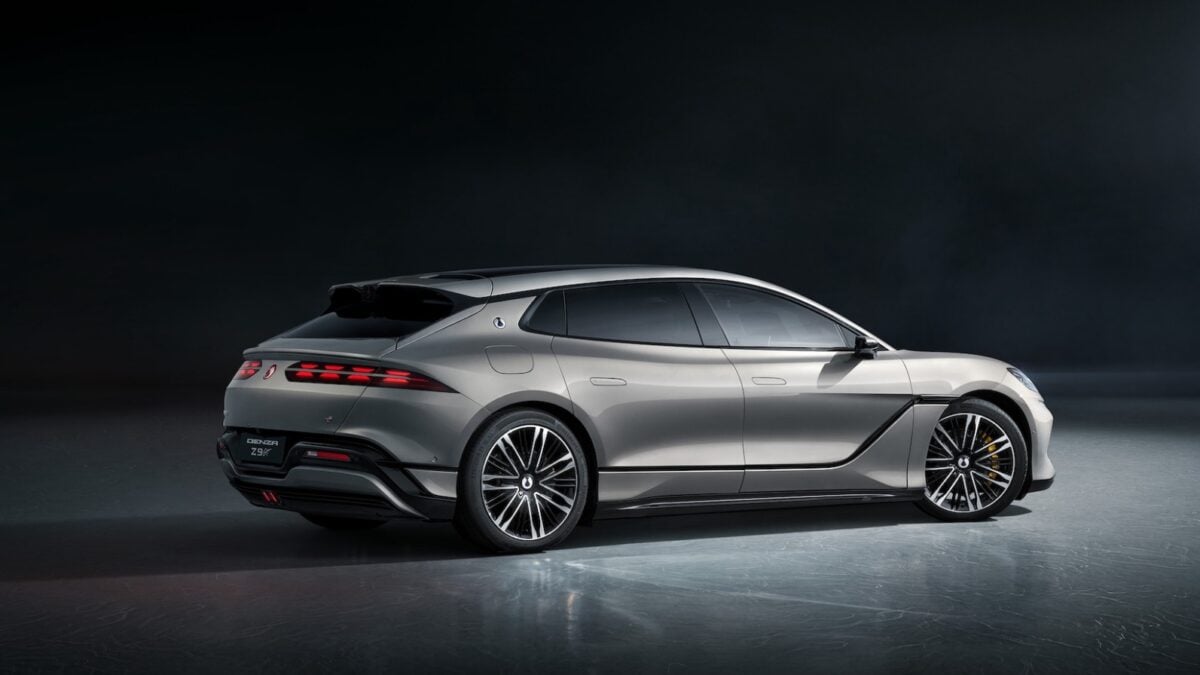
Does anyone know how realistic this range is? You can get some absurd range from a vehicle if you’re driving on a closed course at 60kmh with no air conditioning or entertainment.
https://en.wikipedia.org/wiki/China_Light-Duty_Vehicle_Test_Cycle
Right, so you’re not getting anywhere near that on the open road.
Right. Open road should be more around 770Km. I have a BYD Han 2023 that has a claimed range of 550Km, and I get just about 420Km realistically, at a steady 110Km/h with a few bursts of up to 150Km/h to get away from idiots doing 80 on a 100 (or just to show off the torque to other types of idiots like BMW and some Tesla drivers 😏). I do still get a bit over the claimed 550 if I don’t leave the city and drive as if I was afraid of tickets.
Yeah, they’re the idiots. Not the one going 50 over while showing off…
Lol. I do break the law some times by speeding, but have almost no tickets, so that’s a win, haha.
According to wiki
CTLC 509 km (316 mi)
EPA 390 km (242 mi)
So yeah take a solid 25%+ off
WLTP, which is closer to US Highway driving, estimates 800 km. Or 500 Eagles.
I mean, that’s still pretty darn impressive.
For better or worse, it’s one of those sticking points keeping many away from electric. I was like that several years ago, but I’ve noticed my driving patterns since then. I can’t do electric because I can’t afford a new car and even worse I’m an apartment dweller, so there’s no infrastructure. But if I could, I absolutely would get a vehicle. Long as it had a couple hundred miles of range, that’s all I need (we have a second car anyway, so if we needed longer trips, we’re covered). And less battery means moving less mass means even cheaper to run.
But my dad went looking a few years ago and ended up with a gas car again - because they do take trips and drive sometimes, and so the idea of having to recharge, even on infrequent trips, was a sticking point. But with 500 miles of range, it’s getting to the point where that’s getting close to a day’s comfortable driving for a lot of people, and if you can charge overnight, then it becomes enough for trips and it helps eliminate the range anxiety.
I think once people start transitioning over to electric, their second vehicle might have less range…
Is it? 122 KWhr battery -they are just piling in more batteries, which means a huge waste on energy and money on carrying around battery packs.
Who drives 500 eagles without stopping?
I mean they can just fly out the window
Came across this which I’ve not validated but does seem to make sense at a glance: Comparison of WLTP and CLTC
Based on that the WLTP range would be 828-900km (515-560 miles).
Real world, 6-700km at a guess?
The WLTP is pretty accurate to the actual range I get on my BYD.
Cut another third off that in cold weather.
Sounds about right. My experience in range difference is very similar.
Yeah, the EV range is frustrating.
270 miles? Pretty good. Except you shouldn’t drive it below 20% or above 80%, so really the range is like 170. Cold winter? Now it’s like 75.
No regrets on our EV, but I would feel a whole more more comfortable with 2x the capacity.
Too bad we can’t buy BYD here.
I can attest that the blade battery doesn’t seem to care if you take it all the way to 100% or drop it as low as 5% regularly. I’ve had my car for over 3 years now, and the battery degradation has been negligible. I’ve lost 1% over all this time, and both our cars (BYD HAN and Tang) are consistently allowed to drop under 10% before we decide to go charge them back to 100%. Granted, we live in the Caribbean, so we don’t have to deal with cold weather ever.
Edit: This was all wrong. I forgot I have a battery saver mode on my phone that lowers “fully charged” to something like 80%, so it is ideal to keep it “fully charged”.
Never heard the “above 80%” thing. I’m pretty sure you’re wrong about this. With lead-acid batteries, this was optimal. I’m pretty confident that lithium ion batteries it’s best to keep the charge as high as possible. Ideally you’d only ever use it fully charged. It’s health is harmed by draining it low/fully.I don’t own an EV, but I know enough about it that I’m pretty sure this is the case. You should look it up for your vehicle though. This advice also applies to phones and other lithium ion batteries too. Lead-acid was damaged by keeping the charge high, but lithium ion is damaged when low, and almost all devices are lithium ion now.confidently incorrect.
You could disabuse yourself with a quick search.
Oh, sorry. You’re right. I forgot I have my phone on a battery saver mode where “fully charged” is not fully charged.
Lead acid batteries like to be kept fully charged all the time and don’t like to be discharged below 50% state of charge.
Lithium batteries like to be kept around half charged. They degrade quicker when kept at a high or low state of charge. Running lithium batteries from 20-80% does extend the lifespan, but charging to 100% is fine when you need to go on a longer trip. Just don’t keep it at 100% for long periods of time.
I think the BYD blade batteries can go down to 20% and up to 100% weekly. Though tbh I probably keep mine too high, I should lower it a bit closer to 80%…
Lithium ion batteries have a sweet spot of around 60 to 80 percent charge where very little wear takes place to charge or discharge. If you could keep it to just that 20-30 percent usage in that range it would pretty much last ten thousand cycles.
Charging to 100 or discharging below 50-60 percent accelerates the wear on the battery, but it is still much better than the wear rate on lead acid batteries that are cycled in a similar manner.
Batteries also need to be balanced. If you constantly keep your battery packs in that small range they’ll drift out of balance over time.
You should charge to 100% occasionally to allow the BMS to balance all the packs.
Your mileage may vary.
1000km range is fucking stupid. No one should be driving that far at once, and they rest of the time you waste energy and money just carrying around thousands of pounds of batteries.
Then there is the fun of a car crash and shorting out over 120KW of energy.
Ya, why do those big trucks have 40 gallon gas tanks? Not like anyone ever needs to drive that far at once.
So we are now comparing daily drivers to long haul truckers?
Should we all be driving this?
A man can dream.
What are you taking about?
What a ridiculous blanket statement.
Nobody should make such silly blanket statements. :P
in non shit hole countries, driving that far without breaks is illegal.
in shit holes, over 40,000 are killed and countless more maimed for life on highways. Every year.
I take it you’ve never had an emergency while living in a remote area. Especially not one with cold winters that will tank your EV’s range.
You live outside of a thousand km range of anyone?
Sure, lets make up fake once in a lifetime scenarios. What if we needto get 1000km from that comet impact?
Car threads degrade to fucking stupid quickly.
Yes, there are parts of Canada that remote that still have roads. I grew up in one of them. Let’s posit an urgent but not-likely-to-be-fatal medical emergency, like the torn and detached retina I had a few years ago. That required an urgent trip to a major city in particularly foul winter weather. Nearest major city to where I grew up was 800+km, and there are other towns further out than that one. Add to that battery loss in the cold, plus loss of battery capacity over time if you’ve had the car for a while, plus the vehicle having maybe already been driven that day without time to recharge completely . . . I can think of places up in that neck of the woods where I would be seriously worried that 1000km of rated range wouldn’t be enough, although it would be more than sufficient for where I’m now living.
So I’m talking about shit that, in my experience, actually happens to actual people. The segment of the population involved is, admittedly, not all that large, but it’s of nonzero size—probably on the order of a few million, worldwide, spread through a number of countries that have large areas of empty nothing.
Funny, I was looking at your comments and thinking precisely that.
Calling people stupid and then complaining about the reaction you get.
I mean what do you expect?
How much is the average used by daily drives? What about the 90% percentile. Something like 1000km must be on the extremely tail that. The only distance I can think of 1000km is going to and back from São Paulo to Rio.
A 1000km range is a complete waste of resources.
I’ve done it several times. It happens.
It would certainly be interesting if EV’s had a means to load or unload batteries for more or less capacity. If the majority of the time you’re driving local it would certainly be better having a smaller battery pack loaded and then load more when you need the range. We’re a long way from being able to do that unfortunately
When the selfdriving feature gets even better, 1000 km will be useful.
you must be excited about this guy showing up next month.
Self driving is absolutely a thing. FULL self driving like what Tesla tries to bullshit about is a way off.
I’ve done a bit over 900km in a day a few times, it’s a full day, but easily done.
Expect CLTC to be advertising the best possible range.
There’s a ceramic battery hitting the market that has a marginally higher density and nothing is stopping them from adding more batteries. There’s also a new hub-motor concept that has a lot less losses, but they’re not car sized yet.
Getting to 644 would be as easy as throwing more batteries at it, but i’d expect those numbers to come down a bit, or the price to be much higher.
Adding more batteries increases the weight, though, which in turn makes the motors work harder, and therefore makes them use more energy to do the same thing.
That’s not that big of a deal for long-range trips, on which you typically don’t have to accelarate often.
Keeping the car going at a certain speed depends on several types of resistance, most importantly air resistance, but not really on weight.
More weight plays a bigger role for energy consumption in urban ares, where the weight needs to be accelerated more often than on the highway, the mileage per kWh is yet typically higher than on the highway due to the lower speed and less air resistance.
What I’m trying to say: I’d pick the bigger battery any time over the smaller one, if the price is reasonable.
EVs are already heavy. The weight from some additional batteries don’t play a big role.
Also, with breaking recovering energy, this negates some of the issues too. The inertia is used to recharge the batteries, so the losses are from friction and heat losses. Obviously lighter is better, but a lot of the issues of weight on efficiency can be reduced. Weight is bad for safety though, so there is that to consider.
It sure does. But we have to consider that recharging is less efficient than not spending the energy on acceleration in the first place, so heavier EVs are worse off than lighter ones; it’s not only losses from friction and heat losses - those come on top.
And you’re spot-on with the danger that comes from weight; being in an accident with a lot of kinetic energy that needs to be absorbed is not great.
Frequent acceleration/deceleration driving like city driving is also significantly more efficient in EVs because of regenerative braking. ICE just lose all that energy they spent accelerating when the have to stop 500m later, which destroys their efficiency.
I was comparing EVs with different weight and not comparing EVs with ICE vehicles, though.
And in that case the heavier EVs are less efficient than more leightweight versions even with regenerative breaking, because the process of accelerating and breaking cant’ regenerate all energy that was spent for accelerating.
It’s the same idea as adding a larger gas tank. If you wanted to make a gas car go 600mi, you’d just need to hold enough gas to double the range + make up for the load of the extra gas itself, of course as the tank depletes, it gets markedly lighter.