In one hand, the moon is smarter because you can have Interaction and any change takes only a week or two. While we can’t harvest local resources, the cost to location is relatively low. You could even completely run out of food and still have everyone survive
We can’t afford to screw up anything to mars when there is no Interaction and it takes 18 months or more to make a change. Imagine if there’s a medical Emergency or the garden dies: 18 months is a really long time. Everything you send there is correspondingly more expensive and everything needs to much more stock in case anything goes wrong. There are many more possible issues to plan and prepare for. This will be especially expensive until we develop in-situ resource usage
And we don’t even know if people could survive that long
mars has no magnetic field so both moon and mars are fully exposed to radiation, but an astronaut needs to survive like 3 years of it to goto mars
we know that microgravity causes long term health issues limiting long term presence in orbit. But we don’t know how much gravity is enough to prevent those issues. Going to the moon is short enough to not worry and gives us a second data point. Going to mars is long enough to be a serious problem if it’s gravity is not enough
But in the other hand mars is smarter because more gravity and more resources. If you believe we should eventually have colonies in space, that will never happen on the moon but might on mars
The whole Mars mission was stupid and a fantasy of scifi fans with grade 9 science. A colony, on a planet with no atmosphere and exteme temperatures, yet humans can’t handle the arctic.
For sure it was over-hyped and jumping the gun on what’s possible. But if we ever do live off earth, mars is more likely than the moon
Mars is also an inspirational challenge - doing something that has never been possible. Going to the moon is something we already could to half a century ago. What’s the point of doing that again?
Assuming we do go to the moon, it had better be noticeably more than what we did 50 years ago. Personally I’m looking for a permanent moon station, similar to what ISS did for human presence in orbit
These efforts are a massive waste of money nobody has and just distract us from the problems we are causing on the only planet in light years than can sustain us.
Where do people think the resources would come from move a population? At best, a few billionaires and some sex slaves.
I agree that large colonies are an enticing science fiction image that doesn’t look likely.
But we’ve proven that we can support an “international space station” to maintain a continuous scientific presence in space. A great next step is the same but on the moon. It seems quite possible with relatively little technical development. This is desirable to advance our technology, our science, our society, to use our imagination to look forward , to have hope, to see a positive future for humanity.
Here’s the problem with fixing local problems first: you can’t. You either stagnate, looking within, looking behind, looking down, and still have the same local problems or you take a portion of your civilizations product and also move everyone forward.
Here’s the problem with using those resources: it’s not enough to matter. The space program is a tiny percentage of the government budget, almost invisible next to what is needed to fix our problems. If you want to fix our local problems, it starts with social justice, environmental justice, safety nets, quality of life and most importantly equity in taxes, and greatly reduced income inequity. Elon musk’s wealth will soon be 40x NASA’s entire annual budget yet is barely taxed. If we were able to tax one persons wealth at a mere 2.5%, we could fully fund NASA at no cost to anyone else. Most of us pay a lot more than 2.5% of our income so why is he excepted?
If we have colonies on Mars I can’t see why we also wouldn’t have colonies on the moon if only to support ships going further out into the solar system. Refuelling on the moon makes much more sense than refuelling on earth.
The only way that isn’t the case is if we build a space elevator to bring resources up to spacecraft orbit, but if we’re at that point I still think we would build colonies on the moon just because, even if it’s just at the level of a Saudi Arabian vanity project.
For sure, any longer term presence outside orbit will hinge on finding resources. And i don’t think it even matters if we’re able to harvest helium-3 or something that might be worth bringing back, but to be able to use enough resources to make it affordable. Every pound lifted from earth to outside orbit will always be too expensive and local resources much much more affordable. While it starts with shelter and radiation shielding (ie live underground), we’ll need to generate bulk consumables like water, oxygen, fuel, and we’ll need to grow at least some of our own food
But we don’t even know if we can live on the moon. Microgravity has bad long term health effects such that we really don’t want to spend more than a year there. Does the moon have enough gravity to be substantially better?
If we do establish a larger off earth presence, we’ll have to compromise on enough gravity for long term health and livability vs as little gravity as necessary to keep space accessible
The huge potential of helium-3 is for nuclear fusion. Yet we don’t have fusion reactors that use helium-3 and fusion is “20 years away”. We could get to mars before needing this is any quantity
NASA as a whole is a tiny fraction of the federal budget but has always generated outsized contributions to humanity. It’s an easy argument that money spent on nasa is money earned elsewhere. It’s a good investment
SpaceX Falcon has revolutionized space launches and I don’t believe that is government supported at all. It does fill government launch contracts but more cheaply than they could have done so themselves, and reliably enough to capture most of the world’s market. This does not add to the deficit and the early investments have been handsomely rewarded
Both SpaceX and blue origin, as well as other new generation space companies have been much much cheaper than old style projects. Just look at Artemis for example. Huge developments costs, continually
More expensive, and $1B-$2B per launch. Yet I believe the total nasa funding for the entire starship program is around not like $2B. That is a very good use of our money. Heck, it’s probably cheaper than our little tantrum in Iran and certainly for a better purpose
I don’t know whether that is currently a bottleneck or will be any time soon. I only know we’re “20 years away” from using it regularly, just like we have been my entire life
I suppose it’s good science to figure out if we can do it, just like it’s good science to see if we can establish more access to space


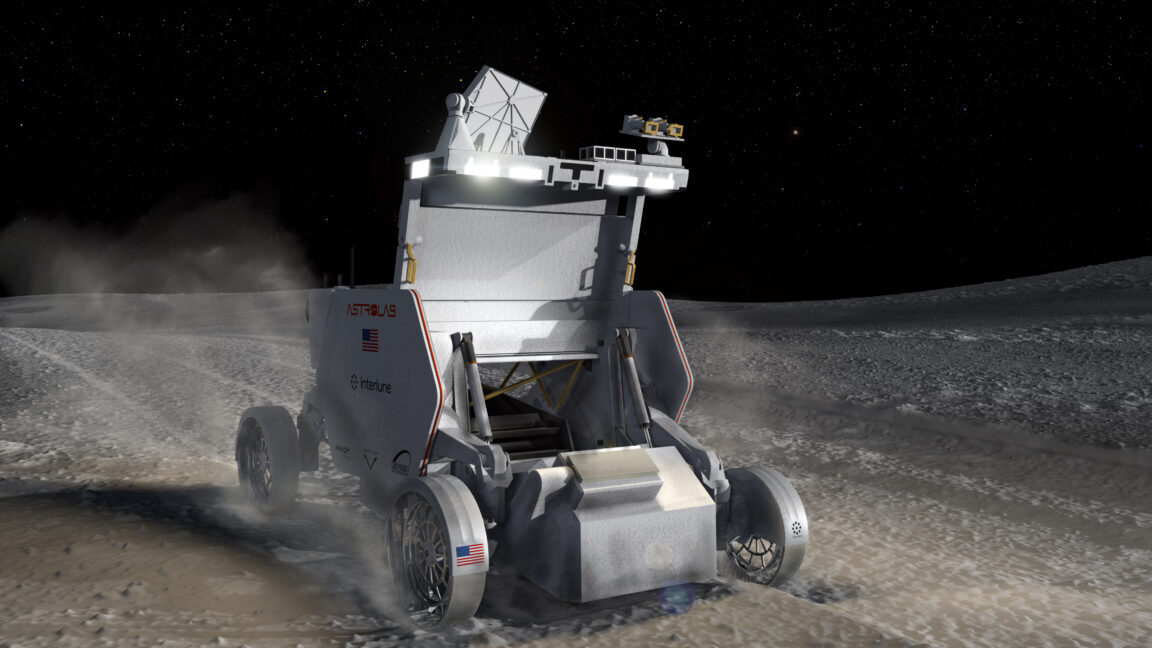
While I don’t like Musk, it’s actually never made sense to even attempt to go to Mars without taking advantage of the helium-3 stores on the Moon.
Which is why a smart person would have started with the moon instead of saying in 2011 that he would put a man on Mars by 2021.
I mean yeah, Musk is a fucking idiot that wants to retroactively prove the book he got his name from.
At least, that’s my headcanon.
In one hand, the moon is smarter because you can have Interaction and any change takes only a week or two. While we can’t harvest local resources, the cost to location is relatively low. You could even completely run out of food and still have everyone survive
We can’t afford to screw up anything to mars when there is no Interaction and it takes 18 months or more to make a change. Imagine if there’s a medical Emergency or the garden dies: 18 months is a really long time. Everything you send there is correspondingly more expensive and everything needs to much more stock in case anything goes wrong. There are many more possible issues to plan and prepare for. This will be especially expensive until we develop in-situ resource usage
And we don’t even know if people could survive that long
But in the other hand mars is smarter because more gravity and more resources. If you believe we should eventually have colonies in space, that will never happen on the moon but might on mars
The whole Mars mission was stupid and a fantasy of scifi fans with grade 9 science. A colony, on a planet with no atmosphere and exteme temperatures, yet humans can’t handle the arctic.
For sure it was over-hyped and jumping the gun on what’s possible. But if we ever do live off earth, mars is more likely than the moon
Mars is also an inspirational challenge - doing something that has never been possible. Going to the moon is something we already could to half a century ago. What’s the point of doing that again?
Assuming we do go to the moon, it had better be noticeably more than what we did 50 years ago. Personally I’m looking for a permanent moon station, similar to what ISS did for human presence in orbit
These efforts are a massive waste of money nobody has and just distract us from the problems we are causing on the only planet in light years than can sustain us.
Where do people think the resources would come from move a population? At best, a few billionaires and some sex slaves.
I agree that large colonies are an enticing science fiction image that doesn’t look likely.
But we’ve proven that we can support an “international space station” to maintain a continuous scientific presence in space. A great next step is the same but on the moon. It seems quite possible with relatively little technical development. This is desirable to advance our technology, our science, our society, to use our imagination to look forward , to have hope, to see a positive future for humanity.
Here’s the problem with fixing local problems first: you can’t. You either stagnate, looking within, looking behind, looking down, and still have the same local problems or you take a portion of your civilizations product and also move everyone forward.
Here’s the problem with using those resources: it’s not enough to matter. The space program is a tiny percentage of the government budget, almost invisible next to what is needed to fix our problems. If you want to fix our local problems, it starts with social justice, environmental justice, safety nets, quality of life and most importantly equity in taxes, and greatly reduced income inequity. Elon musk’s wealth will soon be 40x NASA’s entire annual budget yet is barely taxed. If we were able to tax one persons wealth at a mere 2.5%, we could fully fund NASA at no cost to anyone else. Most of us pay a lot more than 2.5% of our income so why is he excepted?
If we have colonies on Mars I can’t see why we also wouldn’t have colonies on the moon if only to support ships going further out into the solar system. Refuelling on the moon makes much more sense than refuelling on earth.
The only way that isn’t the case is if we build a space elevator to bring resources up to spacecraft orbit, but if we’re at that point I still think we would build colonies on the moon just because, even if it’s just at the level of a Saudi Arabian vanity project.
For sure, any longer term presence outside orbit will hinge on finding resources. And i don’t think it even matters if we’re able to harvest helium-3 or something that might be worth bringing back, but to be able to use enough resources to make it affordable. Every pound lifted from earth to outside orbit will always be too expensive and local resources much much more affordable. While it starts with shelter and radiation shielding (ie live underground), we’ll need to generate bulk consumables like water, oxygen, fuel, and we’ll need to grow at least some of our own food
But we don’t even know if we can live on the moon. Microgravity has bad long term health effects such that we really don’t want to spend more than a year there. Does the moon have enough gravity to be substantially better?
If we do establish a larger off earth presence, we’ll have to compromise on enough gravity for long term health and livability vs as little gravity as necessary to keep space accessible
The huge potential of helium-3 is for nuclear fusion. Yet we don’t have fusion reactors that use helium-3 and fusion is “20 years away”. We could get to mars before needing this is any quantity
We have lots of fusion reactors.
They just release years of energy in a split second.
why.
We need to add more to that $38T debt?
NASA as a whole is a tiny fraction of the federal budget but has always generated outsized contributions to humanity. It’s an easy argument that money spent on nasa is money earned elsewhere. It’s a good investment
SpaceX Falcon has revolutionized space launches and I don’t believe that is government supported at all. It does fill government launch contracts but more cheaply than they could have done so themselves, and reliably enough to capture most of the world’s market. This does not add to the deficit and the early investments have been handsomely rewarded
Both SpaceX and blue origin, as well as other new generation space companies have been much much cheaper than old style projects. Just look at Artemis for example. Huge developments costs, continually More expensive, and $1B-$2B per launch. Yet I believe the total nasa funding for the entire starship program is around not like $2B. That is a very good use of our money. Heck, it’s probably cheaper than our little tantrum in Iran and certainly for a better purpose
Yes, but wouldn’t it become that much easier to achieve with an effectively limitless quantity of the resource?
I don’t know whether that is currently a bottleneck or will be any time soon. I only know we’re “20 years away” from using it regularly, just like we have been my entire life
I suppose it’s good science to figure out if we can do it, just like it’s good science to see if we can establish more access to space