Scientists in China have demonstrated a wireless power transmission system that uses a ground-based microwave emitter to beam energy to an antenna array mounted on the aircraft’s underside. Importantly, they were able to do this while both the drone and charging system were in motion.
In tests, the car-mounted system kept fixed-wing drones in the air for up to 3.1 hours at an altitude of 15 metres (49 feet). The key challenge that the team overcame was maintaining alignment between the emitter and the drone during flight, wrote Song Liwei, the project’s leader.
I mean this is really cool but at the same time doesnt seem usefull? Apparently the peak of modern combat is chinese drones with small bombs and a plastic fiber-optic cable attached to them lol.
Holy shit.
Getting the ability to remote charge things via microwave… that are moving?
That’s been basically sci fi nonsense, at a practical level, for a long time.
Anybody remember the Microwave Power stations in SimCity 2000?
If you could actually get this tech working, it has an incredible number of potential applications.
I remember arguing with a mate in school about the damage a misaligned beam would cause to a city. I think the prevailing theory was a lot of cooked people without much structural damage.

1/r2
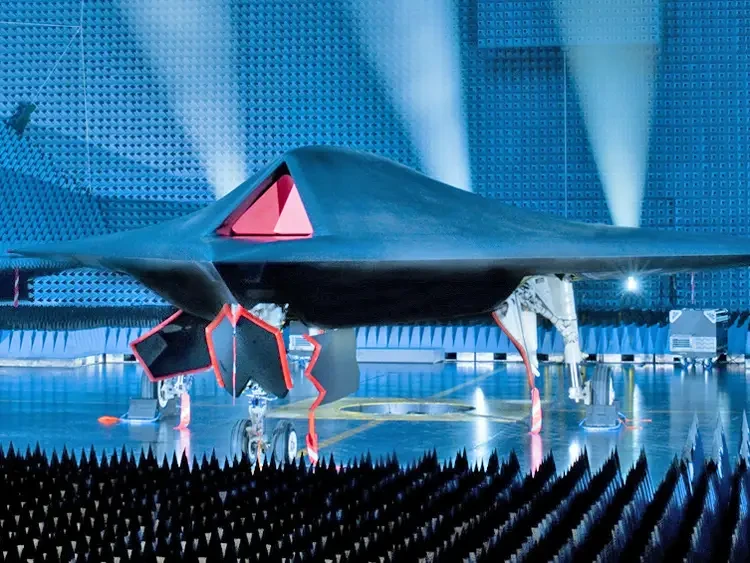
Wow that looks a lot like the UKs Taranis bomber drone.
Sounds:
- Pretty advanced
- Pretty expensive
- Quite useless (I mean it definitely has its uses, but I think you could find much cheaper and simpler solutions)
“… you could find much cheaper and simpler solutions…”
Heat feelt thanks for your bold show of confidence in my technical capacities. Yet I have to disclose that I’m not exactly sure to be able to compete with a first world power like China.
Sounds cool. And also like an attack vector.
Getting some Ace Combat vibes
Neat but 3 hours of loitering is nothing for a fixed wing drone. We have drones that stay in flight for a month or more.
The difference is likely size and expense.
Now you don’t need a 100 million dollar Boeing 737 sized drone to loiter for 3 hours.
Previously small and cheap drones could loiter for 40 mins on an internal battery. Now they can stay up for 3 hours. That can be useful.
Of course these mobile wireless recharging stations will become military targets for the opposition. So the overall combat math isn’t obvious to me, but it’s not a tech I see as obviously useless.
This could be much more straightforwardly a win for civilian applications.
I have a 6 year old electric car that takes 40ish minutes to charge, now BYD has batteries that will go from 10% to 70% in 5-10 mins.
In a few years time these drones will be getting charged from a microwave stream of power from a solar array floating in the upper atmosphere.
Yes but you are charging through a conductive cable. It’s not even remotely the same as charging something with microwaves.
The power delivered decreases exponentially with distance. I’m sure you’ve heard the phrase “inverse square law”.
Because you divide the effect and gain by 4pi(r^2) meaning your output is decreased by 75% every time you double the distance.
You’re going to need ridiculously powerful hardware and an enormous amount of electricity to run it on any meaningful distance.
A concentrated, collimated beam doesn’t act like a point source. There’s of course some amount of scattering and absorption loss due to atmospheric particles, but other than that a fully collimated wireless energy transmission doesn’t lose intensity over distance. Kind of obvious, really, because “where would the energy go?”.
The decreased chargng time comes with a massive increase in charging power. The equivalent in ths scenario is to massvely increase the microwave power - which would likely cook the drone.
I prefer my drones cooked in an old fashioned oven, microwaves leave the middle too cold and the outside too hot.
Exactly, proof of concept was all the scientists needed to see.
Solar power is still more practical
not nearly enough surface area to power a drone.
Has already been done
https://www.geeky-gadgets.com/solar-powered-drone-design-2025/
That thing is just a dollar panel with the bare minimum amount of motors to hold up the solar panel. That not practical at all for someone that also needs to move quickly and fire munitions
try that with the drone in the article. ain’t gonna work buddy.
You can have solar panels and batteries on the ground, and use them to charge the microwave emitter, which can then charge the aircraft, which now does not need to carry solar panels and as much batteries, and thus has increased payload / range.
The microwave receiver will not be small or efficient
Oh, ok.
Even though this entire post is… about how it is small enough to fit on a drone, and efficient enough to power it for 3 hours.
Ok.
Gotcha.
I’m not sure if you’re aware of this, but densely packed explosive bombs and missiles and warheads tend to be pretty heavy.
… the entire problem with purely onboard solar powered vehicles of any kind is that they have to be absurdly lightweight, flimsy.
That isn’t practical.
It might be purely efficient, in a sense, but it isn’t very useful.
Being able to actually move stuff, that is practical.
Most transportation modes involve the ability to haul stuff.
You know, do work, aka the capacity to make stuff move.
You picking a fight that makes no sense to pick.
You can have solar and batteries be more stationary, and use microwaves to power things that are more mobile, this post is literally the proof of that concept… you can charge a battery with a any kind of power source.
Look heres another massive potential application of this, if you science fiction extend the accuracy/capability of this:
Plop a bunch of solar panels/batteries in the L1 point between the Earth and the sun.
Now, via a set of satellites in something like concentric orbits, you can get absurd amounts of power, beam it back along chains of satellites, snd then beam it to recieving stations on Earth. Or the Moon. Or orbital infrastructure.
Microwave transmission power loss will be waaaay less in space, because there’s no atmosphere.
Same with solar panel efficiency!
Solar Power + Microwave Transmission = Very Good, Actually.
The only two metrics that matter here are W/m^2 and weight.
You can’t make a reasonable microwave receiver lighter than solar film and efficiency peaks around 50% in FIXED installations and you can easily assume less than a quarter (under 10%) when the target isn’t just moving, but is also changing angles and distance (you’d have to put the receiver on a gimbal like for cameras) and now it’s also interfering with flight (propeller airflow, unless you do weird propeller geometries or tilted body flight
Tldr DUMB
Microwave power transfer only make sense between distant fixed line of sight locations with minimal infrastructure available. On earth that’s literally just island mountain tops. Even then it’s easier and cheaper to still just install solar
On the moon, it would basically just mean you have one big generator and everything gets powered by the sun when in sunlight and switch to microwave from the generator when in shadow, which is pretty much the only configuration that even make sense
You can’t make a reasonable microwave receiver lighter than solar film and efficiency peaks around 50% in FIXED installations
https://www.sciencedirect.com/topics/engineering/microwave-power-transmission
In JPL 30 kW power was transmitted for 1.54 km with reception conversion array having an efficiency of 80%
That was 8 years ago.
What I’m describing are… currently extremely active areas of research.
Microwave power transfer has been used for many applications since its inception by Maxwell. Wireless charging of EVs and UAV using microwave power are some of the widely researched examples.
you can easily assume less than a quarter (under 10%) when the target isn’t just moving, but is also changing angles and distance (you’d have to put the receiver on a gimbal like for cameras)
You should maybe look into the level of precision that things like Phalanx CIWS systems have at tracking a moving target, with the ability to throw bullets at it, and hit it.
Or basically any SPAAG type platform that throws rounds down range.
Or I dunno, MASERs used in deep space transmission.
Or all the research that has gone into developing tracking gimbal systems that do intentionally use lasers or some kind of DEW to shoot down small drones, or damage aircraft in flight, or burn out incoming missiles.
Hell of a lot easier to track a friendly aircraft.
and now it’s also interfering with flight (propeller airflow, unless you do weird propeller geometries or tilted body flight
Genuinely no clue what you are talking about.
Are you assuming only like, quadcopters here?
We’ve had RQ 4 drone aircraft the size of WW2 medium bomber planes, with jet engines, for 20 years now.
I’m fairly sure that a jet engine produces a considerable amount of consistent heat.
Do… you think aircraft engineers… do not know… how to handle… heat?
Shall I describe a ramjet to you?
Or maybe we could go with something like the Space Shuttle’s reentry tiles?
In conclusion, you are vastly uniformed as to the state of… not even state of the art technology, that would be incredibly relevant to this discussion.
Is paywalled for me, do they explain the range and how much power they are throwing? An altitude of 15m suggests this thing needs to be pretty close …
I don’t think this is the full article (with 3rd-party js disabled) but the web archive didn’t get more out of it either.
Edit: fixed formatting a bit
China’s ‘land aircraft carrier’ charges flying drone with microwave beam
While the technology is still at an early stage, it may one day allow drones to fly indefinitely
2-MIN

If wireless charging is deployed to a battlefield, it would not only allow drones to stay in the air for longer but could also allow them to carry bigger payloads by reducing the size of their batteries. Photo: Eugene Lee
Chao Kong in Beijing
Published: 7:00pm, 19 Apr 2026
A vehicle that can zap energy into a fleet of drones, allowing them to fly indefinitely, is getting closer to becoming a battlefield reality.
Scientists in China have demonstrated a wireless power transmission system that uses a ground-based microwave emitter to beam energy to an antenna array mounted on the aircraft’s underside. Importantly, they were able to do this while both the drone and charging system were in motion.
Some analysts have likened the concept to a “land-based aircraft carrier”, in which an armoured vehicle could function as a mobile command and energy node, launching and sustaining drones much just as naval carriers support aircraft.
They say such systems could extend the operational reach of ground forces, enabling persistent surveillance, airborne attacks and electronic warfare.
The findings were published on March 25 in the peer-reviewed Chinese journal Aeronautical Science & Technology by a team from Xidian University, which is known for its military technology research.
In tests, the car-mounted system kept fixed-wing drones in the air for up to 3.1 hours at an altitude of 15 metres (49 feet). The key challenge that the team overcame was maintaining alignment between the emitter and the drone during flight, wrote Song Liwei, the project’s leader.
To do so, the researchers integrated GPS positioning, a dynamic tracking system and onboard flight controls into the system.
I feel like practically this isn’t very helpful. The car (or other much larger aircraft needs to pace the drones or vice versa and be in very close proximity, surely landing and hotswapping a battery pack would be faster and more efficient. Like if landing isn’t an option is driving a car over garbage terrain while maintaining proximity to a low flying aircraft going to be possible? I guess you could use a blimp or large aircraft to pace the drones, but not sure a blimp and drone could match speeds without one breaking up or the other falling out of the sky.
Swapping out batteries in flight would probably be more efficient.
We don’t even have automated battery replacement working on the ground, while stationary.
Building aircraft with a whole bunch of their body and mass that significantly changes, in flight, is extremely expensive and difficult.
Its why the V22 Osprey is widely regarded as a death trap, why we stopped building swing wing F-14s.
… Have you ever tried to uh, remove your car’s rear seats, while on the highway, at 60 mph, and then also installed new seats, from a neaby car travelling alongside you?
Ok now do that with aircraft, at 15k feet, going 600 mph.
Yeah I’m sure that’ll be about as efficient as Elon Musk’s approach to designing the Starship+HeavyBooster.
Yeah I’m sure that’ll be about as efficient as Elon Musk’s approach to designing the Starship+HeavyBooster.
Compared to microwave energy transmission which has even worse efficiency.
Ok now do that with aircraft, at 15k feet, going 600 mph.
This is about drones. At 5 km distance and close to mach 1 you can absolutely forget any microwave based charging systems.
You are aware that we’ve been shooting drones out the sky with lasers for about a decade now, right?
Not too long ago DHS/CBP freaked out over some balloons in Texas, thought they were cartel drones, shut down the airspace, burned them outta the sky with truck mounted lasers.
JPL got 80% microwave power transmission efficiency at ~1.5 km, 8 years ago.
Granted, that was a fixed land point to fixed land point test, but also, it was 8 years ago.
I’ll take 50% efficiency loss over 10% chance of ‘everything explodes and crashes’ any day.