If ethically bred they should be doing health testing to ensure the offspring dont have health issues, and actively managing genetic diversity by “swapping studs” with other breeders, and depending on the breed, “outbreeding” where sometimes a dog from outside the breed is one of the parents to intentionally increase genetic diversity (some breed standards allow this, some dont.).
Do note, some breed standards just suck, and breeding healthy dogs within that breed may not meet breed standards to be considered pure bred. Usually there are breeders pushing to change that breed standard to fit healthier practices (I think thats a thing with like English bulldogs or pugs if I remember right…)
I hear a lot about this because my best friend’s special interests are animal genetic and animal behavioral science (she works as a dog trainer), and she’s REALLY passionate about ethical breeding as a better way for dogs to come into the world
Not everyone can afford an ethically bred dog, health testing and line management is expensive, but if all dogs were ethically bred you’d end up with a lot fewer dogs in the shelter because it produces more predictable offspring that are less likely to end up being a poor fit (if you’re picking breed based on how that breed fits you, and not just by aesthetic without thinking about what kind of enrichment they need, which sucks whether the dog is purebred or not), or have severe health/behavioral issues that make it hard to live a healthy life
So if you’re ever considering getting a dog from a breeder for whatever reason (maybe you need a dog that you can be sure fits into a particular kind of life or family, or is compatible with your disability/medical limitations) make sure to ask if they do health testing, what kind, and if you can see it. Ask if they keep in touch with owners of past litters to monitor for health issues, and ask what practices they use to make sure they have healthy litters and manage genetic diversity. The answers will help you find a breeder that has good practices :)
There are heritage and preservation breeders that do try to breed healthy, genetically diverse animals.
As society has found out time and time again, a prohibition does not solve the issue. Education, harm reduction, and sourcing from ethical sources will work best.
Certain breeds would die out without heritage and preservation breeders. These types of breeders basically live and breathe their animals.
I loosely know a few and they are always rescuing animals, doing breed education, etc.
Just saying “don’t buy from breeders” won’t ever fully work. We have to come up with a better solution.
Specifically for preservation breeding they’re an important part of human civilization’s history. The domestication of animals that play intimate roles in our lives and occupations is at least as worth preserving anthropologically as games/art, or artifacts
For breeds in general sometimes we forget that we domesticated dogs for specific roles in our lives, not just for friendly pets, and many of those roles are still deeply important. Having dogs that are well suited to various needs we have of them is kinda important. Dogs work as service animals, search and rescue dogs, bomb sniffing dogs, manage or protect livestock on smaller non-industrial farms, provide protection which is really helpful to people who may have suffered PTSD from past victimization, and as therapy animals. And we also selectively breed some breeds specifically for companionship, which is important because its a specific functional role that not all dogs are going to fit into in the same way.
Breeds exist because of the reason we domesticated dogs in the first place, which is to say a huge plethora of different reasons, for which we have all different kinds of dogs, that will fit different people and different needs. That system is still functionally useful, not every breed is equally well suited to every life, home/family, or job.
because they have uniqe traits. there are dogbreeds for specific type of work. Mixed-breed dogs can sometimes be less predictable and harder to train/work with, people look for specific breeds that fit their profession and lifestyle. Don’t get me wrong, mixed-breed dogs are wonderful, but let’s not demonize breeding. There are good reasons why it was started in the first place.
thats not true in general: it depends heavily on the breed, the region, and the breeding association and/or breeder. In any case, you should always do your research before buying a puppy. Purebred dogs typically come with a pedigree certificate, which includes information about the inbreeding coefficient and hereditary diseases in the family line.
please dont buy from mass breeders, dont support “cruelty” breeds. if a breeder sells you a puppy right on the spot go away. Serious breeders carefully select the families for their puppies and usually want to get to know you over multiple visits.


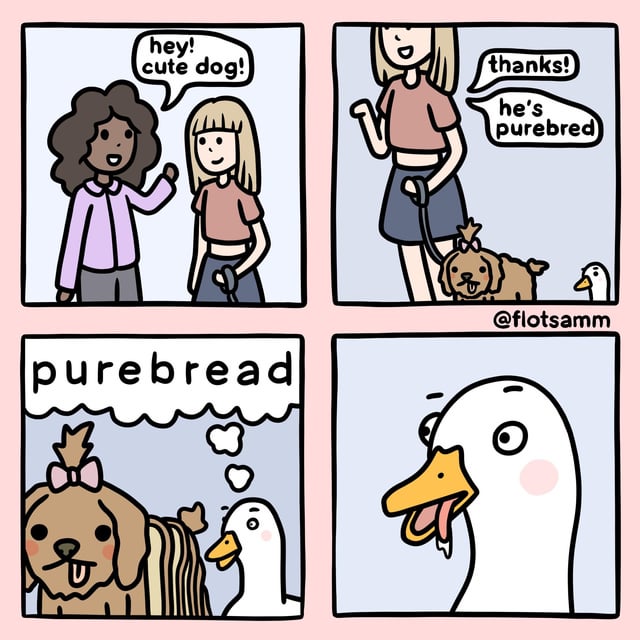
PSA, don’t feed ducks bread.
https://a-z-animals.com/articles/i-used-to-feed-ducks-bread-until-i-learned-what-it-really-does-to-them/
TBH, don’t get purebreed dogs either. Purebreed is basically “heavily inbred”, and they’re often the ones with the most health problems as a result.
If ethically bred they should be doing health testing to ensure the offspring dont have health issues, and actively managing genetic diversity by “swapping studs” with other breeders, and depending on the breed, “outbreeding” where sometimes a dog from outside the breed is one of the parents to intentionally increase genetic diversity (some breed standards allow this, some dont.).
Do note, some breed standards just suck, and breeding healthy dogs within that breed may not meet breed standards to be considered pure bred. Usually there are breeders pushing to change that breed standard to fit healthier practices (I think thats a thing with like English bulldogs or pugs if I remember right…)
I hear a lot about this because my best friend’s special interests are animal genetic and animal behavioral science (she works as a dog trainer), and she’s REALLY passionate about ethical breeding as a better way for dogs to come into the world
Not everyone can afford an ethically bred dog, health testing and line management is expensive, but if all dogs were ethically bred you’d end up with a lot fewer dogs in the shelter because it produces more predictable offspring that are less likely to end up being a poor fit (if you’re picking breed based on how that breed fits you, and not just by aesthetic without thinking about what kind of enrichment they need, which sucks whether the dog is purebred or not), or have severe health/behavioral issues that make it hard to live a healthy life
So if you’re ever considering getting a dog from a breeder for whatever reason (maybe you need a dog that you can be sure fits into a particular kind of life or family, or is compatible with your disability/medical limitations) make sure to ask if they do health testing, what kind, and if you can see it. Ask if they keep in touch with owners of past litters to monitor for health issues, and ask what practices they use to make sure they have healthy litters and manage genetic diversity. The answers will help you find a breeder that has good practices :)
There are heritage and preservation breeders that do try to breed healthy, genetically diverse animals.
As society has found out time and time again, a prohibition does not solve the issue. Education, harm reduction, and sourcing from ethical sources will work best.
Certain breeds would die out without heritage and preservation breeders. These types of breeders basically live and breathe their animals.
I loosely know a few and they are always rescuing animals, doing breed education, etc.
Just saying “don’t buy from breeders” won’t ever fully work. We have to come up with a better solution.
And that would be great.
The hard question: Why do we need to preserve these breeds, other than “it would be a shame”?
Specifically for preservation breeding they’re an important part of human civilization’s history. The domestication of animals that play intimate roles in our lives and occupations is at least as worth preserving anthropologically as games/art, or artifacts
For breeds in general sometimes we forget that we domesticated dogs for specific roles in our lives, not just for friendly pets, and many of those roles are still deeply important. Having dogs that are well suited to various needs we have of them is kinda important. Dogs work as service animals, search and rescue dogs, bomb sniffing dogs, manage or protect livestock on smaller non-industrial farms, provide protection which is really helpful to people who may have suffered PTSD from past victimization, and as therapy animals. And we also selectively breed some breeds specifically for companionship, which is important because its a specific functional role that not all dogs are going to fit into in the same way.
Breeds exist because of the reason we domesticated dogs in the first place, which is to say a huge plethora of different reasons, for which we have all different kinds of dogs, that will fit different people and different needs. That system is still functionally useful, not every breed is equally well suited to every life, home/family, or job.
because they have uniqe traits. there are dogbreeds for specific type of work. Mixed-breed dogs can sometimes be less predictable and harder to train/work with, people look for specific breeds that fit their profession and lifestyle. Don’t get me wrong, mixed-breed dogs are wonderful, but let’s not demonize breeding. There are good reasons why it was started in the first place.
thats not true in general: it depends heavily on the breed, the region, and the breeding association and/or breeder. In any case, you should always do your research before buying a puppy. Purebred dogs typically come with a pedigree certificate, which includes information about the inbreeding coefficient and hereditary diseases in the family line.
please dont buy from mass breeders, dont support “cruelty” breeds. if a breeder sells you a puppy right on the spot go away. Serious breeders carefully select the families for their puppies and usually want to get to know you over multiple visits.
”But Oliver here won best in show!”
https://www.youtube.com/watch?v=aCv10_WvGxo
Does a purebred dog contain the nutrients they need?
My sudden dyslexia: PSA, don’t fuck duck feed.
Probably accurate to be fair.