Movim is a federated chat platform that recently implemented most of Discord’s features. It’s a little rough in the UX department, but it’s pretty much all there, and it isn’t vibe-coded like this chatto app is.
Movim has been developed since 2011 (Chatto began development 8 months ago, in comparison) and is based on XMPP, which is battle tested and proven to scale. It has a codebase that is maintainable long-term.
I personally would not trust an almost entirely vibe-coded app using tools prone to hallucination to be secure and properly implement encryption. But if others don’t have those concerns, then by all means.
It would be nice if these kinds of projects moved towards developing and using interoperable standards, so using something like XMPP seems like a good direction. It makes sense that people have different preferences and dealbreakers for software but it seems like it should be unnecessary for open source chat programs to be the subject of contentious arguments about which one people should use. The argument should be whether to keep using Discord etc. or switch to a unified open ecosystem, not Discord vs picking one of many separate small networks.
The lack of interoperability between modern chat apps is a real tragedy. I remember the days when you could have a single messenger app of your choice and talk to people across different networks instead of having to juggle a whole bunch of apps like you do today. Really shows why open protocols are so important.
There never was. It was only a sea of different instant messenger protocols, and each had their pros and cons. So much that you had meta messengers, doing multiple protocols. Trillian for example. You had to get multiple accounts and softwares to get everyone.
Protocols were understood well enough that you could build a single app that could communicate across different platform. That’s basically not feasible today.
The fact that it has been around since 2011 and still suffers from UI problems and other bugs really highlights the problem with your arguments. You also very clearly have no idea how software development actually works if you think that code written manually by a human is inherently more reliable. Humans make mistakes all the time that’s why we have software bugs in the first place. The way we ensure that code works is by having things like tests, specifications, and code reviews. All of these same tools work just as well with LLM generated code as they do with code written by hand.


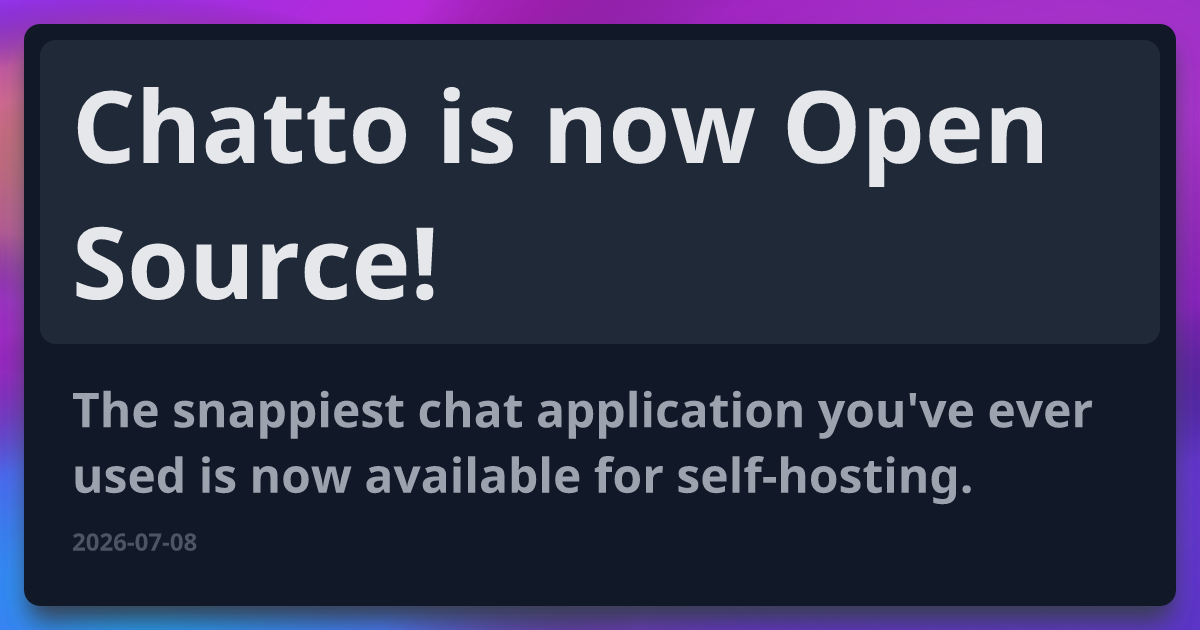
Movim is a federated chat platform that recently implemented most of Discord’s features. It’s a little rough in the UX department, but it’s pretty much all there, and it isn’t vibe-coded like this chatto app is.
Looks good too
Incredible to suggest using for an objectively worse and less mature project just because it’s artisanally written.
Movim has been developed since 2011 (Chatto began development 8 months ago, in comparison) and is based on XMPP, which is battle tested and proven to scale. It has a codebase that is maintainable long-term.
I personally would not trust an almost entirely vibe-coded app using tools prone to hallucination to be secure and properly implement encryption. But if others don’t have those concerns, then by all means.
It would be nice if these kinds of projects moved towards developing and using interoperable standards, so using something like XMPP seems like a good direction. It makes sense that people have different preferences and dealbreakers for software but it seems like it should be unnecessary for open source chat programs to be the subject of contentious arguments about which one people should use. The argument should be whether to keep using Discord etc. or switch to a unified open ecosystem, not Discord vs picking one of many separate small networks.
The lack of interoperability between modern chat apps is a real tragedy. I remember the days when you could have a single messenger app of your choice and talk to people across different networks instead of having to juggle a whole bunch of apps like you do today. Really shows why open protocols are so important.
There never was. It was only a sea of different instant messenger protocols, and each had their pros and cons. So much that you had meta messengers, doing multiple protocols. Trillian for example. You had to get multiple accounts and softwares to get everyone.
Protocols were understood well enough that you could build a single app that could communicate across different platform. That’s basically not feasible today.
The fact that it has been around since 2011 and still suffers from UI problems and other bugs really highlights the problem with your arguments. You also very clearly have no idea how software development actually works if you think that code written manually by a human is inherently more reliable. Humans make mistakes all the time that’s why we have software bugs in the first place. The way we ensure that code works is by having things like tests, specifications, and code reviews. All of these same tools work just as well with LLM generated code as they do with code written by hand.