

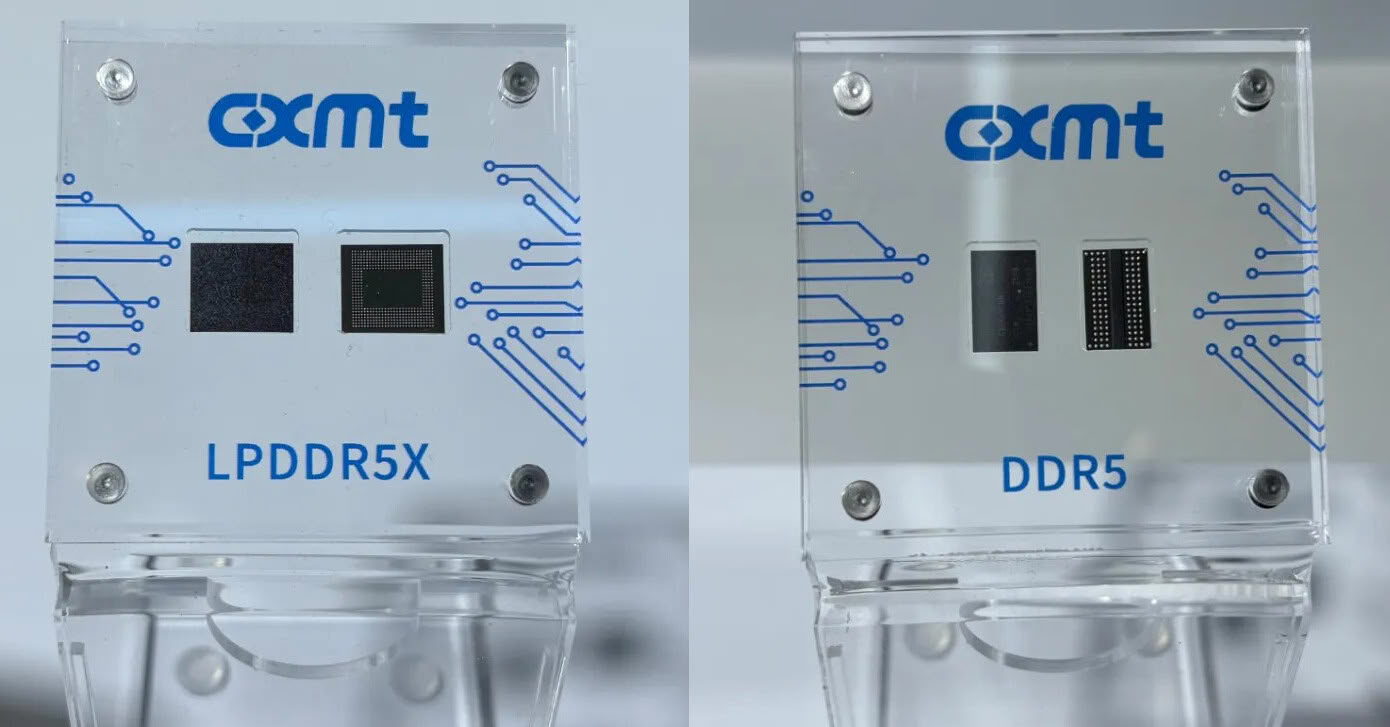
A particularly surprising discovery is that CXMT is constructing its cleanrooms—where the actual silicon is produced—in just around 12 months, whereas the rest of the DRAM manufacturing industry typically takes 21-24 months, nearly a full year longer.
Finally, the report notes that the Chinese government is encouraging CXMT to transfer its DRAM technology IP to other Chinese DRAM manufacturers such as JHICC, Swaysure, and YTMC’s subsidiary XMC. This initiative aims to alleviate memory shortages domestically before CAMT-designed DRAM enters other markets, such as the EU and possibly even the U.S.
Watch how quickly the US government will try to ban them in the name of security. They’ll claim that they transmit RAM data to the Chinese government 😛.
The US doesn’t manufacture RAM. But becoming reliant on a country so hellbent on dismantling democracy would be unwise.
China is “hellbent on dismantling democracy”?
Do tell! Which terrorists have the sponsored? Who have they recently invaded? Ooo did they capture the leader of a sovereign state? Does money control all of their politics?
It’s unclear to me whether you are referencing China or United States, and that makes me sad.
It hasn’t felt t like there’s been much significant performance increases or development in RAM in the last… decade? Definitely not following moores law (if that even applies here). So if youve spent your time price fixing for the western market instead of developing technology to keep you ahead, then second rate competitors will eventually catch up and cut a huge portion of your market share, and enjoy those inflated prices instead of you. This of course is my very uninformed take, and probably completely inaccurate.
It hasn’t felt t like there’s been much significant performance increases or development in RAM in the last… decade?
In memory? There’s been a ton of improvement, even if most of the coolest stuff isn’t making it into DIMMs that are installed in user laptops/desktops.
Advanced packaging technology has allowed chip manufacturers to put different silicon dies together with increasingly high performance (high bandwidth, low latency) connections in the same package, including with some three dimensional stacking. That way they can mix and match different silicon dies for greater cost effectiveness, yield, performance, etc.
This also means that in-package memory is now the standard in certain chips. Apple’s M-series silicon has its memory packaged right into the CPU/GPU package, as a system-in-a-package, so that the connection between the logic and memory is comparatively much higher performance, several times higher bandwidth than desktops or laptops that don’t follow that kind of architecture.
Similarly, in data centers, the AI boom has caused all the memory manufacturers to switch their production lines to high bandwidth memory, where they vertically stack a bunch of DRAM chips on each other, with ultra-fast, high bandwidth connections, so that they can shove terabytes of memory into these data center servers. These recent generations have been improving speed and bandwidth in ways that make consumer level DDR5 RAM look like child’s play.
So they’re improving things. Just not in ways that really show up in DIMM sticks.
Also DIMM sticks have gotten faster in the last decade.
Like, significantly faster than 2016 RAM.
Standing by for “Chinese memory is spying on you, don’t buy it”.
If this memory is high quality, it will become very popular with consumers and still have high prices. No reason to lower it a lot for consumer market if they are alone there. Maybe make it 10% cheaper.
This shit is so over. This gang ain’t gonna collude on price with Micron. They’re in for eating Micron. First its market share, then its IP by buying it for pennies on the dollar.
Especially pay attention to the CCP’s directive to share IP among RAM manufacturers. They appear to be looking at this problem as a supply shortage of an essential component for the rest of the economy, which it is. But that also means they aren’t playing for profit.
After watching recent ram cartel investigation from gamernexus: fuck them. They got what they fucking deserve.
i seem to recall micron getting in trouble a while back for this same thing hmm… https://en.wikipedia.org/wiki/DRAM_industry_price_fixing
And it happened again in 2018 and they were acquitted, and now there’s this and I doubt anything will come from it
A smart decision which the Americans are probably not gonna make would be to nationalize Micron once they become unviable for-profit business, in order to keep the competency and ability to make RAM, which is an essential economic input these days. Instead I think they’ll just let the CXMT gang buy them at that point, just like they’ve let that happen to so many important firms. That’s unless democratic socialism has taken enough control of the US political power.
nationalize Micron
No, no, no, you don’t understand, that doesn’t happen in the US.
What will happen is that they’ll get a trillion dollar bailout, a yuuuuge amount of protectionary tarrifs on overseas competitors and then some other company will scoop them up with no obligations.
And then - and this is very important - maximum profit will be extracted from consumers, who end up being measurably worse off.
ability to make RAM, which is an essential economic input these days
It’s kind of cool to think about…that we’re living in the silicon age. The next step after bronze and iron and steel. We’re still making useful things out of rocks…but different rocks, and now we boil water to use them. Like a stone soup, which itself is based upon a pre-revolution French folk-tale about the joys of communism…but now the government is “encouraging” manufacturers to throw in their vegetables. I don’t think government strong-arming the peoole was a part of the original tale but I could be wrong.
Micron doesn’t seem interested in competing for consumer memory anyway, since they exited the consumer memory market. Latent demand exists for memory at not-outrageous prices so good for CXMT for filling that niche.
CXMT will also sell at outrageous prices. It’s free money.
CXMT will sell the chips to memory manufacturers in China for “domestic use only” at near cost price as directed by the CCP.
Those manufacturers will construct consumer ram modules and sell them locally, and there will be grey market exports to other countries for ridiculously low prices compared to everyone else.
This way the CCP props up domestic supply, and chips away at foreign manufacturer market share by turning a blind eye to the massive grey market export of RAM.
Do you think they’ll stop expanding after filling the consumer memory market though?
I don’t think so, domestic electronics manufacturers have an enormous need for memory that is performant but doesn’t necessarily need the top-of-the-line, and probably China’s government is pushing to reduce the need for imported memory components from Korea or Taiwan as well, so demand for production is there coming from both the private and public sector.
Micron DDR chips are still being added to many consumer devices. They just would down the side the sold SSDs and similar direct to consumers.
The companies are still focusing on larger customers that are willing to pay more, one has to wonder how they will fare when those businesses aren’t willing to pay as much and the companies they told to take it or leave it have options from China.
Watch international ram be banned like international EVs
It’s better to use their weak labour standards to exploit their workers for low wages, rather than try to compete with those conditions directly.
Ram prices would still fall since other countries would not ban it and would put less stress on the current supply that already exists.
Considering Micron is the only US manufacturer, and they no longer produce consumer ram, this would just mean you literally could not buy any electronics that relied on ram. I doubt that would happen. Chinese ram, maybe
Didn’t this admin already warn Apple?
Competition is good. Hopefully an end to memory manufacturer price collusion is near. I’m not holding my breath for it though.