Orbits the sun, has enough gravity to form a sphere and has cleared it’s orbit. It’s the clearing the orbit part where Pluto fails, as do Ceres, Haumea, Makemake, and Eris. And also Quaoar, Orcus, Ixion, Varuna, Sedna, Gonggong, Salacia, Varda, Hygiea and Vesta. They all orbit in basically an asteroid field.
Do the Trojan asteroid clusters in Jupiter’s L4 and L5 points still count as “clearing its orbit”?
What if there were a second planet-sized body there?
I would say in that example:
Jupiter is the dominant mass making it be the planet.
Anything in the Lagrangian points would not be planets specifically because anything in those points are there because of Jupiter and its orbit, not in spite of it.
Clearing the orbit is a very shorthand version of the meaning. If it was literal, nothing could be a planet as there’s always something in every orbital path. It means the planet is massive enough to be the dominant thing within its orbit.
Mercury is an interesting case. While there are some moons that are larger than it, they aren’t nearly as dense. Its surface gravity is only a little less than Mars, even though its smaller in size, so it has potential for orbital domination. The Sun certainly helps in keeping other objects clear, but that shouldn’t be part of the equation, if Mercury qualifies as a planet it should be able to do it in any orbit. I wonder if you put Mercury where Ceres is and ran for a few millennia what would happen?
If the coin is so big that you don’t notice the garbage, it’s money. If you have to sift through the garage to find the coin, it’s just worthless loose change.

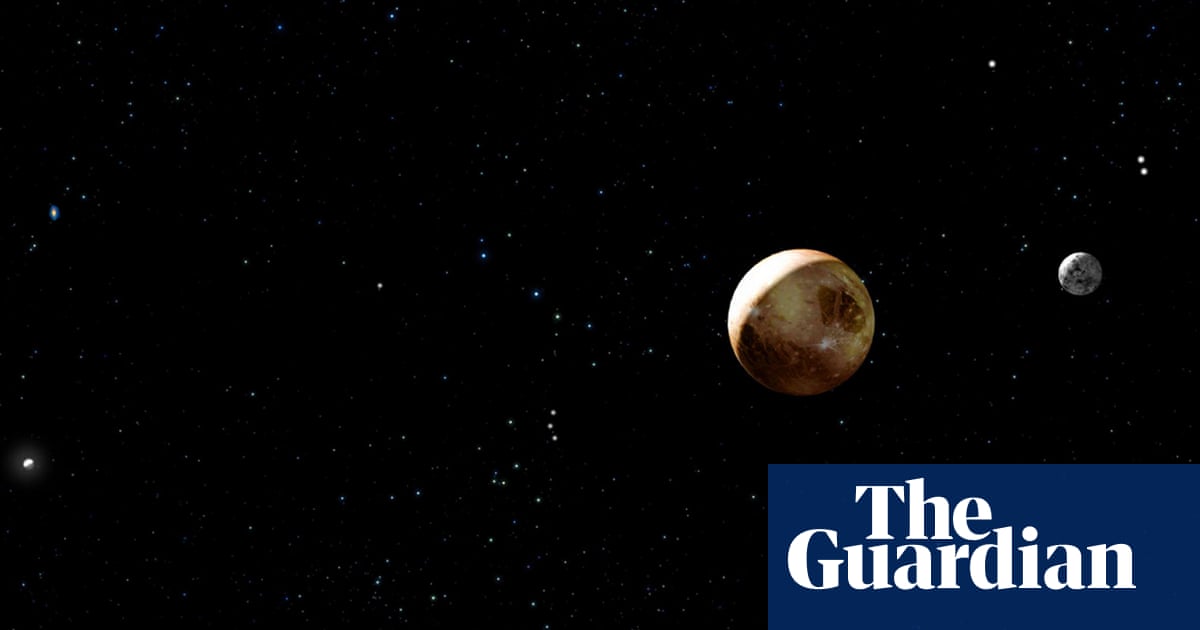
Oh, plutodrama is still going on. What is the current definition of planet?
Orbits the sun, has enough gravity to form a sphere and has cleared it’s orbit. It’s the clearing the orbit part where Pluto fails, as do Ceres, Haumea, Makemake, and Eris. And also Quaoar, Orcus, Ixion, Varuna, Sedna, Gonggong, Salacia, Varda, Hygiea and Vesta. They all orbit in basically an asteroid field.
The gorilla from Super Monkey Ball?
It’s also a god in Chinese mythology.
That makes a lot more sense
Do the Trojan asteroid clusters in Jupiter’s L4 and L5 points still count as “clearing its orbit”?
What if there were a second planet-sized body there?
I would say in that example:
There are mathematical formulae for defining it and the dwarf planets have orders of magnitude lower values in comparison to planets: https://en.wikipedia.org/wiki/Clearing_the_neighbourhood
Clearing the orbit is a very shorthand version of the meaning. If it was literal, nothing could be a planet as there’s always something in every orbital path. It means the planet is massive enough to be the dominant thing within its orbit.
Mercury: sweats
Mercury is an interesting case. While there are some moons that are larger than it, they aren’t nearly as dense. Its surface gravity is only a little less than Mars, even though its smaller in size, so it has potential for orbital domination. The Sun certainly helps in keeping other objects clear, but that shouldn’t be part of the equation, if Mercury qualifies as a planet it should be able to do it in any orbit. I wonder if you put Mercury where Ceres is and ran for a few millennia what would happen?
Everything sweats (or boils) that close to the sun.
So a coin stops being money if tossed to a garbage pile? :)
If the coin is so big that you don’t notice the garbage, it’s money. If you have to sift through the garage to find the coin, it’s just worthless loose change.
A forged coin isn’t money despite seeming like it is at first glance.
Pluto is real. The only problem with it – it being in the garbage belt and not in a separate orbit. Or is there something else?
Well, forged coins are also “real”. They can be identical to authentic coins but still be counterfeit.
Position very much matters to planets or else large moons would be planets.
Just link planets to the star and there won’t be any problems with “large moons”.