In 1872, a group of Toronto printers went on strike, fighting for a nine-hour work day. (The standard work day was 10 to 12 hours at the time.) The workers’ demand to reduce their hours had been refused by print shop owners, and in particular, George Brown, a respected father of Confederation and founder of The Globe, a predecessor to The Globe and Mail.
…
Ten thousand people marched in support of the workers to Queen’s Park.
…
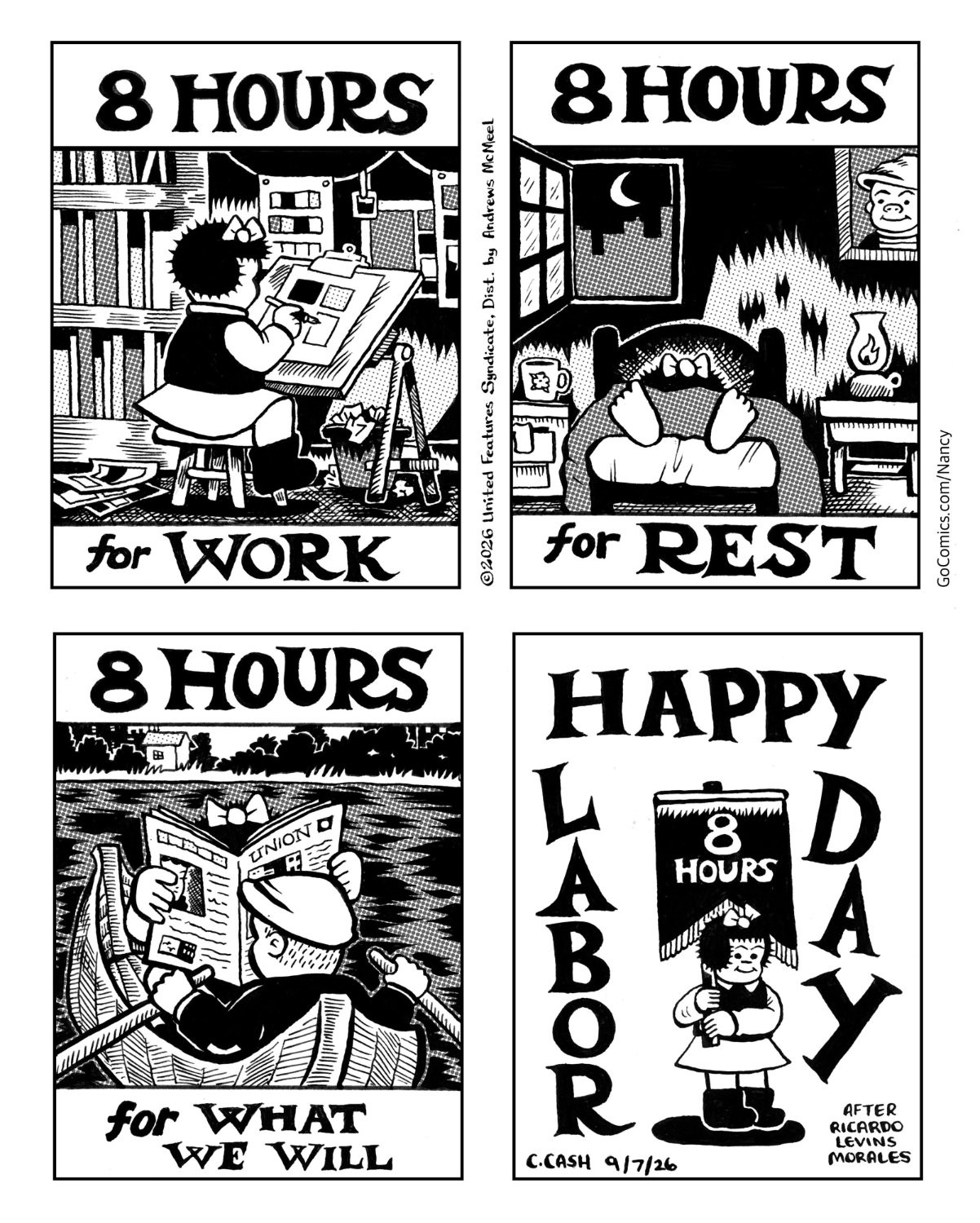
Many of the printers lost their jobs, but the incident led then prime minister Sir John A. Macdonald, a rival of Brown’s who was keen to gain worker support, to legalize union activities. In the years that followed, unions across North America pushed for shorter work days, and the eight-hour day eventually became standard.
…
There’s some dispute around the origins of America’s Labor Day, but some historians believe U.S. labour leader Peter J. McGuire, inspired after visiting a Toronto labour gathering, organized the first American Labor Day parade in 1882.


…
…
…
https://www.theglobeandmail.com/opinion/editorials/article-lessons-from-the-birth-of-labour-day/