I’m not 100% but I’m pretty sure the bigger battery is there to compensate for the increased power use of the OLED rather than being supplementary. Keep in mind, the OLED is also a 50% step-up in refresh rate up it likely just balances out. There’s likely a plethora of reviews out there that quickly confirm that, or prove me full of it. Either way…
I have an LCD one, got my partner an OLED one last year. It’s noticeably better looking with a sightly larger screen and the battery life is decidedly better. I got the LCD when it was steeply discounted and don’t regret it, but the oled one is a nicer device. Thumbsticks are broader and it’s also a bit lighter.
All other things being equal (same game, settings and refresh rate / fps limit), the OLED and LCD models have comparable power draw.
If anything, the OLED max power draw at 15W TDP is lower, usually around 23W max versus 26/27W for the LCD iirc.
Based on the screenshot in the article, the OLED model has longer playtime; Valve says that the LCD model has “2-8 hours of gameplay” and the OLED “3-13 hours of gameplay”.
Though they do also say that this is “context-dependent”, and I’m sure that you can come up with pathological cases for each. Like, a game that has a nearly all-white screen and runs at 90 Hz is probably relative worst-case for the OLED in terms of battery life, and a game that has a dark screen and runs at a locked framerate of 60 Hz is probably relative worst-case for the LCD.


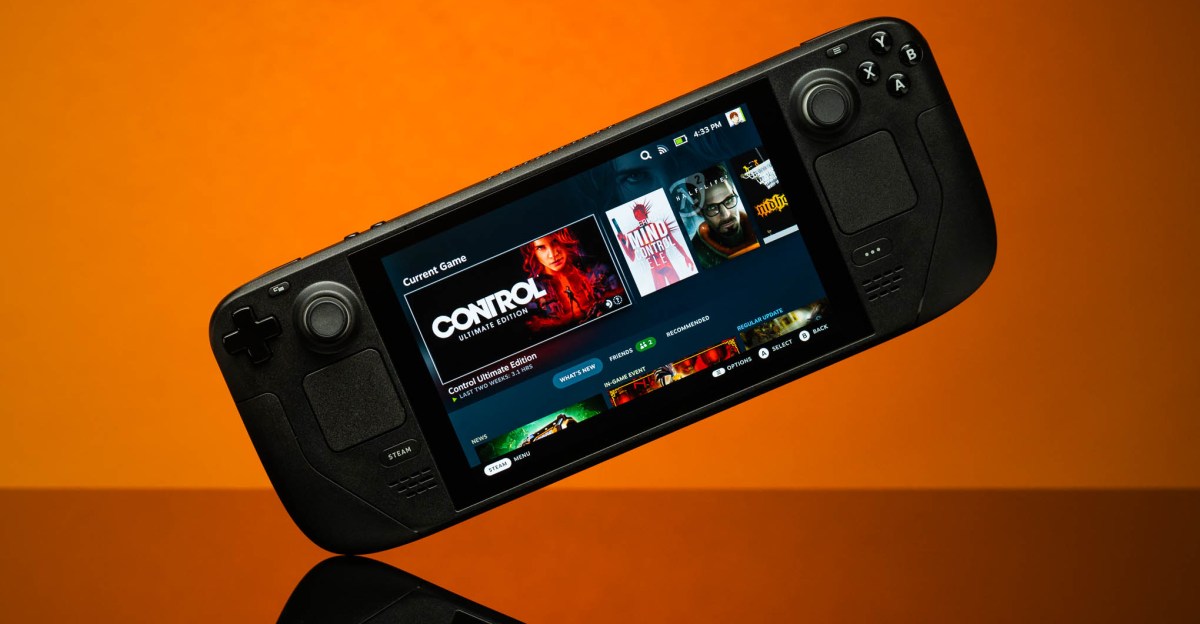
I’m not 100% but I’m pretty sure the bigger battery is there to compensate for the increased power use of the OLED rather than being supplementary. Keep in mind, the OLED is also a 50% step-up in refresh rate up it likely just balances out. There’s likely a plethora of reviews out there that quickly confirm that, or prove me full of it. Either way…
I have an LCD one, got my partner an OLED one last year. It’s noticeably better looking with a sightly larger screen and the battery life is decidedly better. I got the LCD when it was steeply discounted and don’t regret it, but the oled one is a nicer device. Thumbsticks are broader and it’s also a bit lighter.
All other things being equal (same game, settings and refresh rate / fps limit), the OLED and LCD models have comparable power draw.
If anything, the OLED max power draw at 15W TDP is lower, usually around 23W max versus 26/27W for the LCD iirc.
Based on the screenshot in the article, the OLED model has longer playtime; Valve says that the LCD model has “2-8 hours of gameplay” and the OLED “3-13 hours of gameplay”.
Though they do also say that this is “context-dependent”, and I’m sure that you can come up with pathological cases for each. Like, a game that has a nearly all-white screen and runs at 90 Hz is probably relative worst-case for the OLED in terms of battery life, and a game that has a dark screen and runs at a locked framerate of 60 Hz is probably relative worst-case for the LCD.