
Honestly, it’s not a great take from low-tech magazine.
This does not replace what solar panels do, which is to be an almost entirely passive way to collect/generate clean energy. It requires a fuel source, produces dirty emissions, requires actively monitoring while in use, and generates very little energy relative to what it is exposed to.
It’s potentially good for reusing waste heat as a small amount of electricity but it’s very little compared to other methods of reclamation like a hot water heater or an actual steam engine.
Why is it always an either/or.
What is the realistic output? Seem some thermoelectric camping stoves and they can barely manage to charge a phone.
Also sounds like a lot of fuel would be required which solar panels don’t need. As some kind of backup power maybe it could have a use, but no chance at being a good primary power source. And isn’t a steam turbine much more efficient than thermoelectric?
How well would these perform if they were placed inside an exterior wall of a climate controlled space? Say there’s a 30°F difference between the outside space and the inside space.
If you’re using electricity for that climate control, then that would be a waste of energy. I think the main appeal here is for places where wood is already burned for cooking and water heating. I imagine it could be a nice way to generate a bit of electricity during cold and dark winters when the sun isn’t shining all that much.
The article mentioned designs that negate the need for chimneys but I wonder if that’s a place where mounting it (sort of) through a wall could work - the flue/exhaust in a chimney is generally extremely hot (likely too hot?) and any heat in the chimney is just waste about to escape through the top anyways. If you could mount one of these through an exterior part of a chimney you’d have below freezing winter air on one side and like 400 degree heat on the other. I suspect that’s the sort of thing you’d have to build in from the start as conventional chimneys probably don’t like the kind of uneven heat a hole through the side would produce.
Edit: haven’t gotten to read in depth yet but it looks like there’s a bunch of research papers on thermoelectric generator chimneys
Based on this test, a small temperature difference like that would likely produce less than 0.01 watt of power per module.
They appear to require very drastic temperature differences to produce any meaningful power.
An interesting article (big fan of Lowtech mag), but I have some gripes.
- The title mentions it’s lower cost than solar panels, but no where in the article does it mention the cost of the experimental thermometric peltier generators discussed, which seems odd to leave out. Based on bulk orders from alibaba, it appears they cost somewhere between $4 to $11 per module for ones that can withstand woodstove temperatures, not including a heatsink, which will add some additional cost.
- These devices are only really practical in areas that require a home to be heated for a good portion of the year. In warmer climates, they would only be truly viable to use for a handful of months out of the year, outside of short cooking sessions in the warmer months.
- In higher density areas, wood/coal burning causes immense air pollution to the point of making the air dangerous to breathe (Poland’s smog issue from coal/wood burning home heating is a good example). It doesn’t seem like a great idea to add incentives to keep using those sources of heat instead of a heat pump (though for the people where these generators may be appealing, they likely cannot afford a heat pump without some form of government assistance).
I don’t think the idea is entirely meritless, it would probably be useful in low-density impoverished areas without access to an electric grid, especially in colder climates, but it’s not something that can reasonably scale up beyond those specific situations.
I can make solar all day long while it’s sunny. If I plan to keep my stove running all day long to produce power I have to go put the energy into getting enough wood to do that. That’s likely an obnoxious amount of wood for the amount of power output.
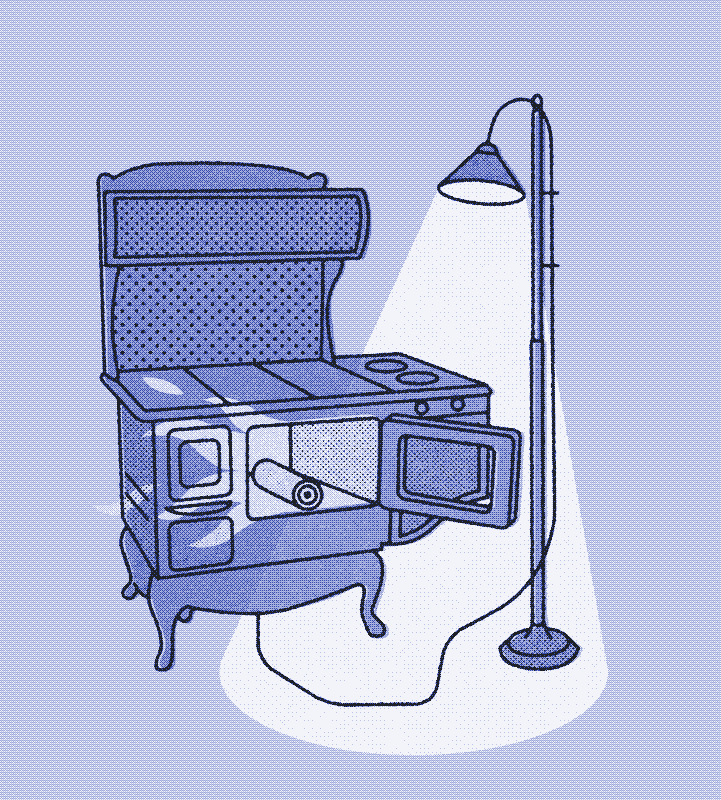
A 2015 prototype, in which a wood stove used for cooking and space and water heating was equipped with 21 thermoelectric modules cooled by a pumped water system, showed a power production from 25W (burning 1 kg of pine wood per hour) over 70W (4 kg wood/hour) to 166W (9 kg wood/hour).
So, it takes burning 1kg of wood to generate 25 Wh, or 90kJ. One kilo of wood contains, roughly, 20.000kJ of energy. That’s about 0.5%.
It’s fine if you want heat at that time, but quite a bit power demand is when you don’t need any heat.
It also creates huge problems with particulate pollution that are tied with all fossil fuel heating systems.
I can see that being used in rural areas where wood is abundant. We need a alternate for urban areas tho
166W an hour? You can power a laptop and a light for that. What on earth were they smoking to say this is worthwhile…
Unit pedant here: Just 166W. Watts are joules per second (they already have time in them, adding another unit of time confuses things).
This might seem silly, but it will help avoid confusion when you encounter Wh (watts * hours).
Sunlight is broadly speaking abundant in rural areas too, along with wind
The problem with modern solar panels is that they are hard to recycle. TEG’s do not have that problem.
Solar panels that don’t sustain some environmental damage tend to last 50 years or more (their power output degrades, but they still function and put out useful amounts of electricity). By the time most panels need to actually be fully replaced and recycled, I think we’ll have the facilities to do so.
But even if we somehow can’t, and every single solar panel is destined for landfill after 50 years (which is highly unlikely), they’d still be a far better option environmentally and climate wise compared to burning gas, coal, or wood at scale.
But even if we somehow can’t, and every single solar panel is destined for landfill after 50 years (which is highly unlikely), they’d still be a far better option environmentally and climate wise compared to burning gas, coal, or wood at scale.
While this it’s true it also reinforces the myth that we should, it’s still entirely unsustainable. Even 90% recycling still means massive amounts of new material is needed.
near zero energy use isn’t acceptable to the people causing all this.
https://dothemath.ucsd.edu/2024/07/metastatic-modernity-launch/
I’m not convinced that’s a big enough problem to outweigh the extreme inefficiency of thermoelectric.
They have their own problem of worsening air quality.
Can you imagine what a whole city with wood burning stoves would be like? You could cut the smog with a knife!
And they use up wood too. I think they are meant to be combined with other renewables.
The article mentions thermoelectic generators only make sense when used with fossil fuels, they aren’t viable with electric heating, as presumably the user then already has access to a grid or some other more powerful form of renewable electricity.