If they’ve got their heart set on an LCD model, it looks like eBay has a number of secondhand ones.
I don’t own a Steam Deck or intend to — I have more than enough portable electric devices capable of running games that I lug around already — but if I were going to get one, it looks like the OLED model has a 25% larger battery, which would be interesting to me.
The main appeal of the LCD one was you could get the cheapest Steam Deck, then swap out the hard drive for a 1TB+ drive. The total cost was super cheap, far less than a Switch 2 anyway.
It sucks to see it gone, but the whole economy around tech is fucked, so I guess it’s another casualty.
I’m not 100% but I’m pretty sure the bigger battery is there to compensate for the increased power use of the OLED rather than being supplementary. Keep in mind, the OLED is also a 50% step-up in refresh rate up it likely just balances out. There’s likely a plethora of reviews out there that quickly confirm that, or prove me full of it. Either way…
All other things being equal (same game, settings and refresh rate / fps limit), the OLED and LCD models have comparable power draw.
If anything, the OLED max power draw at 15W TDP is lower, usually around 23W max versus 26/27W for the LCD iirc.
Based on the screenshot in the article, the OLED model has longer playtime; Valve says that the LCD model has “2-8 hours of gameplay” and the OLED “3-13 hours of gameplay”.
Though they do also say that this is “context-dependent”, and I’m sure that you can come up with pathological cases for each. Like, a game that has a nearly all-white screen and runs at 90 Hz is probably relative worst-case for the OLED in terms of battery life, and a game that has a dark screen and runs at a locked framerate of 60 Hz is probably relative worst-case for the LCD.
I have an LCD one, got my partner an OLED one last year. It’s noticeably better looking with a sightly larger screen and the battery life is decidedly better. I got the LCD when it was steeply discounted and don’t regret it, but the oled one is a nicer device. Thumbsticks are broader and it’s also a bit lighter.
I don’t care to find the source right now, but around the time when the OLED came out, the battery performance was nominally better in third-party tests. It did come down to specifics in what you played (game optimization) and how you set the power profiles, but the extra battery didn’t add much in terms of playtime—maybe an hour extra in real world use cases.
I don’t know if that’s still the case; it could be that Valve has OLED specific improvements by this point, but I suspect that it still would not be a significant enough point for someone to decide upon a model just on battery specs.


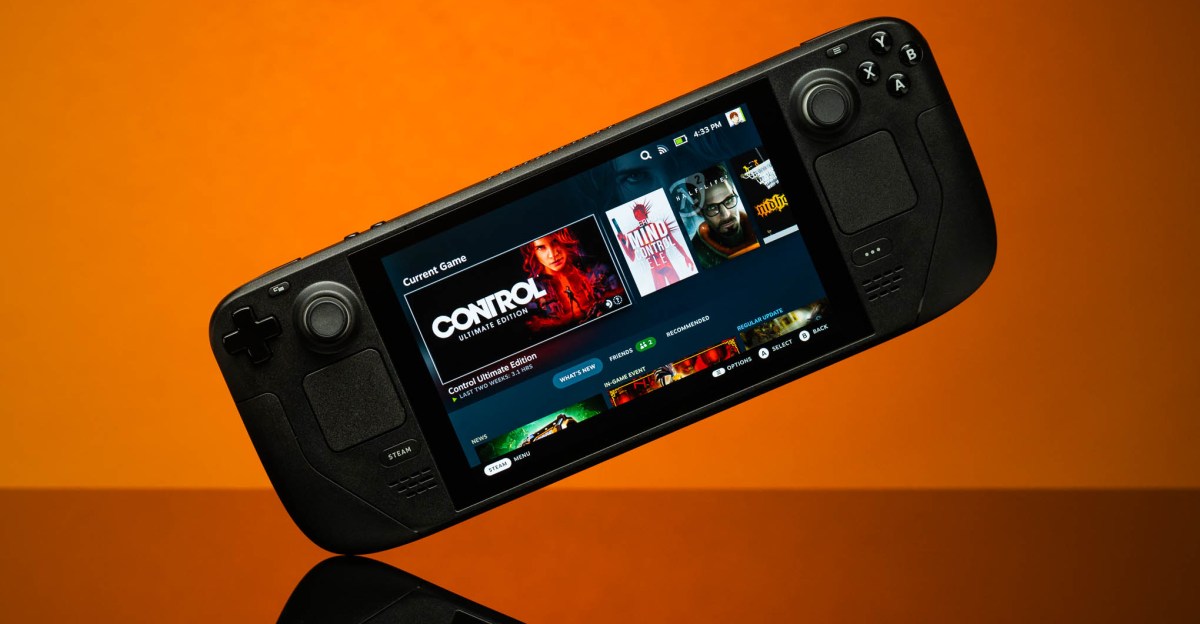
If they’ve got their heart set on an LCD model, it looks like eBay has a number of secondhand ones.
I don’t own a Steam Deck or intend to — I have more than enough portable electric devices capable of running games that I lug around already — but if I were going to get one, it looks like the OLED model has a 25% larger battery, which would be interesting to me.
The main appeal of the LCD one was you could get the cheapest Steam Deck, then swap out the hard drive for a 1TB+ drive. The total cost was super cheap, far less than a Switch 2 anyway.
It sucks to see it gone, but the whole economy around tech is fucked, so I guess it’s another casualty.
I’m not 100% but I’m pretty sure the bigger battery is there to compensate for the increased power use of the OLED rather than being supplementary. Keep in mind, the OLED is also a 50% step-up in refresh rate up it likely just balances out. There’s likely a plethora of reviews out there that quickly confirm that, or prove me full of it. Either way…
All other things being equal (same game, settings and refresh rate / fps limit), the OLED and LCD models have comparable power draw.
If anything, the OLED max power draw at 15W TDP is lower, usually around 23W max versus 26/27W for the LCD iirc.
Based on the screenshot in the article, the OLED model has longer playtime; Valve says that the LCD model has “2-8 hours of gameplay” and the OLED “3-13 hours of gameplay”.
Though they do also say that this is “context-dependent”, and I’m sure that you can come up with pathological cases for each. Like, a game that has a nearly all-white screen and runs at 90 Hz is probably relative worst-case for the OLED in terms of battery life, and a game that has a dark screen and runs at a locked framerate of 60 Hz is probably relative worst-case for the LCD.
I have an LCD one, got my partner an OLED one last year. It’s noticeably better looking with a sightly larger screen and the battery life is decidedly better. I got the LCD when it was steeply discounted and don’t regret it, but the oled one is a nicer device. Thumbsticks are broader and it’s also a bit lighter.
I don’t care to find the source right now, but around the time when the OLED came out, the battery performance was nominally better in third-party tests. It did come down to specifics in what you played (game optimization) and how you set the power profiles, but the extra battery didn’t add much in terms of playtime—maybe an hour extra in real world use cases.
I don’t know if that’s still the case; it could be that Valve has OLED specific improvements by this point, but I suspect that it still would not be a significant enough point for someone to decide upon a model just on battery specs.