

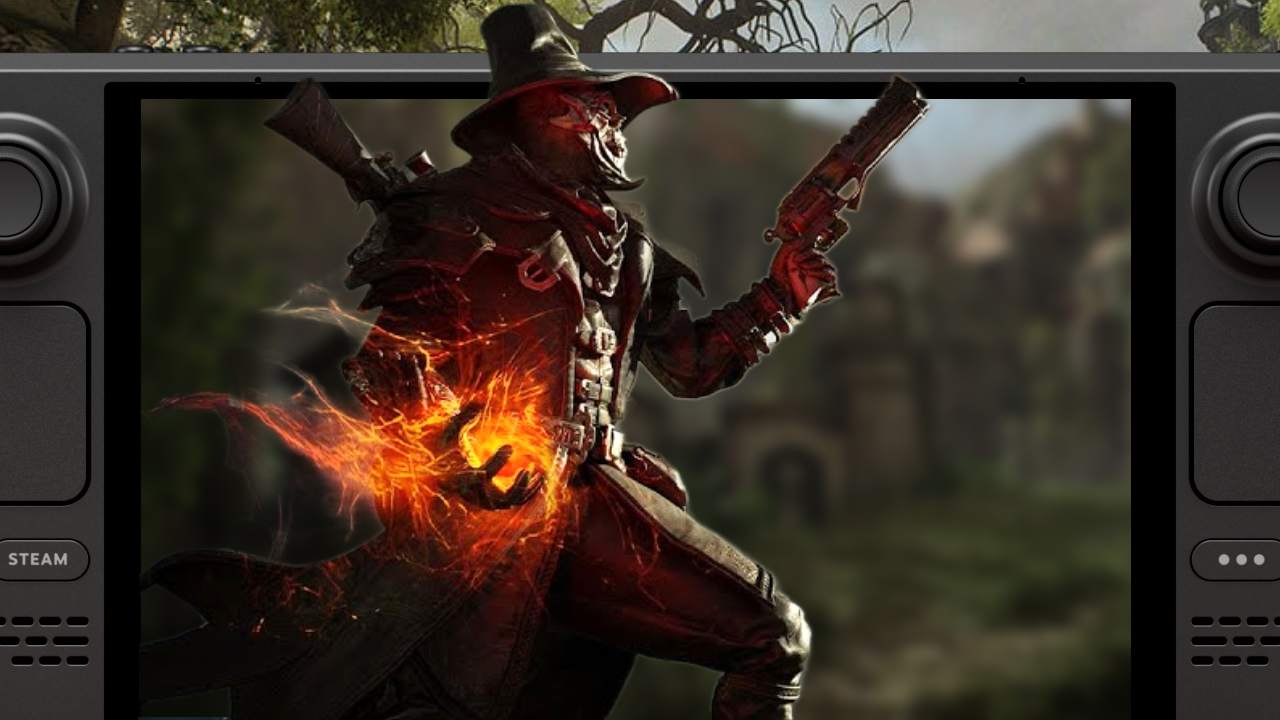
Not just the Deck. Having these games work there also means I have an easier time transitioning my desktop to Linux.
Valve is probably responsible for me moving to Linux fully because of proton and how steam works on Linux. While I would be bitching nonstop about Microsoft, I don’t know if getting off windows would be worth it to me if it was a hassle to play games.
Microsoft has driven me away from Windows at least a half dozen times over the last 20 years.
Each time the siren call of some game or another will pull me back.
I’d played with Linux native games as well, but most of the greats were Windows only.
And yeah, then Proton.
Now I’m trying to save up the small fortune needed for a computer upgrade, and I’m not even planning to pirate Windows.
I’m in the same boat. Been using Linux on a laptop for decades. But have always used Windows for gaming on my gaming desktop. I’m due for a rebuild and had a Linux build planned out that I was going to buy parts for during the holidays when they were expected to be on sale… Then RAM shot through the roof. A few months back the retail price of the parts (minus accessories and a case) was at a little above $1700 now it’s almost at $2100 due to the RAM pricing.
It is harsh. I’m hoping for the AI bubble to crash. For a lot of reasons, but partially so that I can buy parts at reasonable prices.
Bad timing though
It is, but my current setup is struggling.
Working harder on your game makes it better! Wow!
But seriously, it’s great that Valve is leading the way pushing demand for this.
It’s not really about working harder. Before, it just wasn’t a justifiable expense investing time into ensuring proton support or even linux support because a sub 1% OS just isn’t “worth” supporting from a financial standpoint. That changed with the steamdeck and because the steamdeck is actually just a small PC with built-in controller, things that profit the deck also profit the linux ecosystem.
Honestly the steam deck was a genius move from valve.
Devs targeting Steam Deck Verified sets a bar for performance that ends up including other PCs with integrated graphics or those with older graphics cards (up to ~10 years)
By extended the usable life of older gaming hardware, It’s even a win from an environmental point of view.
I’m willing to bet that without the Deck, most AAA games would have already jumped to requiring roughly PS5-level PC hardware now that last gen consoles are effectively dead.
UE5 on the Deck might not be pretty, but making it run at all on it lowers the minimum requirements of a game tremendously.
Read the article - this isn’t just about Linux support.
Steam Deck verified is like 90% done towards linux support
Please try reading the article.
No

because the steamdeck is actually just a small PC
That is very contrary to what’s the point of the article. Supporting the Steam deck also means supporting the controller and the small screen format. Things that can benefit users of Windows based handhelds too.
And people who use controllers in general. And people with small screens. And people with poor vision. And …
exactly
Wush!
Way to completely miss the message. Which include how user interfaces need to be usable on the small screen, and to make optimizations for lower end hardware and not just focus on mid range and high end.The exception being that if you make a very high end complex game, it may be better to not support Steam Deck at all, because if it doesn’t play well, it shouldn’t pretend to work.
That … that’s the hard work.
No it’s not the hard work, it is about working differently.
yes, that’s the hard work they were talking about. why are you even arguing when you’re agreeing with what they say?
Wush! Way to completely miss the message.
Wooosh, indeed (that’s how it’s spelled, btw).
It’s a moronic oversimplification, and making a different approach is not the same as harder.
And just saying working harder says nothing about the ways that are described in the article, and provides zero additional info.
Sad that such low energy effort without reading the article first is even upvoted. Lowest denominator rules here. 🤮
Please believe it when a seasoned professional informs you that ingesting user feedback, implementing good UIs, and optimization are all hard work.
Of course it is, but it’s just the focus on how the UI is made that has changed, that does not inherently make it harder. It just changes some of the design goals.
I have fucking made UI’s from scratch in assembly on a pixel basis, that were better than a lot of the crap we see today.
Just about nobody out there is focusing on making a steam deck optimized game right out the gate. They build a full game, then they go through and try to optimize/update ui for smaller screens. That’s additional work, on top of an already hard task of making a good game.
Sounds pretty stupid if you don’t know which platforms you want to target from the beginning.
If development really is that random and poorly planned, they are making extra work for themselves due to poor planning more than because they chose to support the Steam deck.
Chiming in to say that witchfire is a great game and I think a rather unique singleplayer extraction shooter with bloodborne style dodging and you should play it (on the steam deck)
It’s a super impressive game, and also very punishing. There are so many times where I get hit with crazy difficulty spikes and lose a ton of loot I spent several hours collecting. I had a particularly bad loss deep in the castle level that made me drop the game until 1.0.
I’ll be back
Is this the one that’s like 3D Hexen
Hey Hexen was 3D!
I dont normally go for this genre but they nailed the atmosphere and all out weirdness. The mystery keeps me coming back. It never beats you over the head with details or rams how you’re supposed to feel down your throat. Very clever design.
It sets a baseline performance target that is really low. It’s an integrated GPU laptop that’s not close to high end integrated GPUs anymore. Makes your potential audience pretty much the whole of the steam userbase rather than the like RTX 3060+ userbase
Thats really good all around. I’m always surprised by how much my laptop can do, but I dont even look at the latest AAA super-shiny games because I don’t want the disappointment when it doesnt work well or at all.
You know, I was rather surprised how well my 2016 Lenovo gaming laptop handled BG3. That has I think a GT640? Don’t exactly remember the device names, but they stopped updating drivers for it in 2020.
I bought a steamdeck new with free shipping and taxes for $320 USD on black friday. I mean at a price like that I doubt there making much of a profit but I still say I support Valve & the open source community.
Textbook example of accessibility benefitting everyone and not just the ones who need it.
As mentioned in the article, supporting the Steam Deck greatly helps with UI/UX, but also potentially with optimization. Especially in 2025, with all bigger releases requiring workstation CPUs, 64GB of RAM and GPUs from fhe future, this is very much needed.
One good thing (and likely the only good thing) about the current RAM shortage is that people are probably not going to be buying games that “require” 64GB of RAM anymore, forcing those devs to optimize
Well, that’s the last excuse I needed. Time to finally buy Witchfire.
I was looking at the 1tb 32gb ram Legion Go 2. $1300. I couldn’t believe the price. Does the 700$ steamdeck have 32gb ram?
Why would you need 32gb of ram tho
zramctl -f -s 16Gfor shits and giggles?@optissima@lemmy.ml @drmoose@lemmy.world zram is even better than dowloading more ram 🫢
Yeah you can then set it to your swap file for more drive space!
No, it has 16.
Worth noting that you can mod 32 GBs of RAM, and a few people did the mod, finding literally zero performance benefit.
Yeah, I know. If I remember correctly, the Steam Deck uses a pretty standard RAM type.
But the system is well designed and doesn’t have any real bottlenecks that aren’t game-specific. So the Deck can’t even run anything that would benefit from 32 GB of system RAM.
Got my legion go 1 used for like (converted) 400 usd, consider your usecase and look if one of the older ones still work for you. Because 400 for that thing was a steal.
I don’t think it makes it better for everybody, but I agree every developer should support the Steam Deck.
I’ve not read the article, so I don’t know if they specify it, but I think it comes to performance too, not just proton-usability. Since you target a “console” rather than whatever you are using to test on, that’s a win for other devices too. I’m just guessing here
But optimizing for low hardware does not mean its a win for everyone. For lot of people who have strong enough configuration does not care the performance at the portable level. There is no real benefit for them.
Optimization is good also for hi-tier rigs, since they can run cooler. Don’t see the problem in targeting a specific mid-range device. Lately optimization is not even done right on PlayStation by big developers, it’s just good enough.
Not just run cooler, but smoother too.
The Moto X was the best phone I’ve ever used, and thays because they took the time to optimize instead of just throwing more RAM/CPU/GPU at the problem.
Low tier optimization does not mean its running cooloer on higher tier systems. In example if a game requires 16gb of VRAM for high tier setup, then developers optimizing the game alongside for low tier handhelds that have less VRAM will not change the fact for high tier. Therefore not everyone benefits from it. Similar to RayTracing or other features.
Not everyone benefits from games making run on Steam Deck.
Optimization involves a lot of things. For example off-loading off-screen stuff, improving multithreading npc path-finding and other stuff using too much cpu cicles without any gain in quality. All these things could go under-radar if you test on hi-tier rig which may not get impact by these but of course increase cpu usage for, again, no gain at all. This of course heats hardware too.
Edit: once I seen a game main menu, with simple 2D UI and plain black background, using 100% of GPU (built with unreal engine of course)
You count specific optimization strategies that affect everyone. But not all optmizations or in the case of our discussion, making the game run on Steam Deck, won’t affect everyone.
in the case of our discussion, making the game run on Steam Deck, won’t affect everyone.
Indeed making the game run on Steam Deck involves more than optimization, like gamepad support and a proper UI scale (other than wine or linux friendly anti-cheat) which are beneficial not to EVERYONE but to what I think still a big piece of the cake.
What I was doin was speculating on optimization, which indeed is beneficial to everyone.
Being pushed to target a specific frame rate on a mid or low range device make you more aware of possible bottlenecks and things that can just be improved.Lately there are a lot of studios who just don’t care because they expect you to have an hi-tier rig (or because they use one to test their own game, resulting in good enough fps), so you end up in simple scenes which use 100% of Gpu or whatever just because the engine is doing something in background actually useless. But since you must be running this on a powerfull pc, that still means enough fps. This leads to bad design choices, which is also the trend with not so savvy unreal engine developers.
I get your point that not everyone “wins”, but the people with high end setup don’t loose anything if the game is suddenly playable on the deck. On the contrary, people with steam decks, people on linux and people on lower end system get to have positive repercussions. So while high end gamers migh not always gain somethig, it’s still neutral to them. Therefore, no one loses and it’s a net positive
Neutral does not mean its a benefit. And not losing something was not the point of discussion or what i was talking about.
When we are talking about for example 10 years from now it means the people with strong configurations today, will still be able to play new games with the same pc if the games are being targeted to a lower spec (at that time) pcs. So it will benefit everyone and it’s a win for everyone.
You make some assumptions about who will benefit. And those are not “everyone”.
I don’t like the implied sociopathy in that assessment. It smacks of "i got mine, fuck you ". I’m not implying that is your attitude, just pointing out that people who don’t care because it does not affect them overlap the population that is all for fascism because they are in the “in” group and aren’t (obviously) harmed.
Building to work well on low-end systems does not take from high-end systems unless the devs don’t take advantage of it when it is available.even then, they are not worse off. They just don’t get something better than “the pleebs” are getting.
I don’t know how you can even get to this conclusion from what I said.
It depends on the optimization for low-end systems that is being done, if it will have an effect to high-end systems. All I say is, that optimizing a game for Steam Deck does not mean it will have an effect to high end machines (btw my system isn’t even high end…, I’m not an elitist). In other replies I tried to give a few examples of what I mean.
A very simple example would be having low quality textures added to a game, to make it run with the constraints of the Steam Deck (or other low end machines). If the game was already running well at 60 fps with high quality textures, then it will not benefit from option to set low quality textures. And just to make it clear: I am not against optimizations for low end hardware. In fact I own a Steam Deck and love it and my PC is not even high end, some may even say low… (at least the GPU).
As I said in my comment, I was not implying you personally had any such attitude. I was commenting on my feelings about how that statement could be interpreted and the general attitude behind it is part of what I have in the past actually experienced when I advocated for the value of building for a less l33t configuration. The attitude by at least some and perhaps many is a weaponization of the attitude I saw in your comment (again, not seeking to imply you actually had that attitude).
When enough people just don’t care because the problem does not directly affect them, the problem is not addressed because not enough people care. That is what I was attempting to say. Thus, I apologize for the appearance of saying you personally had a “bad” attitude on this. It’s a common attitude and is a contributing factor to many real-world serious social problems, and I just don’t like it because of consequences on a larger scale.
I understand the issue here. I just wanted make my intentions crystal clear, as you was not entirely sure. Although, I do not entirely agree. Why? Because it is in the right of not caring other what affects you. Unless someone goes out of the way trying to stop the “optimization” for low end hardware, its totally fine if someone says “I don’t care, it doesn’t affect me”.
I am against elitism too. In example on a different subject, but similar reasoning is emulation vs real hardware enthusiasts. Those people don’t like how easy we have access to expensive games and hardware (for free) and therefore they are against it. This is the definition of elitism. And this is a different issue than people with high end hardware not caring about low end hardware, because it does not affect them. Not caring is okay to me.
Understood. My issue is more abstract. It would be nice if some who don’t need it also put their support behind the concept for altruistic reasons and because they realize it could affect them when their hardware is no longer cutting edge.
that game is brutal
And glorious. Been playing for a few months. Wild stuff.