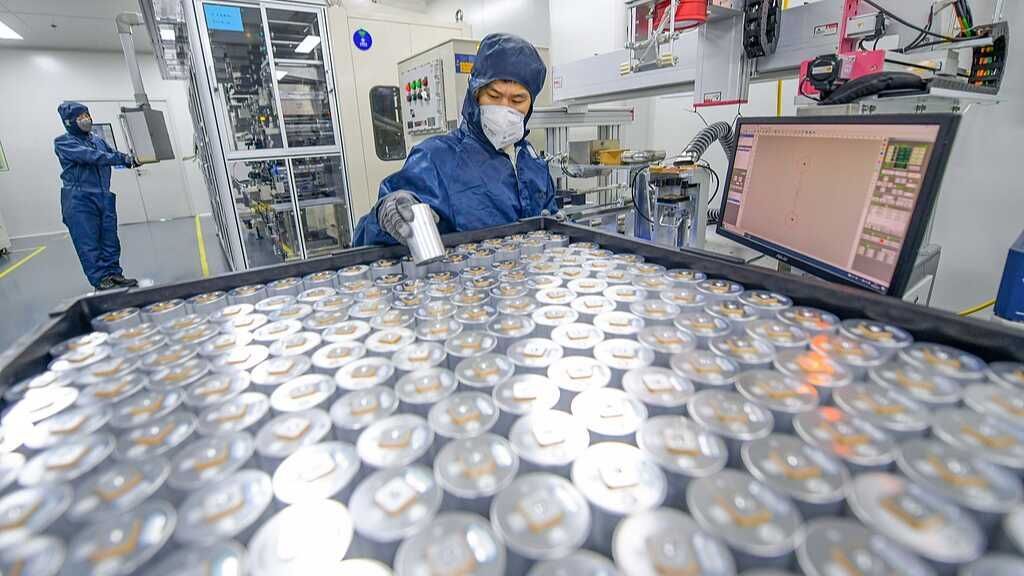
the breakthrough that makes EVs safer than ICE cars
Did Toyota write this? EVs already are much safer than ICEs, the headline reads like it’s trying to gaslight people into thinking otherwise.
Except ones with no handles. You’re supposed to burn alive in these.
Which has nothing to do with the drive train.
Except the fact that batteries burn extremely rapidly. In case of fire you have seconds to open the door and help the driver/passaners escape out of the vehicle
I’ve heard that gasoline also tends to burn rapidly. The Mythbusters usually had to add gas to make their explosions look cooler
Not as rapidly as lithium batteries. From firefighting perspective this is much uglier case. Bonus issue: unlike gasoline, you can’t extinguish it reliably - it has to burn out on its own
Battery fires can be extinguished.
The only way I know how to reliably extinguish a lithium car battery fire, is to throw the whole car into a water tank
Dude…gas cars blow up every day. It’s so common it’s not news.
Vehicle fires report | NFPA Research
National Fire Protection Association (NFPA) https://www.nfpa.org/ › research › fire-statistical-reports Oct 31, 2024 — The 195,927 highway vehicle fires per year in 2018–2022 caused an average of 579 civilian deaths; 1,336 civilian injuries.
So? Overall risk is still much lower.
That’s a feature as far as I’m concerned
Except their weight which leads to insane amounts of energy transfer and also none of the intrastructure, like guardrails, is built to handle that much weight so low down.
The way to safer is to reduce the amount of cars.
The way to safer is to reduce the amount of cars.
Hersey! Blasphemy! Unamerican!
First time I ever heard about guardrails having issues with EVs. Do you have a source for that?
Also the comment was about the fire risk, which the article was about.
Yes, I do.
It affects more than the guardrail situation as well. Any collision with a car laden with extremely heavy batteries as low to the ground as possible has inertia and force that was not calculated into road safety systems originally.
This can be corrected, but the first step is recognizing and accounting for it. Which seems to upset people for reasons I cant comprehend.
But as the other guy said, the safest systems are the ones with the fewest cars on the road in general.
EVs weigh similar to similar ICE vehicles.
Yeah, no.

This is a golf compared to an id.3. Two very comparable vehicles. The id.3 weighs 41% more. Don’t get me wrong I’d love to be able to get an id.3 but all we get in the states are these horrible SUVs. That said EVs do still suffer a major weight penalty that comes with its own issues.
Not even a little bit, and I’d say “but good effort” but really no, not even that.
WTF Lemmy…EVs are massively heavy.
Next best thing to improving public transport to reduce the ammouny of cars would be reducing the size of cars, thus in large part negating the weight issue.
But like you said, nothing beats just having fewer cars on the road.
Just make cars insanely expensive, eventually Less cars will be on the riad
That just punishes poor people. If you male public transport good, people will take it.
I was being sarcastic and it didn’t come off well
EVs already are much safer than ICEs
For the occupant or those who are involved in a collision with one?
EVs are heavy
They don’t catch fire that often though.
Which is what that headline is about.
Do ice car catch fire more often?
Yes.
While true, you should also mention that there’s way more ICEs and (more importantly) the way they burn is much, much safer.
You can’t really extinguish lithium fire, it burns way hotter, and it’s more toxic.
Comparatively an ICE car burning is not a big deal; they almost never make other stuff around them burn, and also when they catch on fire it’s pretty much exclusively only when people are still near/in them so there’s A chance to notice it and do something about it.
deleted by creator
Came here to say exactly this.
But it was already said so…
EVs already are much safer than ICEs
You do realize that article neither negates or supports the above statement.
“But Teslas are electric and Teslas are bad!” -the person we’re replying to.
It’s like the commenter doesn’t realize there’s more electric cars than just Teslas.
Safer cars get into less crashes. You seriously want to argue semantics?
There are electric cars that are not Teslas…
So the article’s source has been updated. Tesla was number 1 in the last year’s report (2024’s numbers) but it’s number 3 now (2025’s numbers).
Source used by the article you shared
TLDR: It’s a close battle between BMW (44.9 per 1000), Ram (44.7 per 1000), and Telsa (42.8 per 1000)
EDIT: “That includes accidents, DUIs, speeding and citations” If you instead just isolate accident rates it’s slightly different: Ram (23.9 per 1000), Subaru (23.2), and Tesla (23.1).
I should clarify that I’m not a fan of Tesla AT ALL. I’d love to see Tesla fail (in particular Elon failing especially). There’s more electric car’s than just Tesla’s.
It probably has more to do with the people that buy BMWs, Rams, and Teslas driving like fucking idiots than with the cars themselves.
I was about to say that when I am near a tesla, bmw, or ram truck I anticipate them driving like jackasses. teslas can go both ways though, either unnecessarily slow or crazy bmw style impatient driving
Tesla crashes are a function of a poorly designed interface, overweight cars, and too much power for public roads.
This battery is even safer than Li-ion cells, why is that “gaslighting”?
Because the headline is not making that comparison?
EVs already are much safer than ICEs
That’s new to me. Why exactly?
The main thing is there’s no big engine in the front, so your entire hood can now be a crumple zone, and it’s easier to design to be safe in impacts. The center of gravity is also much lower so there’s a lower chance of a rollover.
On the other hand… Tesla’s have a habit of locking their occupants inside when the car is on fire because SOMEONE decided mechanical latches were too expensive.
And as others have mentioned… the added weight also makes it less safe for everyone else outside the car.
The article is about batteries that might catch fire less often.
ICEs catch fire much more often than EVs already. The comment was specifically about that.
The fires from EVs (ones that use lithium batteries that is) are incredibly hard to extinguish.
Sodium ion batteries don’t ignite which makes them even safer.
That’s nice and all but not what the headline compared and therefore not the point. That comparison was specifically between ICEs and EVs.
Maybe a bit irrelevant but why is the article calling it “China’s battery“? I feel like if the researchers were from any other countries academy of science, say France, the title would have simply been something like “scientists discover new ways for fireproof battery”. Maybe it’d say French scientists or so, but not simply “France’s battery”?
Because cool China is so totally innovative unlike the boring west! We gotta hype them up, no one else ever does cool stuff only China brand is cool.
They have been trying to murder the US and EU auto industry and dumping biblical shittons of money into battery technology. the EU and the US aren’t trying to compete.
Its still an advancement for all mankind, even if my countries leadership wont let me have one.
They have been trying to murder the US and EU auto industry and dumping biblical shittons of money into battery technology. the EU and the US aren’t trying to compete.
China invests in R&D, Trump slashed scientific research.
Not only in R&D but market development… Like, finding out what people want and selling it to them, exporting them… The Americans are trying to push pickups on europe…
Actually it’s the other way around.
The internet is all about “China Bad” so calling it China Battery is a way to depreciate this obviously positive discovery.
“Should we just not talk about this awesome new tech?”
“No, let’s put China in front of this totally awesome thing so people will think it’s bad while we hype it up as such a great invention in the article. Oh and don’t mention working conditions, state subsidies, mineral extraction, or any of the usual anti-China talking points, that might make them think it’s not bad”
I’m sorry you live with so much gratuitous hatred in your heart and I pray you can recover some day.
How is pointing out the flaw in your logic “gratuitous hatred”? It doesn’t make any sense that the rationale for calling it “China’s battery” is to make it sound bad, when the article is clearly extolling the virtues of the battery.
Or is it the part where the other commenter brought attention to the working conditions in China? Because that’s not motivated by hatred, but rather class solidarity. How badly do you have to hate Chinese people to believe Chinese workers don’t deserve better conditions? What about ethnic minorities in China who are having their cultural heritage stripped away from them?
Is it because the government officials aren’t white, so you believe they can do no wrong? So you’ll just call any legitimate criticism of them racist? That’s like Israel calling anti-zionism anti-semitic. There’s nothing sinophobic about legitimate criticisms of the PRC.
Nice argument you’re having with yourself there, buddy. Seems like you have quite a lot to pour out.
I don’t have any affinity for China, but I also don’t like the gratuitous hate they get all over the internet, nor the reduction of Chinese people’s experience to work drones (what you’re doing).
I had hoped that Lemmy wasn’t gonna be like that, but alas.
Oh, what, you can’t handle three paragraphs? Maybe you should go over to mastodon or loops then.
I question your definition of “gratuitous hate,” as I haven’t seen any examples of actual hatred in this comment chain. You seem like you just can’t handle being disagreed with, so you make strawman arguments against the people disagreeing with you.
nor the reduction of Chinese people’s experience to work drones (what you’re doing).
Calling attention to an abysmal work culture which enforces long working hours and authoritarian hierarchies, and frequently drives people to suicide, isn’t reducing people to work drones. And if that’s how you interpret that critique, then you have no class solidarity.
And before you cry that I’m singling China out, I’m not. The US rivals them for overall shittiness, while paling by comparison in innovation and development.
But this conversation is about China, and if you can’t tolerate a structural critique that isn’t even laden with hatred and bias, then, well, I don’t know what to tell you…
People who support China don’t seem to comprehend that shitty countries aren’t a zero sum game.
You can shit on China’s government while also shitting on the US government.
deleted by creator
Is this “china always bad” internet in the room with us right now? Do you deny the positive sentiment in this very thread you’re posting in right now?
deleted by creator
What an unhinged thing to say. That is true about literally everything except maybe puppies.
except maybe puppies.
I seem to remember that there is some dangerous dissease that people mainly catch from puppies.
Classic fluff piece to make China look more innovative than they actually are. I wouldn‘t be surprised if we never heard of this tech or if they recycle the same article next year. Tech ‚journalism‘ about China is a mine field of false claims and exaggerations.
Sodium ion batteries are already in cars in China, this iteration is even safer. You should read the article.
Na+ batteries are really cool tech, and with a few more iterations of R&D they can potentially replace Li+ batteries, removing the need for rare earth elements that are toxic to people and the environment, dangerous to extract, and more often than not extracted by child slave labor (such as in Xinjiang and Congo).
It doesn’t matter how you feel about China, although framing Na+ as “China’s battery” is problematic for other reasons.
Sodium batteries won’t fix the mining issue for rare earths. Lithium is not rare.
My understanding is that the lithium itself isn’t the issue, it’s that lithium batteries require other rare earths like cobalt where as sodium itself is not only more common than lithium, but it uses more common material like iron or tin in its battery chemistry that are also less problematic.
Go read about rare earths and what they’re mostly used for, then come back when you’re ready to join the discussion
Well it stinks like Chinese propaganda. That much was blatantly obvious to me. It‘s just not always obvious what part they‘re lying about. So it was the part about it being Chinese in the first place. Not very creative I must say.
The particular innovation discussed in the article was developed by Chinese engineers. But that doesn’t make Na+ batteries “Chinese batteries.”
If all tech was owned by the country where it was developed, there would be a lot more “american this,” “american that.” Planes, computers, automobiles, nukes, etc.
Too much of it already is controlled by US patents, though. There needs to be more freedom to invent, develop, and iterate…
These batteries are already in production cars. Have been for a while. If you don’t have access to them it’s because of your regressive protectionist government.
No no no. China is Fake News. They don’t even make cars. If they made cars, I would have seen Chinese cars driving around in America.
Regressive protectionism isn’t exactly unique to the American auto industry but yea.
This is recycled I read about about this last year in the same kind of context on Reddit.
Separately though I have read there are hundreds of chemical combinations that produce electricity and only a handful have been researched for batteries.
Because it’s written as Chinese propaganda.
“China Battery!” typically trips everyone’s “Fake News! Evil Company! Communists Killed 100 Billion People!” alarm
More like “China lies” about everything.
That’s what my government tells me
Maybe you aren’t old enough to remember all the “scientific breakthroughs” that came out of China in the early 2000s that were later proven to be false, completely made up, all of which were published by institutions at least partially owned by ministers in China’s government.
You mean high speed rail and electric cars?
No.
Because (most people believe) China controls its scientists with iron fist and they only research what the state wants them to research.
For me it’s because they have a tendency to… exaggerate, their research results.
Sodium batteries are real though. You can buy them today, their big promise was that they would be cheaper than lithium batteries because sodium is abundant and readily available whereas lithium is a rare mineral. Then lithium prices fell through the floor and the value proposition failed, at least for now. They’re also not as energy dense, which is probably what will hold then back from EV use for a while yet, but the claim around being safer holds up.
LOL. Americans don’t?
because China doing anything is a geopolitical issue somehow. also, these things are effectively banned in the United States via tariffs
This from the people that gave us fireworks… traditions disappear so fast…
God forbid someone does a humor
Wut
the chinese invented gunpowder centuries ago
That’s wasn’t the confusing part
What was?
the same people that invented fireworks (thing that is set on fire and goes boom) now actively research/made the safe batteries (things that DON’T set on fire AND don’t go boom)
well best way to stop something from exploding is to invent/discover all the ways for it to explode. you become an expert at it and you know what not to do.
Gunpowder 2.1
The “they catch fire” argument is fucking bonkers anyway.
If there’s one thing petrol cars are famous for, it’s being filled with flammable liquids that can and do leak everywhere and combust upon collision.
You can ignore them. Same with all the disingenuous cunts who complain about wind turbines “spoiling the view” who ignore the coal and gas power stations that have littered the skyline for over a century.
Lithium fires are hard to contain unlike petrol fire:
https://www.yahoo.com/news/articles/firefighters-forced-submerge-electric-car-082852772.html
So does an airplane crash would be more horrifying than a car crash, but that doesn’t change the fact that airplanes are safer.
Even so, any improvement is still good though
I never said they aren’t safer I only replied to the comment that petrol cars also burn, my point is that even though they are safer overall their fires are more dangerous.
You can put a petrol fire out in less than a few days though. Petrol doesn’t magically catch fire upon seeing oxygen either.
Ah, Lemmy. You never disappoint with sharing hilariously inaccurate information in comments!
ICE vehicles have far more fires. EVs are more intense, but significantly less frequent
Cool source. Ok, I’ll bite. The number of fire deaths in Teslas alone drawfs the number of fatalities in the infamous Pinto. The number is being tracked by volunteers because there’s no data from the NFPA or others that segments by EV vs ICE, but the number of highway vehicle fire deaths has been trending sharply upwards since 2016.
Tesla has sold nearly 8 million cars in total, with 3.5 million cars in 2023-2024 alone. There were 3.1 million Pintos ever produced in its 10 year run.
There are 27 fatalities linked to Pinto related fires and 83 related to Tesla fires according to your volunteer run source. The Pinto had a fatality for every 1 in 116,000 vehicles while Tesla, according to your source, has 1 in every 96,000. So the number of Tesla fire related fatalities does not “dwarf” the number of Pinto related fatalities. On top of that, a key difference is most of the Pinto fatalities were due to rear end collisions with no fault of the driver while Tesla’s are much higher performance vehicles getting involved in high energy collisions due to driver (autonomous and human) errors.
Here is a list giving a different view of fatal accidents by car model. To quote the article:
“Most of these vehicles received excellent safety ratings, performing well in crash tests at the IIHS and NHTSA, so it’s not a vehicle design issue,” said Brauer. “The models on this list likely reflect a combination of driver behavior and driving conditions, leading to increased crashes and fatalities.”
Narrowing down the relevant information from your otherwise interesting comment, we can conclude that, if the sources are accurate, Teslas on average are more unsafe in terms of fire safety than the most unsafe internal combustion engine vehicle ever manufactured.
I think it’s ludicrous to dismiss those concerns as “fucking bonkers” and that we “can ignore them.” New addition to this list is that we can evidently also generalize all those EVs deaths as being “due to driver error,” so I suppose good riddance? Not really sure what to make of that, but boy do these threads sure show the best of humanity.
I think Teslas shouldn’t speak for all EVs.
the company has demonstrated a very high tolerance for risk. In execution, but also they don’t seem to care about reputational risk. Other manufacturers with a larger business at stake, I would expect to handle recalls, safety in a different manner (one of the reasons they are lagging in the EV space)
So… EVs have significantly less fires than combustion engines
But EVs fires are more severe
Tesla is a mess.
EV chemistry is getting better and safer over time.
Combustion engines are largely at their limit.
Absolutely agreed on all points!
You have clearly made up a narrative you want to hear, that doesn’t change the statistics that clearly shows EVs are significantly less prone (~20x) to catching fire compared to internal combustion vehicles.
How have I made up a narrative? My premise from the start was the absurdity of dismissing the dangers of vehicle fires, and there’s data showing that a significant number of people die in EV fires. You’ve decided to argue that the deaths somehow matter less—that’s making up a narrative to justify your, frankly, ludicrous position.
I’m sure that if somebody you loved died in such an event and somebody came along telling you that you’re “an idiot” for having legitimate concerns, should be ignored and lumps you into a group of “disingenuous cunts,” you’d have a different perspective.
Uhm, the statistics are flawed. Not the fire itself is the problem, but how many people are killed by it. If an ICE vehicle burns, you usually have enough time to get out. If an EV burns, good luck.
I thought I was careful not to claim any stats. The only thing we know is that EV fires are less frequent but more intense.
Probably not much data out there because it’s so infrequent. You are much more likely to die from collisions I imagine.
I think Teslas cast a dark halo in this area as well. Newer vehicles, but it wouldn’t surprise me of their drivers carelessness mirrored their largest shareholder.
Its worth knowing and researching to reduce fire incidence, but combustion engines have bigger problems.
Uh, EVs are safer than ICE cars
That’s incorrect.
EVs crash more. Safer cars crash less.
EVsTeslas crash more.“Some of these accidents involved Tesla’s self-driving system.”
Tesla Fanboys have a way of hurting that there’s a difference and increasingly big one these days because Tesla is increasingly small part of the electric vehicle landscape
Do you usually post links without reading them?
Interestingly, the study attributes the problems to the drivers not the cars.
Because aside from random catastrophic failure, the vehicle doesn’t make you cash. The driver or Tesla’s “self-driving” does
Bad drivers and shitty “self driving” are how the cars are unsafe.
No matter how it happens if they crash more often or have worse outcomes when they do, then they’re less safe.
Is this a bit account? Should the name have clued me in?
You may just be having trouble with the idea that people can reasonably and seriously see the world from a point of view other than your own.
Or it’s all a bit!
Who can say? No matter how I answer it’s not really evidence, you can draw a 2x2 decision matrix here for both answers and both possibilities. All four outcomes are plausible. Choose the answer that makes you happiest.
No, that’s not the same thing. Something being used in a more dangerous way doesn’t make it more dangerous or more unsafe.
Driving a car at speed along a cliff in the dark in the rain is more unsafe than driving it slowly in an empty car park. It’s the same car.
If I included a self destruct button beside the AC controls and claimed that it was driver error that was the problem, how credible would that be?
That would be an unsafe car in all conditions and with all drivers. Sure, user error would play a part but a reasonable person could still cause a problem.
Perhaps a better analogy will make a useful point. Is there a button for that?
crashing more means nothing about the safety of the car and everything about the safety of the average driver of the car, unless the manufacturer is directly at fault for the crash somehow. This is an unfixable problem and has nothing to do with whether it was gas or electric. The variables were not isolated at all.
Am I the only one who has never heard the term “ICE” referring to Internal Combustion Engine vehicles? I hate how headlines deliberately make new acronyms or limit context to get people to click on the article.
I’ve heard of it before
It’s very old… decades, and when talking about EVs and hybrids, an obviously quick way to reference conventional gas engine vehicles. The term is just unfortunately carrying some more recent baggage.
I’ve heard it a few times before the whole ICE thing in the US. Especially on threads of electric car owners talking about combustion cars.
Am I the only one who has never heard the term “ICE” referring to Internal Combustion Engine vehicles?
Probably not the only one. Maybe there are dozens of you
I blame the American education system. (Or lack there of)
I love the poor grammar while dunking on the US educational system.
Oldest acronym I know, since physics class in grade five
I thought sodium batteries had considerably less energy density than conventional? Is that not a problem anymore? If that hasn’t been solved, I don’t see how this helps make EVs safer.
They indeed have less energy density, but I don’t get your point about less safety.
They work better in high and low temperatures, can be charged a lot faster and don’t degrade as fast. Sodium isn’t as reactive as Lithium, lowering the risk of fires.
My point is that if they have less energy density, they aren’t a particularity great choice for EVs, as the increased battery size to get the same capacity makes the whole thing much heavier, requiring even more battery to move it.
I guess for like short range vehicles, it might be fine, but at least around here, thats gunna be a pretty tough sell, because everything is spread out.
It can’t really make EVs safer if its not being used for them due to the drawbacks, is all.
ICE engines use a bunch of physical space for accessory components related to the engine. Li-ion powered e-cars reclaimed a ton of that space (i.e. Tesla has a frunk)
Perhaps next using a bit more space for a less dense sodium battery in exchange for a vehicle that is 0% explodable is a worthy trade (if claims are true).
Battery density is energy per kilos. The problem is not only were to put the battery, but also the added weight.
Leave the weight as is, accept lower range which is offset by faster charging speeds. Or just buy a car with a lithium battery if you cannot accept this.
We have faster charging speeds with lithium today, 800v cars that can charge at 300KW+ have been on the market for half a decade, BYD has launched cars that can charge at 2-3x that speed. The charging infrastructure is the bottleneck there, even if all new cars could charge at those speeds it wouldn’t mean much because hardly any chargers can support it.
Besides it’s almost moot, most EV owners aren’t charging via fast chargers like you would fill up an ICE car, they’re charging at home at much cheaper rates and only using fast chargers for particularly long trips.
Exactly. Fast charging is for long trips.
Same compromise I made when I bought the base range version of my car with LFP chemistry. But I would not go lower in range than that. LFP is already much safer than any gasoline engine. I would like sodium just for the reliable range on low temperatures. Probably in the next years we will reach comparable density for sodium.
The issue with that is that your range at least needs to make it between charging stations on the highway to be a realistic choice for many people. That might not be a problem in major corridors, but in sparser areas like the US midwest, it’s a legitimate concern.
Doesn’t mean Na+ is bad, it’s just a young technology. In the next few years I expect to see the energy density increasing rapidly.
Putting part of the battery in the front, in the crash zone, is going to reduce safety, not improve it.
One of the main things that improved EV safety over ICE cars is the frunk itself. By removing that massive engine from the front and replacing it with a crumple zone, the car becomes much safer in front impacts.
Do you have a source for that or is it just a conclusion you reached?
The reason I ask is that I vaguelly remember of seeing somewhere that the way the front of modern ICE cars is designed makes the engine literally fall when a high-speed frontal collision happens exactly so that the front can act as a crumple zone rather than the engine being pushed inside the passenger compartment. That being so, things aren’t quite as simple as you say and I think we need actual real world test results showing that difference in safety rather than mere expectations extrapolated from superficial knowleged about cars.
I looked it up. 2022 IIHS crash tests showed the Tesla model 3 as being much safer in front impacts.
Modern cars may make the engine fall in a crash, but it’s still better not to have that mass there in the first place. Having said that, the safety advantages of a frunk may be reduced if you have a bunch of heavy cargo in there.
The safest car is the one that crashes less.
Who wants a more front-heavy car? That’s just a recipe for understeer and I prefer having the ability to turn on ice.
Is frunk what elon rebranded his fupa? His fat upper penis area?
I guess they suggested, that the batteries won’t be used in EVs, as long as their capacity is significantly lower.
I recall reading the same.
Sodium batteries make loads of sense for house batteries like solar storage.
They should be the default for solar installations and grid-level storage, but are too new.
They can also replace lead-acid batteries for many applications.
Lithium will still rule microelectronics and wearables, but all lower density stuff should switch to sodium.
That being said, for cold environments like Scandinavia and the US Midwest & canada, sodium ion works better in both cold and heat swings than Lithium variants that it might be worth the tradeoff in capacity because in the long cold months, the reduced capacity and performance of lithium chemistries would completely close the gap anyways.
They should be the default for solar installations and grid-level storage
What ever happened to flow batteries? They were supposed to be the really cheap low density option for grid storage.
I would love this for my home, as well as at a smaller scale for my homelab, and even potentially things like power tools.
Just recently a friend doing a home reno project had one of their drill batteries achieve thermal runaway, fortunately while they were home. Made me really think twice about the pile of tools in my garage.
I’d trade in just about every portable-scale Li-ion battery I own for a slightly less energy dense but safer alternative.
I was hoping eBike could use them. I’ve seen one too many of those go up. Possibly from shoddy 3rd party batteries.
Sodium chemistry works in cold temps, lithium does not.
They have considerably less energy density yes, but that was also the case for LFP batteries in the past.
LFP batteries have improved now though over the years and can now go quite reasonable distances, making the more expensive higher energy density batteries like NCM only needed for the longer range or performance variants.
The same should happen to the sodium based batteries, and LFP will eventually get to the point of the longer range types in the future.
Eventually, the range of the higher density types won’t be needed, and they’ll simply start including fewer cells of them to get the sweet point range which will then bring their costs / weight down when compared to lower density types, but it’s possible by that point maybe the lower density types simply dominate due to their general lesser cost?
All of this of course assuming something like solid state batteries don’t have their breakthrough low cost long lifespan moment.
Yea but if it’s half the price people are willing to put up with a lot of inconveniences.
Idk about that. Electric cars have been half the price to drive and people still buy gas cars due to the ‘inconvenience’ of long charge times on road trips.
I think lot of people not too serious about buying electric dont really understand the savings either.
They see a bigger monthly payment and dont account for how much in gas they’ll pay, plus some of the extra more immediate maintenance like oil changes. Its harder to think about the longer term maintenance though.
And no amount of performance improvements is going to change the minds of those people. Either they’ll finally try electric and realize how great they are or eventually die out. Either way ICE is going to be the oddity one day.
Something we’ll never see in the US because the US hates real competition.
Don’t worry, you can see Teslas catching fire.
Two cyber trucks yesterday.
do you know what else Cybertrucks have in common with dumpsters (besides the obvious visual similarities and raccoon problems)? they both have spontaneous combustion issues.
Sodium is absolutely less of a fire risk which is good and is made of less rare earth minerals which is also a bonus.
The major downside is the energy density. If I am not mistaken it is about half of current litium ion batteries. Which would result in a halving of range for the same weight.
On top of that, if they ever get them into production, the solid state Lithium ion batteries are not only more energy dense than current batteries, they are also safer due to the lack of flammable liquid electrolites.
In conclusion with what I know, I doubt most cars will use sodium ion batteries. I would see them as great home batteries for solar installations. And maybe batteries for farm equipement or construction vehicles although the weight might become an issue.
Sodium batteries are only 30% less energy dense, but cost half as much as lithium and work better in lower temperatures. Most cars will use sodium chemistry and the shift is already taking place.
See the “working better in lower temperatures” is what im interested in. I would love an EV if we had the infrastructure to support it, but as they are right now there is little incentive to build the infrastructure because it’s often too cold where I live and everything is so far apart.
Your government needs to just build whole country nuclear and stop its other spending, once you’ve got cheap abundant energy then its inevitable.
Than my information was out of date because the in formation I had sodium was around 140w an lithium around 250w so not half but a large gap. But with the range anxiety most people already have I wonder if 30% less available power will be acceptable for them. And as I said before solid state Lithium should be a massive change and allow electric cars to rival diesel for range.
Aren’t EVs already safer than gas cars?
I think the point is (I haven’t read the article) that once an EV is caught on fire, it’s extremely hard to extinguish it, because the battery tends to re-ignite afterwards.
I heard from a firefighter in my hometown (haven’t verified if true or not), the only way to extinguish it was to immerge the car.
But you are right, EVs are less likely to start burning in the first place compared to ICE cars.
Even immersing the car doesn’t really stop it, it kind of just pauses the fire. When it’s surfaced again and starts to dry it tends to self ignite again for a very long time. EV fires are extremely difficult to stop right now and the procedure usually boils down to “Let it burn itself out and keep everything around it from catching too.”
Cover it in lead?
They put a blanket over burning car, and any occupants trapped inside because of doors that wouldn’t unlock and laminated side glass, to keep it from igniting things around it. They’ll also pull the burning car onto a flatbed truck to get it off the road, and take it to somewhere safer.
This is opposed to just dousing a gas car with water till it stops burning.
They could probably use sand
It’s a bit of an outdated way now. The newer way is to inject coolant directly into the batteries.
https://en.wikipedia.org/wiki/Sodium-ion_battery
Sodium-ion battery development took place in the 1970s and early 1980s. However, by the 1990s, lithium-ion batteries had demonstrated more commercial promise, causing interest in sodium-ion batteries to decline.[16][17] In the early 2010s, sodium-ion batteries experienced a resurgence, driven largely by the increasing cost of lithium-ion battery raw materials.[16] Also, the number of patent families reached the number of non-patent publication after ca. 2020, which usually signify the fact that the technology reached the commercialization stage.
Technically correct.
Sodium blows up when exposed to water.
So does lithium, even more violently, good thing is that nobody is using pure lithium or sodium
So does lithium. Not relevant for battery tech, tho
Very relevant for firefighters who have to deal with lithium and sodium fires.
BTW: Explosion in case of lithium is indirect since you need a hydrogen buildup first. In case of sodium plus water it goes boom almost instantly
Jesus Christ you all want to discount Chinese innovations so bad. America won’t fund anything that doesn’t immediately return anymore. They’ve fallen off.
they’re not using raw sodium but obviously mixing it with other chemicals. so it’s not relevant.
No, by design, you have as close as possible to raw metal on one of the electrodes when battery is fully charged. That’s the chemistry behind it - its moving metal between oxidation states. When it burns down, it also moves to higher oxidation states. Volatility is baked in. Usually you have lithium in carbon matrix that acts as physical sponge. But that’s just raw lithium in a sponge. It will still burn like hell.
Sodium explodes on contact with water, having a barrier or two is great, if you use them in cars it’s going to get punctured at times, what with tons of vehicle crashing into things at high speeds and all.
Sodium ion batteries don’t use sodium metal. They use sodium oxides as the cathode.
shhhh…no chemistry allowed
Some sodium ion batteries use an aqueous electrolyte, meaning they’re full of water.
Ah, so they’ve already exploded, thus rendering them safe for use.
You could still stub your toe on them, so not completely safe
“sodium batteries, pre exploded!”
Do we have cars made of ice?! Cool
We almost had ships made of mostly ice a while ago, but it never took off https://en.wikipedia.org/wiki/Project_Habakkuk
For the occupants, any pedestrian hit by an EV will generally be in worse condition than if they were hit by an ICE vehicle.While this is ultimately good, the benefit can’t be applied so broadly as “the breakthrough that makes EVs safer than ICE cars”.Edit: /u/inclementimmigrant had it right, not me
The solution as always is to reduce car dependence.
wouldn’t the increased weight due the battery be partially compensated by a more lightweight motor? electric motors are significantly simpler and less heavy than ICE motors.
deleted by creator
I think they may be a fuckcars person. They car be unreasonable also.
No, combustion engines don’t weigh much nowadays. 100-300 KG is common. Battery pack alone for a Model S is 544 KG, motor+inverter+transmission is another 140ish. For an RWD car, AWD of course adds another one of these (it also adds drivetrain complexity in an ICE vehicle, but not as much additional weight as in an EV).
VW ID.3 is apparently 41% heavier than a similar sized Golf.
Provide proof there bucko.
If I had to guess, I would point to 2 reasons:
-
better frontal collision dynamics due to not having an engine up front
-
generally lower front ends since aerodynamics is more important to EVs
-
Looks like I spoke too soon, my bad.
I must have gotten studies that looked at height confused with weight.